
Ant scale
Lecanopsis formicarum
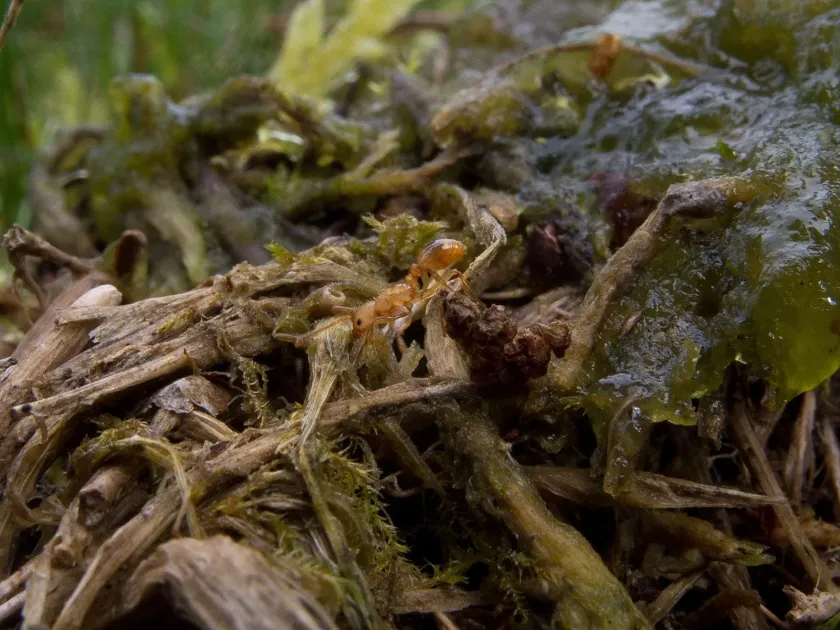
Description
How to identify
The ant scale (Lecanopsis formicarum) is a specific type of insect belonging to the family Coccidae (soft scales) within the order Hemiptera.
Adult females of this pest typically have an oval or nearly circular body shape, often covered with a protective waxy substance that shields them from external threats.
The coloration of the females ranges from yellowish-brown to dark brown, allowing them to blend seamlessly with the bark or stems of their host plants.
The common name reflects a close mutualistic relationship with ants, which protect these insects and assist in their distribution in exchange for sugary honeydew secretions.
Unlike other species, males of this scale insect are rarely seen and possess wings, enabling them to move across plants to fertilize the stationary females.
What it damages
The primary hosts for this pest include various grass species and certain types of trees and shrubs within their natural habitat range.
The pest feeds exclusively on plant sap, extracting nutrients from young shoots, leaves, and stems, which significantly weakens the overall vigor of the host plant.
Under conditions of heavy infestation, the ant scale can lead to stunted growth, deformation of shoots, and premature yellowing of the foliage.
In addition to direct sap loss, the sticky honeydew produced by the scales fosters the growth of sooty mold, which severely disrupts the plant's photosynthetic process.
Severe infestations can result in significant yield losses and render the plants more susceptible to secondary fungal and bacterial infections.
When it appears
The life cycle of the ant scale is closely tied to seasonal temperature shifts, with the most active crawler stage occurring during the spring and summer months.
During this period, young crawlers emerge from their overwintering sites and move across the plant in search of succulent tissues for feeding.
Females become relatively stationary after securing their position on a stem, where they undergo their main development phase while secreting protective wax.
In the autumn, adult females lay eggs that overwinter either beneath their hardened body shells or in specialized nests guarded by attendant ants.
Development typically spans the entire warm season, requiring consistent monitoring of plantations from late spring through early autumn.
Signs of infestation
A primary indicator of infestation is the appearance of round or oval protrusions on stems, which are often mistaken for bark texture or undeveloped buds.
Sticky residue on leaf and stem surfaces is a reliable sign of scale activity, as these insects constantly filter plant sugars during their feeding process.
Visible "ant trails" on trunks and stems often indicate that ants are tending to a scale colony, actively protecting them from natural predators.
Gradual wilting of shoot tips and leaf curling are clear symptoms of a heavy infestation that requires immediate phytosanitary intervention.
A careful inspection with a hand lens often reveals dense clusters of crawlers, which appear as small, mobile dots congregating near node bases.
Control measures
Managing the ant scale requires an integrated approach combining cultural practices with targeted chemical pest control strategies.
It is essential to restrict ant access to host plants by utilizing sticky traps or physical barriers on tree trunks to isolate the scale colonies.
The application of systemic insecticides is generally the most effective method for controlling the females, which are protected by their tough waxy armor.
Preventive pruning and the removal of heavily infested plant materials are recommended to reduce the overall population pressure in the field or garden.
Biological control, utilizing natural enemies like predatory wasps, can be highly effective in environments where chemical pesticide use is restricted.
Taxonomy
- Latin name
- Lecanopsis formicarum
- Order
- Hemiptera (bugs, aphids, leafhoppers)
- Family
- Coccidae
- EPPO code
- LCPSFO
Discussion
No discussions yet — be the first.