
Fungus beetle
Latridius minutus
Description
How to identify
The fungus beetle (Latridius minutus) is a small insect belonging to the family Latridiidae, often found in stored grain products.
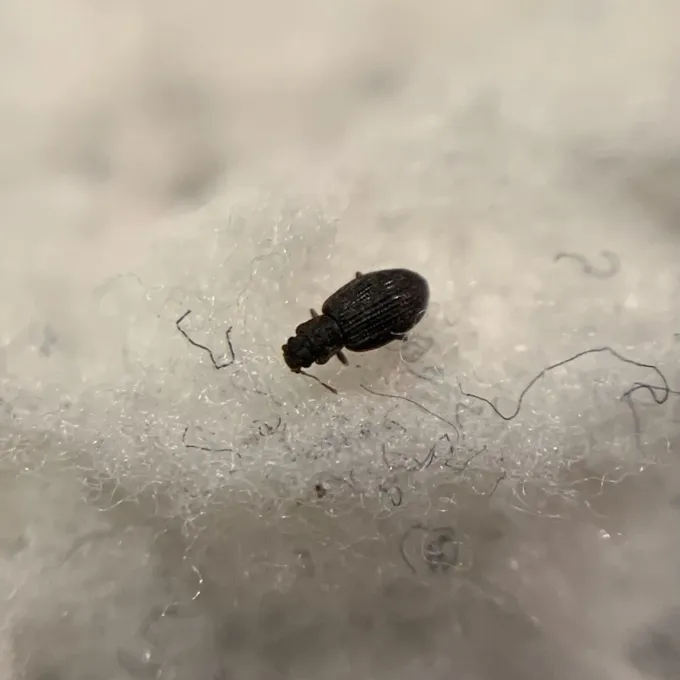
Adult beetles are approximately 1.2 to 1.5 mm long, with a distinct brownish color and a characteristically sculptured thorax and elytra.
They possess a hard exoskeleton and are classified within the order Coleoptera, which is known for their complete life cycle transformation.
Larvae are microscopic and slender, living in close association with fungal colonies, which serve as their primary food source.
Proper identification requires magnification, as their small size allows them to hide easily in the cracks of storage equipment and grain piles.
What it damages
This beetle is considered a secondary pest because it primarily feeds on the spores and mycelium of mold, rather than the healthy grain itself.
The primary economic damage is caused by the contamination of commodities with frass, cast skins, and fungal spores spread throughout the batch.
When present in large numbers, they indicate that the stored product has already reached a moisture level that supports mold growth.
They infest cereals, flour, dried fruits, and animal feeds that have been improperly stored in high-humidity conditions.
The secondary effect of their activity is the further promotion of damp conditions, which can lead to significant quality degradation.
When it appears
The fungus beetle is active year-round in storage facilities if the internal environment remains humid and stable in temperature.
They reproduce most rapidly in the spring and summer months when ambient moisture levels naturally rise, facilitating fungal growth.
The developmental life cycle from egg to adult can be completed in about three to four weeks under optimal conditions.
In winter, populations usually decline in activity unless the storage facility is heated or moisture accumulation occurs.
Their presence is closely tied to seasonal fluctuations in humidity rather than direct temperature changes in the climate.
Signs of infestation
The most common sign of an infestation is a musty, moldy odor in the storage area, indicating active fungal degradation.
Visible presence of small beetles on the surface of grain sacks or storage walls often suggests an established population.
Clumping of grain kernels or the presence of visible mycelium on stored products is a clear warning sign of pest development.
Inspect dark corners and floor crevices, as these insects prefer sheltered areas with poor air circulation.
Frequent screening of samples from different depths of the grain pile will reveal the presence of adult beetles and larvae.
Control measures
The primary method of control is moisture management; keeping grain dry is essential to prevent mold growth, which this pest needs.
- Maintain low humidity levels within the storage facility using proper ventilation systems.
- Thoroughly clean storage areas between batches to remove dust and grain debris.
- Seal cracks and crevices in the walls and floor to prevent insect harborage.
- Use temperature and humidity monitoring tools to detect hotspots early.
Once mold and beetles are present, the grain must be dried immediately or aerated to inhibit further reproduction.
In cases of severe infestation, fumigation of the warehouse may be required to eliminate the beetle population entirely.
Taxonomy
- Latin name
- Latridius minutus
- Order
- Coleoptera (beetles)
- Family
- Latridiidae
- EPPO code
- LATIMI
Discussion
No discussions yet — be the first.