
Emerald fruit fly
Lamprolonchaea smaragdi
Description
How to identify
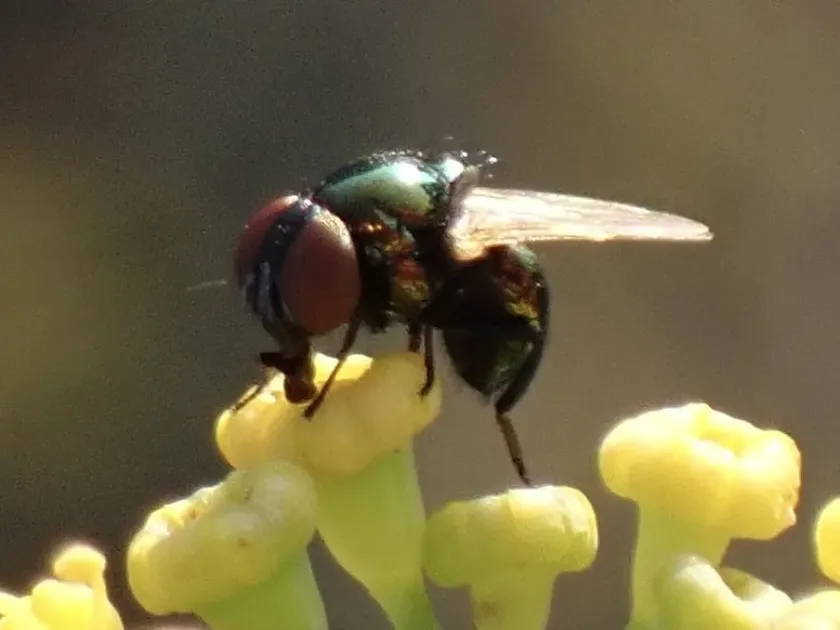
The emerald fruit fly, scientifically known as Lamprolonchaea smaragdi, is a small dipteran insect belonging to the family Lonchaeidae. As the name suggests, it is characterized by a striking metallic green or bluish-green sheen on its body.
The adults are relatively small, usually measuring 4 to 6 millimeters in length. They possess large, reddish-brown compound eyes and transparent wings that have a distinct iridescent reflection under direct sunlight.
Females of the species are equipped with a sharp, elongated ovipositor, which they use to pierce the skin of fruits and vegetables. This anatomical feature makes them highly specialized pests for soft-skinned crops.
The larvae are typically maggot-like, cylindrical, and lack legs. They are white to pale yellow in color and possess a specialized mouth structure adapted for rasping plant tissues within the fruit.
Taxonomically, L. smaragdi is classified within the order Diptera, family Lonchaeidae. While many species in this family are saprophagous (feeding on decaying matter), L. smaragdi is known for its ability to infest living plant tissues.
What it damages
This pest primarily affects a wide range of vegetable crops, with a particular preference for tomatoes, peppers, and various cucurbits. Damage occurs when larvae consume the internal flesh of the fruit.
The feeding activity of the larvae destroys the structural integrity of the fruit. By creating tunnels, they allow bacteria and fungal spores to penetrate deep into the pulp, resulting in rapid decay and fermentation.
Visible symptoms on the fruit include small, darkened puncture marks where eggs were deposited. As the larvae feed, the affected area becomes soft, sunken, and often discolored, rendering the crop unmarketable.
Economic loss is often significant, especially in greenhouse conditions where the fly can complete multiple generations quickly. In severe infestations, the fruit may fall from the plant prematurely.
The fly acts as a vector for secondary infections, meaning even a small number of larvae can lead to the total spoilage of a fruit, making it a serious threat to yield quality and quantity.
When it appears
The emerald fruit fly is most active during warm months, particularly when temperatures range between 20°C and 30°C. In controlled environments like glasshouses, the pest can remain active year-round.
Their population peaks generally coincide with the maturation stages of host plants. The presence of susceptible, ripening fruits acts as a beacon, drawing flies to the area for oviposition.
During the day, especially in the morning and late afternoon, the adults are most active on the leaves and surfaces of fruits, seeking suitable locations to lay their eggs.
As temperatures drop in late autumn, the flies enter a state of diapause or move to protected microhabitats. Soil and crop residue serve as the primary overwintering sites for pupae.
Effective monitoring should begin early in the season, particularly during the flowering stage, to track the first emergence of adults and apply preventive measures before significant damage occurs.
Signs of infestation
The earliest signs of an infestation are minute, pinpoint holes on the surface of the fruit. These punctures are often barely visible and can be easily overlooked during initial inspections.
As the larvae develop, the fruit starts to exhibit soft, dark spots. These areas are often associated with the breakdown of the skin, through which liquid may ooze if the rot is advanced.
Dissecting a suspect fruit often reveals internal tunneling and the presence of white maggots. The smell of the fruit is a strong indicator; fermented or sour odors suggest that internal tissue decay is occurring.
The presence of adults hovering around fruit clusters or sitting on foliage is a clear indication that a reproductive cycle has begun and immediate action is required to save the crop.
Premature fruit drop, even when the fruit looks relatively healthy from the outside, should prompt the grower to check for internal feeding damage caused by the larvae.
Control measures
Cultural management is the most effective approach. Growers must regularly monitor crops and remove any damaged or fallen fruit, as these harbor the larvae that will eventually pupate in the soil.
Sanitation practices such as removing crop debris after the harvest are essential to reduce the overwintering population. Soil cultivation can also disrupt the pupal stage of the fly.
In terms of chemical control, targeted insecticide applications are most effective when directed at adults before they can deposit eggs. Rotation of chemical classes is recommended to prevent resistance.
Physical barriers, such as fine-mesh screening in greenhouses, are highly effective in excluding adult flies from the crop. Yellow sticky traps help reduce the adult population and serve as an early warning system.
- Daily inspection and disposal of infested fruit
- Use of yellow adhesive traps for monitoring
- Thorough cleanup of post-harvest debris
- Crop rotation to break the life cycle
- Physical exclusion using fine nets
Taxonomy
- Latin name
- Lamprolonchaea smaragdi
- Order
- Diptera (flies)
- Family
- Lonchaeidae
- EPPO code
- LONHAU
Discussion
No discussions yet — be the first.