
Kilifia americana
Kilifia americana
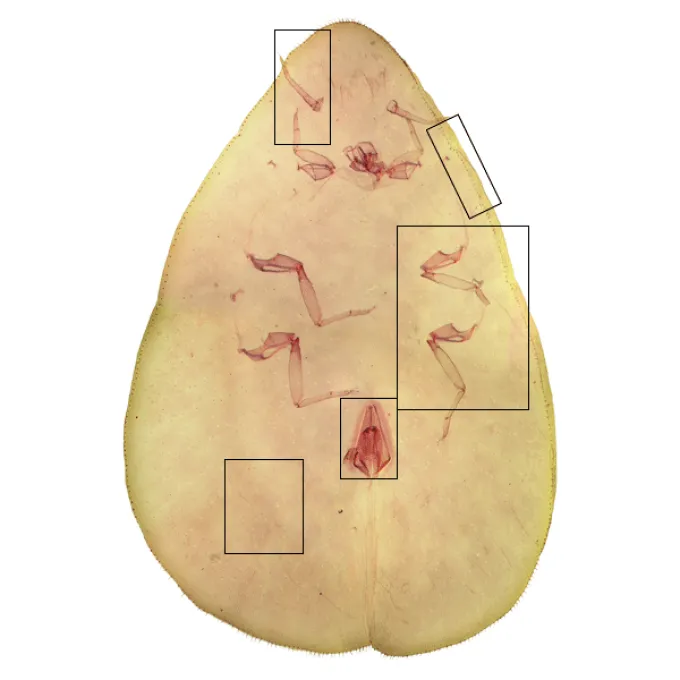
Description
How to identify
Kilifia americana is a species of soft scale insect belonging to the family Coccidae. It is a significant pest known for infesting various ornamental and agricultural plant species.
Adult females are characterized by an oval, slightly convex, and brownish-colored shell. This hardened waxy shield provides protection against environmental stressors and many traditional pesticides.
The insect undergoes a developmental cycle consisting of eggs, mobile crawlers, and sedentary adults. The crawler stage is the primary dispersal phase where the insect actively searches for a suitable site to feed.
Identification is often performed by inspecting the morphological characteristics of the scale covering, as they can mimic other species within the Coccidae family.
Due to its preference for warm climates, Kilifia americana is predominantly found in greenhouses, botanical gardens, and indoor plant collections in temperate regions.
What it damages
This pest is a polyphagous insect, meaning it can feed on a wide range of host plants. It is particularly problematic for indoor and exotic plant species.
Common hosts include citrus trees, gardenias, coffee plants, ficus, and various palms. The insect feeds by inserting its proboscis into the plant tissue and sucking out the sap.
Infestations are typically concentrated on the undersides of leaves, particularly along the midribs and secondary veins, where plant sap is most accessible.
Heavy infestations can lead to the spreading of the pest to stems and twigs, causing significant stress to the host plant and reducing its overall vigor.
Continuous feeding causes nutrient depletion, leading to chlorosis, stunted growth, and in severe cases, the eventual decline of the plant.
Signs of infestation
The most noticeable sign of an infestation is the presence of honeydew, a sticky substance excreted by the insects that coats the leaves.
This sticky residue creates a favorable environment for sooty mold, a black fungal growth that covers the leaves and inhibits photosynthesis by blocking sunlight.
Gardeners will observe small, brown, raised scale-like structures on leaves. Removing these structures typically reveals a pale, damaged spot where the insect was attached.
As the infestation progresses, leaves will yellow, wilt, and eventually drop off, leading to sparse foliage and visible decline in plant health.
- Presence of sticky honeydew on foliage
- Growth of black sooty mold
- Brown, scale-like bumps on leaf undersides
- Yellowing and premature leaf fall
- Reduced plant vigor and stunted growth
Control measures
Effective management of Kilifia americana requires an integrated pest management (IPM) approach that combines cultural, mechanical, and chemical tactics.
Regular monitoring of plants, especially new additions to a collection, is crucial to catch infestations early before they become difficult to control.
Chemical control is most effective during the crawler stage. Systemic insecticides are recommended, as they are absorbed by the plant and kill the insects as they feed.
For smaller plants, physical removal using a soft brush dipped in a soap solution or alcohol can be an effective way to reduce the population without heavy chemical use.
Biological control agents, such as specific parasitic wasps, can be introduced in controlled greenhouse environments to suppress scale insect populations naturally.
Taxonomy
- Latin name
- Kilifia americana
- Order
- Hemiptera (bugs, aphids, leafhoppers)
- Family
- Coccidae
- EPPO code
- KILIAM
Discussion
No discussions yet — be the first.