
Isophrictis striatella
Isophrictis striatella
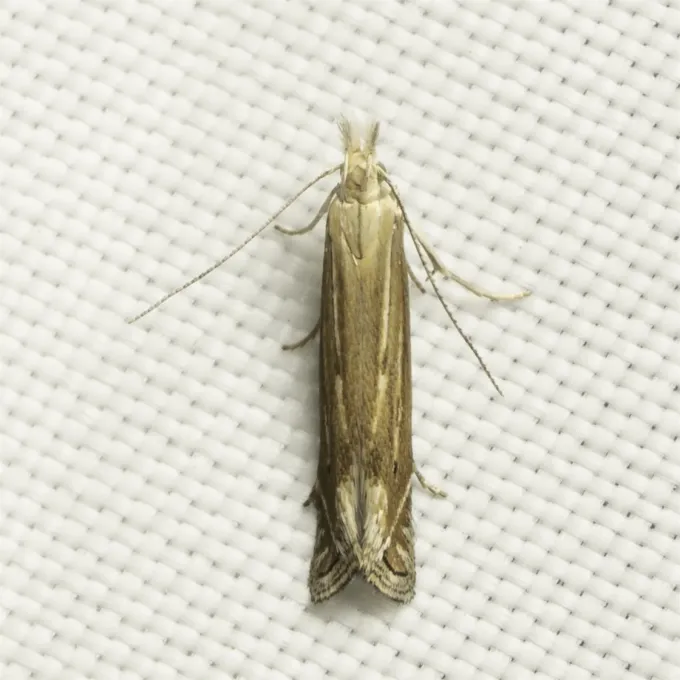
Description
How to identify
Isophrictis striatella is a species of moth belonging to the Gelechiidae family. It is recognized as a specific agricultural pest that targets members of the Asteraceae family, particularly sunflowers.
Adult moths are small with slender wings that feature distinct light markings and a characteristic notch on the outer edge, typical of many gelechiid species. Their coloration provides excellent camouflage against plant parts.
The larvae are typically the most destructive stage. They exhibit a reddish or brown coloration as they mature and possess chewing mouthparts capable of penetrating the protective layers of plant tissues.
Pupation usually occurs within the flower heads or in the upper soil layers. The pupae are dark and well-protected, allowing the insect to survive in various field conditions.
Identification is best achieved through careful inspection of sunflower heads during the late stages of growth or by using pheromone traps to detect the presence of adults in the field.
What it damages
The primary damage is caused by the larvae feeding on the developing seeds of sunflower heads. This activity leads to significant yield losses in both quantity and quality.
By boring into the sunflower heads, larvae create entry points that make the plant susceptible to various fungal pathogens and rots, further degrading the harvested produce.
Large infestations can lead to empty seed husks within the flower head, significantly reducing the oil content and weight of the harvestable crop.
Visible trails and feeding marks inside the head indicate active colonization. These damages impair the overall physiological development of the plant during the critical grain-filling period.
The economic impact of this pest can be severe if not monitored correctly, especially during dry years when plants are already under stress and lack the vigor to resist secondary infections.
When it appears
Adult moths typically emerge in mid-summer, synchronizing their activity with the budding and flowering phases of sunflowers, which are optimal for oviposition.
The life cycle encompasses several stages: egg, larva, pupa, and adult. The duration of each stage is highly dependent on ambient temperature and overall humidity.
Larval activity peaks during the seed-filling stage. This is the period when larvae feed most aggressively, consuming internal tissues and developing seeds within the heads.
The pest spends the winter in the pupal stage, typically residing in the soil or within old plant debris left after harvest, which acts as a primary reservoir for the next season.
Depending on the climatic zone, the insect may complete one or two generations per year, with warmer regions seeing a more prolonged period of infestation pressure.
Signs of infestation
One of the earliest indicators of an infestation is the presence of larval frass (excrement) on the surface of the flower heads or lodged between developing seeds.
As larvae feed, they often create small patches of webbing, which bind parts of the sunflower head together and protect them while they consume the seeds.
Tissue discoloration and premature darkening of parts of the sunflower head often point to the areas where larvae have been actively boring and feeding.
Deformation of the flower head is a common sign of structural damage caused by larval tunnels, which disrupt the normal growth pattern of the inflorescence.
Premature seed shedding or an uneven appearance of the sunflower head during harvest time are classic signs that indicate a historical presence of the pest during the season.
Control measures
Cultural control practices, such as deep autumn plowing, are highly effective as they bury pupae, preventing successful emergence and reducing the local population for the next season.
Maintaining a proper crop rotation plan is essential to break the life cycle of the pest, ensuring that sunflowers are not grown in the same field in successive years.
Chemical intervention should be strategically timed to target the larvae before they bore into the flower head, as once inside, they become significantly harder to control.
Biological control agents, including parasitic wasps or entomopathogenic fungi, offer sustainable options to reduce larval numbers while preserving beneficial insect populations in the field.
- Regular monitoring using pheromone traps to identify peak moth flight.
- Eliminating wild host plants like Asteraceae weeds around field edges.
- Selecting resistant sunflower hybrids with tight head structures.
- Applying insecticides during the early stages of larval development if thresholds are exceeded.
Taxonomy
- Latin name
- Isophrictis striatella
- Order
- Lepidoptera (butterflies)
- Family
- Gelechiidae
- EPPO code
- ISPHST
Discussion
No discussions yet — be the first.