
Isophrictis
Isophrictis
Description
How to identify
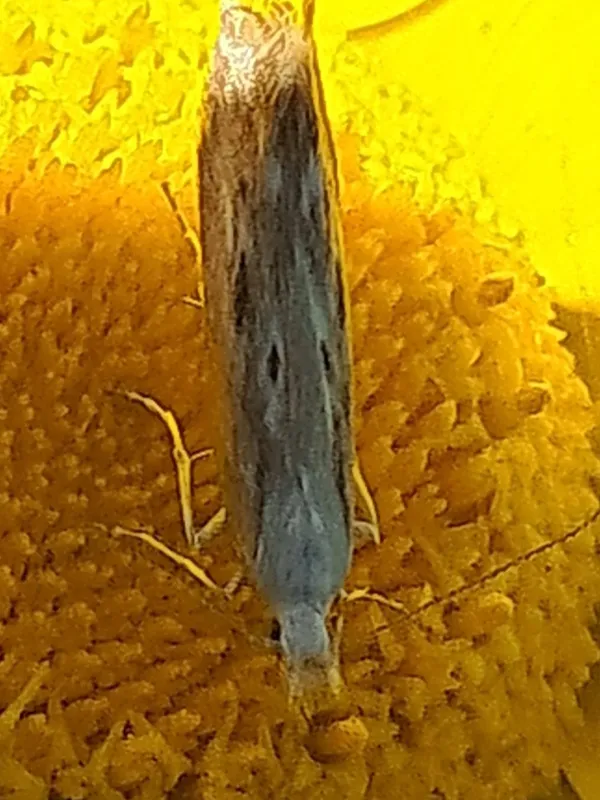
Isophrictis is a genus of moths belonging to the family Gelechiidae (twirler moths). These small insects are characterized by their narrow wings, often adorned with a distinct fringe along the margins.
The adults typically exhibit a grayish or brownish coloration, which provides effective camouflage against plant surfaces during their diurnal resting periods.
The larvae, or caterpillars, possess an elongated body, usually light-colored or pinkish, with a well-defined dark head capsule. They are known for their active movement within plant tissues.
The insect undergoes a complete metamorphosis, progressing through four distinct life stages: egg, larva, pupa, and adult. The larval stage is responsible for the agricultural damage observed in crops.
Identification of the species in the field can be difficult due to their secretive nature, so monitoring usually focuses on the specific damage patterns left on the host plants.
What it damages
The primary host plants for Isophrictis belong to the Asteraceae family. Among these, the sunflower is the most economically significant crop susceptible to infestation.
Larvae primarily feed on the generative organs of the plant. They bore into the sunflower heads, where they consume flowers and developing seeds, directly reducing potential yields.
In addition to cultivated sunflowers, various wild Asteraceae species act as alternative hosts, supporting pest populations in the vicinity of agricultural fields.
Significant infestations can occur during favorable climatic seasons, leading to substantial economic losses for growers if management measures are not implemented.
The physical damage caused by larvae facilitates the entry of secondary pathogens, including various fungal infections, which further degrade the quality of the harvested seed.
When it appears
Adult flight typically begins in late spring or early summer, coinciding with the budding and flowering stages of the sunflower crop.
Females deposit eggs on the surface of floral parts. The incubation period is relatively short and is highly dependent on ambient temperatures.
Larval emergence often aligns with the onset of flowering. Upon hatching, the larvae quickly bore into the floral head, where they are protected from external predators and pesticides.
Pupation generally occurs within the plant debris or inside the infested flower head, providing a safe environment for the insect to transition into its adult form.
The number of generations per season can vary based on regional climate; in warmer regions, two generations per year are possible.
Signs of infestation
One of the earliest indicators of infestation is the presence of larval frass, appearing as fine dark dust on the surface of the sunflower head.
Inconsistent or deformed development of floral parts within the head is another visible sign, often indicating internal feeding by the larvae.
Entry points into the flower head often show localized darkening, which can be distinguished from common plant diseases upon close inspection of the interior.
During seed development, observers may find hollowed-out seeds or galleries within the head, which are diagnostic indicators of Isophrictis larval activity.
Severely infested plants may exhibit signs of premature wilting or desiccation, which negatively impacts the overall seed filling process and final grain weight.
Control measures
Deep autumn plowing is a critical cultural control practice, as it effectively destroys pupae overwintering in the soil and surface plant residues.
Effective management requires the removal of wild Asteraceae weeds from field margins and surrounding areas to eliminate alternative breeding sites.
Adhering to a strict crop rotation schedule—typically a 3 to 4-year break for sunflowers—is essential to break the insect's life cycle.
Chemical control involving systemic or contact insecticides may be applied if population thresholds are exceeded, with timing carefully coordinated with the flowering stage.
Pheromone traps are highly recommended for monitoring adult flight patterns, allowing farmers to apply protective measures only when necessary and at the most effective time.
Taxonomy
- Latin name
- Isophrictis
- Order
- Lepidoptera (butterflies)
- Family
- Gelechiidae
- EPPO code
- ISPHSP
Discussion
No discussions yet — be the first.