
Hyposoter fugitivus
Hyposoter fugitivus
Description
How to identify
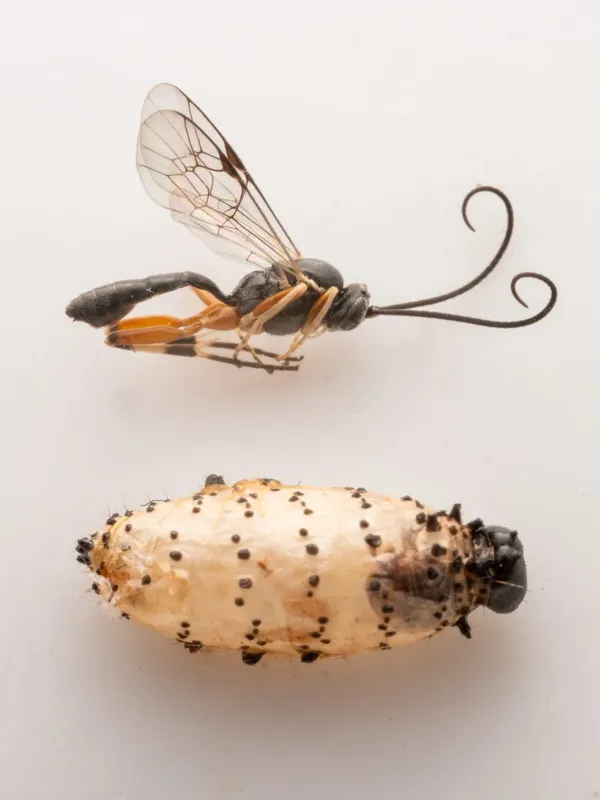
Hyposoter fugitivus is a species of parasitic wasp belonging to the family Ichneumonidae. These wasps are vital natural enemies of various lepidopteran larvae, acting as essential regulators in many ecosystems.
The adult form is characterized by a slender, agile body and well-developed wings, allowing for rapid and effective searching for host caterpillars within vegetation.
The larval stage is internal, meaning the wasp develops inside the body of the host, eventually leading to the host's death before it can reach the pupal stage.
This species is well-adapted to diverse habitats, ranging from wooded areas to agricultural fields where its host caterpillars are frequently found.
Its role as a biological agent makes it an important subject for study in integrated pest management (IPM) programs worldwide.
What it damages
As a natural predator, Hyposoter fugitivus does not cause damage to plants. On the contrary, it provides significant benefits by reducing the population of harmful foliage-feeding caterpillars.
By parasitizing major pests such as various moth larvae, it minimizes the total leaf area loss that would otherwise be caused by unchecked caterpillar grazing.
Their presence helps maintain a balance, preventing pest outbreaks from reaching economic injury levels in orchards and field crops.
There are no known negative effects of this species on plant health; they are purely beneficial organisms within an integrated protection strategy.
The wasp's activity complements other natural enemies, creating a more robust and self-sustaining protection system against agricultural pests.
When it appears
The activity of these wasps typically peaks in late spring and summer, coinciding with the active larval stages of their caterpillar hosts.
They overwinter as larvae or pupae, often protected within the mummified remains of the host or in sheltered locations like leaf litter or tree bark crevices.
As temperatures rise in the spring, the adult wasps emerge to begin their search for suitable hosts for oviposition, effectively timing their reproduction with host availability.
The population dynamics are closely linked to the seasonal abundance of lepidopteran larvae, ensuring the parasite is present exactly when needed for pest regulation.
Multiple generations may occur in a single season, provided the host population is sufficient to support the wasp's life cycle.
Signs of infestation
The most visible sign of Hyposoter fugitivus activity is the presence of dying or dead caterpillars on leaves, which may appear shriveled or mummified.
Closer inspection of the host remains often reveals a small exit hole, through which the adult wasp emerged after completing its development inside the caterpillar.
Although adults are rarely seen due to their size and speed, a reduction in the rate of defoliation in an area often indicates the successful impact of natural predators.
Field scouting for the specific mummified remains of caterpillars is a standard way for entomologists to confirm the wasp's presence.
Sticky traps or sweep-net sampling in crops can also indicate the abundance of ichneumonid species in the local environment.
Control measures
Control measures for this wasp should focus on conservation rather than eradication, as they are essential allies in crop production.
Integrated pest management requires minimizing the use of broad-spectrum insecticides, which often kill parasitic wasps more easily than the target pests.
Planting nectar-rich flower strips around crop fields provides a necessary food source for adult wasps, increasing their longevity and reproductive success.
Using selective biopesticides rather than harsh chemicals allows these beneficial wasps to continue their work of controlling pest populations.
- Avoid unnecessary insecticide sprays.
- Establish floral borders to support natural enemies.
- Use selective bio-control agents to preserve wasp populations.
Taxonomy
- Latin name
- Hyposoter fugitivus
- Order
- Hymenoptera
- Family
- Ichneumonidae
- EPPO code
- HPOSFF
Discussion
No discussions yet — be the first.