
Agrypon
Agrypon
Description
How to identify
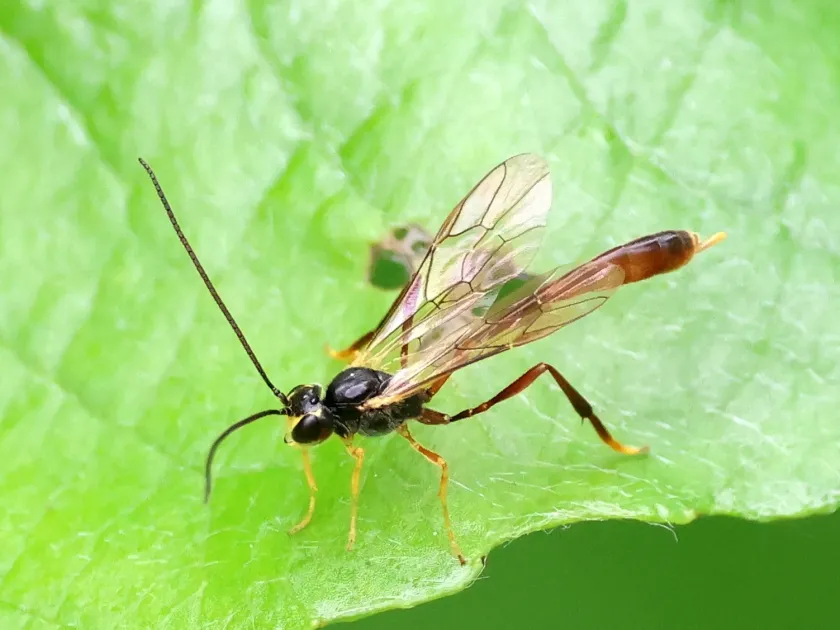
Agrypon is a genus of parasitic wasps belonging to the family Ichneumonidae. These insects are known for their slim, elongated bodies and efficient host-seeking capabilities, playing a critical role in natural insect regulation.
Adult Agrypon wasps typically display dark or yellowish colorations, blending into their environment. They possess specialized ovipositors designed for laying eggs into the larvae of various lepidopteran species.
Systematically, they fall within the order Hymenoptera. Their identification usually requires advanced entomological expertise, focusing on wing venation patterns and specific morphological structures of the thorax and head.
These wasps are highly specialized predators that contribute significantly to the stability of ecosystems. They operate as natural controllers of caterpillar populations, ensuring that pest outbreaks are kept in check.
Understanding the presence of this genus in an agro-ecosystem is vital for farmers. It indicates a balanced environment where natural enemies are actively managing pest numbers without human intervention.
What it damages
Agrypon is not a crop pest; rather, it is a highly beneficial insect. Its larvae act as parasitoids, consuming the internal tissues of host larvae (primarily caterpillars) and ultimately killing them, which protects agricultural and forest crops.
Because they target specific insect pests, Agrypon wasps act as natural biocontrol agents. Their activity helps suppress populations of leaf-rollers and loopers, which are notorious for causing significant yield losses in orchards and fields.
By effectively parasitizing pest larvae, these wasps reduce the need for synthetic chemical insecticides. This promotes a healthier farming environment and reduces production costs associated with chemical management.
Adult Agrypon wasps feed on nectar, providing incidental pollination services. They do not feed on plant tissue, ensuring that their presence remains entirely neutral or beneficial to the growth and development of crops.
Their ecological value lies in their role as a bridge between pest management and environmental sustainability. Encouraging their presence is a key strategy in integrated pest management programs.
When it appears
The seasonal activity of Agrypon is strictly synchronized with the life cycle of their hosts. They typically emerge during the spring and summer months, coinciding with the peak activity of caterpillar populations.
They overwinter as larvae within the host cocoon or in protected soil niches. As temperatures rise in spring, they complete their development, pupate, and emerge as adults to begin searching for new hosts.
Multiple generations may occur depending on the regional climate and the duration of host availability. Warm, stable climates allow for more continuous activity, enhancing the natural suppression of pests.
Availability of floral resources is essential for their seasonal survival. Adult wasps require carbohydrates, which are obtained from diverse nectar-producing plants found in or near crop fields.
Environmental conditions such as extreme heat or heavy rain can disrupt their life cycle synchronization. Healthy ecosystems with hedgerows and wildflower borders offer better resilience against these fluctuations.
Signs of infestation
Detecting Agrypon presence involves observing pest larvae in the field. Parasitized larvae often show signs of lethargy, cessation of feeding, and abnormal physical development.
One clear sign of their presence is the appearance of empty, distinctive wasp cocoons left on leaves or stems after the adult emerges. These artifacts confirm successful parasitism.
Entomological monitoring using traps, such as malaise or light traps, can effectively capture adult Agrypon wasps. High trap counts indicate a robust population that is likely providing significant pest control.
Laboratory dissection of collected larvae often reveals the presence of immature parasitoids inside the host body. This is a definitive method for assessing the actual rate of biological control on the farm.
A noticeable decline in pest damage despite high initial egg counts often suggests that parasitoids like Agrypon are successfully mediating the infestation, justifying the reduction of pesticide applications.
Control measures
In the context of Agrypon, control measures are actually management strategies to increase their population. Farmers should treat these wasps as partners in crop production.
Avoiding the use of broad-spectrum insecticides is crucial. Such chemicals are indiscriminate and often kill beneficial parasitoids more easily than the target pests, leading to secondary pest outbreaks.
The creation of ecological focus areas, such as wildflower strips or grass margins, provides essential habitat and nectar sources for the adults. These areas act as reservoirs for Agrypon populations.
Integrated Pest Management (IPM) practices should prioritize the use of biorational pesticides that have minimal impact on Hymenoptera, allowing natural enemies to maintain their ecological functions.
- Limit prophylactic chemical sprayings.
- Maintain floral corridors throughout the field boundaries.
- Conduct regular monitoring to assess parasitism rates.
- Adopt sustainable farming practices that protect overwintering sites.
Taxonomy
- Latin name
- Agrypon
- Order
- Hymenoptera
- Family
- Ichneumonidae
- EPPO code
- AGRPSP
Discussion
No discussions yet — be the first.