
Agrothereutes
Agrothereutes
Description
How to identify
Agrothereutes is a genus of parasitic wasps belonging to the family Ichneumonidae within the order Hymenoptera. These insects are essential components of the insect communities found in various agricultural settings.
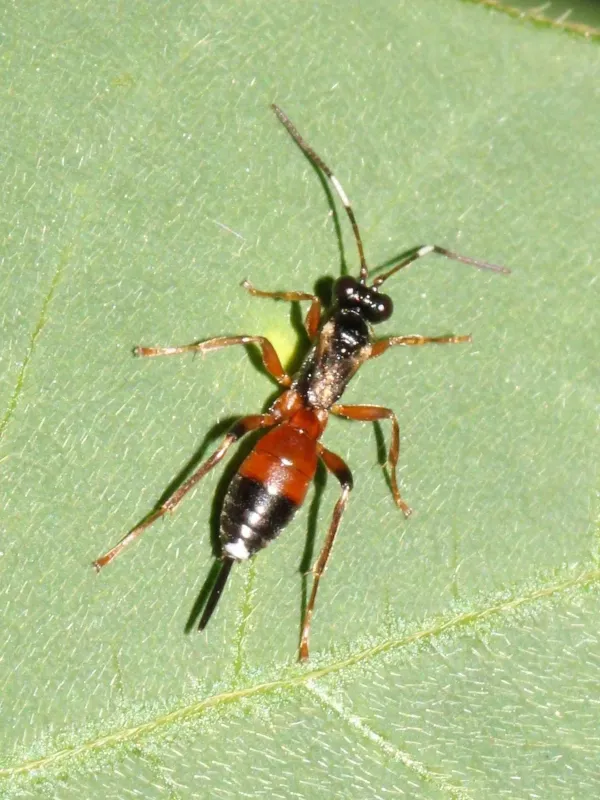
Adult wasps are characterized by a slender body, a mobile head with long antennae, and a distinct wing venation pattern typical of their family. They are relatively small, often blending in with their surroundings.
Identification at the species level is complex and usually requires an examination of morphological traits, such as the shape of the ovipositor and specific chitinous structures, under a microscope.
They are primarily known for their parasitoid behavior, where females search for the cocoons or pupae of various moth species to deposit their eggs.
The lifecycle of these insects is finely tuned to the phenology of their hosts, allowing them to remain active and efficient throughout the growing season.
What it damages
While often acting as beneficial parasitoids, Agrothereutes can be considered an indirect pest when they parasitize beneficial insects that serve as natural enemies of primary crop pests.
By suppressing the populations of natural predators, they indirectly lead to outbreaks of caterpillars and other agricultural pests that damage crop foliage and fruits.
Their presence is particularly noticeable in fields where the ecological balance between pests and their natural enemies has been disrupted by chemical interventions.
The damage is not direct herbivory, but rather the ecological destabilization that necessitates increased pesticide application to manage secondary pest outbreaks.
Crops most affected include various grain, fruit, and vegetable systems where these parasitoids find an abundance of host species for their reproduction.
When it appears
The activity period for Agrothereutes generally begins in late spring, following the emergence of adults from their overwintering states in response to rising temperatures.
Summer months represent the peak of their activity, characterized by intensive host-seeking behavior and the production of multiple overlapping generations.
As autumn approaches, adult activity levels gradually decrease as they begin to seek protected sites for hibernation, such as debris, soil crevices, or bark.
Climatic conditions such as moderate temperature and high humidity are highly favorable for their survival and reproductive success during the mid-season.
Monitoring the flight periods of these wasps can help agronomists understand the population dynamics within their specific geographic regions.
Control measures
Integrated Pest Management (IPM) is the most effective approach, focusing on maintaining biodiversity to support natural biological control mechanisms.
Minimizing the use of broad-spectrum insecticides is crucial to ensure that beneficial insect populations are preserved and remain active in the field.
Cultural practices, including proper field sanitation and the removal of crop residues, help to reduce the available overwintering sites for the population.
The use of selective biological control agents and pheromone monitoring systems allows for precise intervention only when the population exceeds economic thresholds.
Promoting a resilient agroecosystem through crop rotation and habitat management provides a long-term solution to maintaining stable and healthy crop production.
Taxonomy
- Latin name
- Agrothereutes
- Order
- Hymenoptera
- Family
- Ichneumonidae
- EPPO code
- AGRHSP
Discussion
No discussions yet — be the first.