
Agrothereutes hopei
Agrothereutes hopei
Description
How to identify
Agrothereutes hopei is a species of parasitic wasp belonging to the family Ichneumonidae (order Hymenoptera). These insects are known for their specialized life strategy as parasitoids.
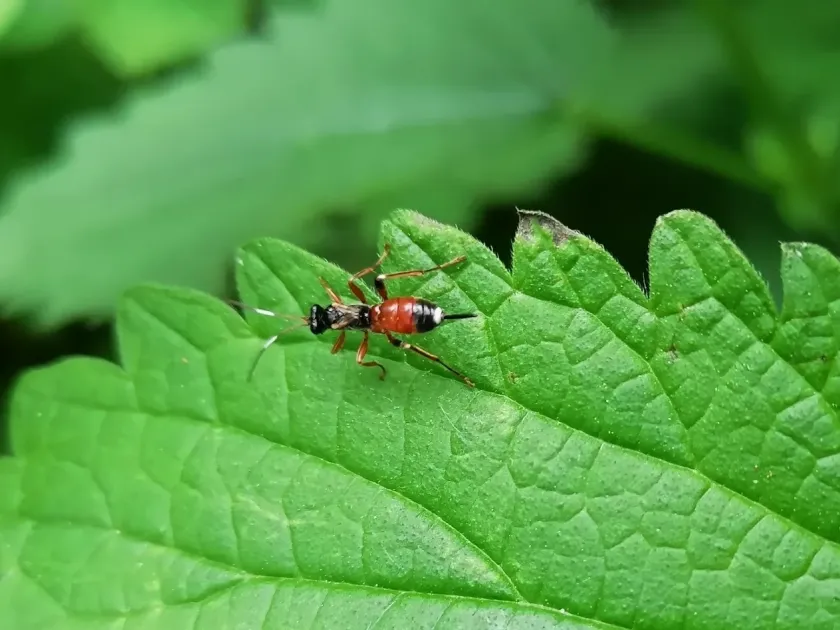
The adults are characterized by a slender body, long filiform antennae, and transparent wings with specific venation patterns typical for ichneumonids.
Females possess a specialized ovipositor designed to penetrate the cocoons of host insects, allowing them to deposit eggs directly into the protective casing.
Their coloration is generally dark, often featuring reddish or brownish markings on the abdomen, which provides effective camouflage in grassy and soil-based habitats.
Correct identification often requires microscopic examination of structural features, particularly the wing venation and the shape of the propodeum.
What it damages
As a parasitoid, Agrothereutes hopei does not feed on plant tissues and is not a direct pest of agricultural crops. Its economic importance is linked to its role as a natural regulator.
It targets the pupae of various Lepidoptera species, many of which are significant agricultural pests, thus providing a form of natural biocontrol.
However, it may occasionally parasitize other beneficial insects, which requires balanced management if biological control programs are being implemented in the field.
The insect does not cause structural damage to foliage, stems, or roots, meaning it does not contribute to crop yield losses in the traditional sense.
Agricultural professionals often view this species as a part of the beneficial insect complex that contributes to the stability of the agroecosystem.
When it appears
The activity of adult Agrothereutes hopei typically spans from late spring through early autumn, coinciding with the availability of host stages.
Overwintering occurs as a larva or pupa within the host cocoon, protected deep within the soil or in leaf litter, allowing the species to survive low winter temperatures.
The emergence of the first generation of adults often aligns with the seasonal abundance of susceptible host caterpillars and pupae.
Multiple generations can occur throughout the growing season, with the total number of generations strongly dependent on local climate conditions and host availability.
Environmental factors such as humidity and ambient temperature are critical for the survival of the species during its development stages and adult activity periods.
Signs of infestation
Detecting the presence of this wasp in a field is challenging because it does not create visible damage to the crop's vegetative organs.
The most reliable sign of its activity is the discovery of parasitized cocoons during field sampling, which may contain the wasp's larval or pupal stages.
Monitoring efforts often rely on the use of specialized traps to track the population dynamics of the adults throughout the growing season.
Examining cocoons collected from soil or debris can reveal typical exit holes made by emerging adult wasps, confirming their successful reproduction on the site.
Entomological surveys of soil and plant debris are standard methods for assessing the density of these parasitoids within an agricultural landscape.
Control measures
In most scenarios, specific control measures against Agrothereutes hopei are unnecessary because it serves as a natural enemy of agricultural pests.
When management is required, practitioners prioritize selective pesticides that minimize harm to beneficial parasitoids and overall biodiversity.
Cultural practices like deep plowing can disrupt the life cycle of these wasps by destroying their overwintering cocoons in the soil.
Integrated Pest Management (IPM) strategies emphasize preserving natural habitats around fields to maintain stable populations of beneficial insects.
Pesticide applications should be timed to avoid peak periods of wasp activity, ensuring that these natural regulators can continue to provide their services.
Taxonomy
- Latin name
- Agrothereutes hopei
- Order
- Hymenoptera
- Family
- Ichneumonidae
- EPPO code
- AGRHHO
Discussion
No discussions yet — be the first.