
Mozambican harvester termite
Hodotermes mossambicus
Description
How to identify
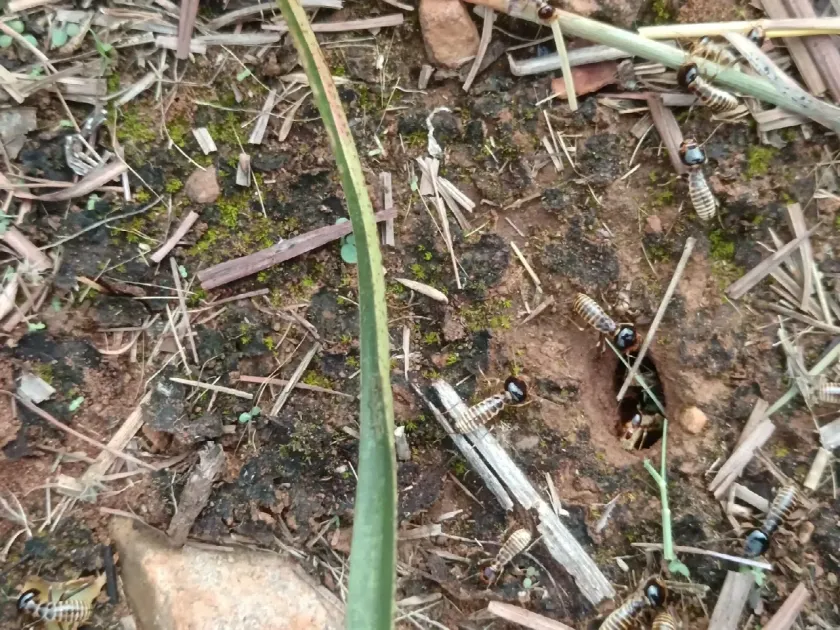
The Mozambican harvester termite (Hodotermes mossambicus) is a member of the Hodotermitidae family. Unlike wood-eating termites, this species forages on the surface for dry or fresh plant material.
The colonies are complex, with specific castes for foraging, defense, and reproduction. Workers are brownish, agile insects capable of navigating long distances through underground tunnels.
Soldiers are equipped with large, strong mandibles specifically adapted for protection against ants and other predators that may invade their foraging paths.
This termite builds deep subterranean nesting systems that allow the colony to survive in the arid conditions of southern and eastern Africa.
Reproductive winged termites leave the nest after rainfall events to establish new colonies, which often leads to rapid re-infestation of agricultural areas.
What it damages
This species is highly destructive to grasslands and rangelands, where it competes directly with livestock for forage by stripping the ground of vegetation.
Crops such as maize, wheat, and sorghum are frequently attacked during the early stages of growth, resulting in significant yield losses due to seedling destruction.
The termites also infest hay storage, damaging the quality and quantity of fodder intended for winter feeding of livestock.
By removing vegetation cover, they exacerbate soil erosion and promote the degradation of agricultural land in semi-arid environments.
The cumulative effect of a mature colony can render entire fields unproductive within a single growing season if not properly managed.
Signs of infestation
Presence of the species is indicated by small, conical soil mounds surrounding subterranean tunnel entrances in the field.
Visible trails on the soil surface, where grass and debris are cleared, are characteristic signs of foraging activity during the cooler parts of the day.
Sudden patches of "cleared" or "mown" vegetation within crop rows are clear evidence of termite foraging activity.
Finding plant stalks pulled down into small holes in the ground confirms the activity of a harvester termite colony.
During twilight hours, observers can witness massive numbers of worker termites carrying plant fragments back to their nesting sites.
Control measures
The most effective strategy for managing this pest is the deployment of slow-acting toxic baits, which workers bring back to the nest to eliminate the queen and colony members.
Mechanical disturbance of the soil, such as deep plowing, can disrupt foraging galleries and force colonies to migrate to undisturbed areas.
Biological control agents, including specific entomopathogenic fungi, are being researched and utilized as an environmentally friendly alternative to chemical pesticides.
Maintaining strong and healthy vegetation cover on rangelands can serve as a deterrent, as termites prefer degraded areas with less competing forage.
- Application of specialized termiticides targeted at foraging trails.
- Seasonal monitoring during the start of the rainy season.
- Use of repellent barriers around high-value crop areas.
Taxonomy
- Latin name
- Hodotermes mossambicus
- Family
- Hodotermitidae
- EPPO code
- HODOMO
Discussion
No discussions yet — be the first.