
Desert termite
Anacanthotermes
Description
How to identify
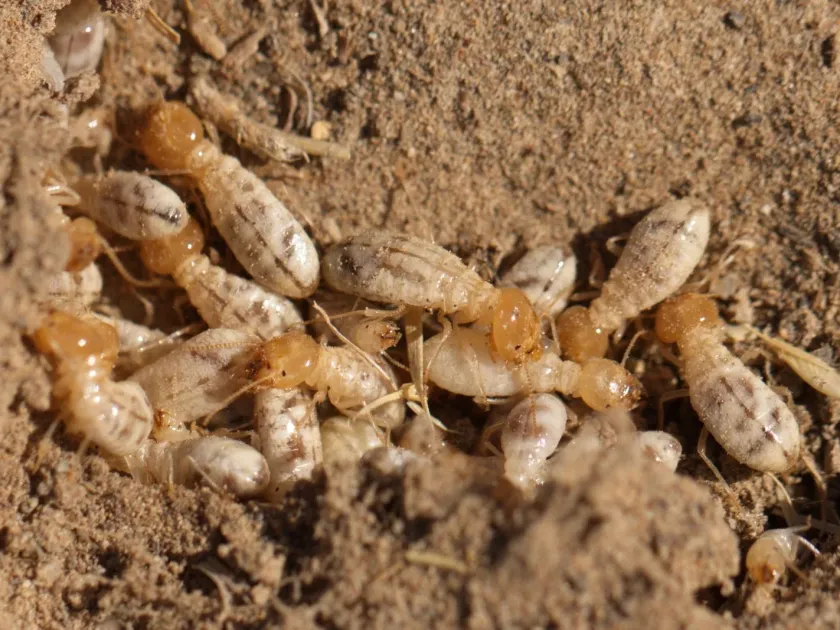
The desert termite (genus Anacanthotermes) belongs to the order Isoptera and the family Hodotermitidae. These insects are known for their subterranean lifestyle, constructing vast tunnel networks.
The colony structure is highly social, divided into castes such as workers, soldiers, and reproductive individuals, each performing distinct duties for the survival of the nest.
They possess an elongated, flattened body which helps them move efficiently through narrow soil passages. Their color ranges from light yellow to deep brown.
Soldiers are distinguished by their large, well-developed mandibles, which they use to defend the colony against intruders and predators.
These termites are highly adaptive, capable of surviving in arid environments by moving deep into the soil to access moisture and stable temperatures.
What it damages
Desert termites are considered significant agricultural pests, causing damage to a wide variety of crops, including cereals, cotton, fruit trees, and vineyards.
They primarily feed on the root systems of plants, leading to nutrient uptake failure, wilting, and eventually the death of the crop.
In perennial plants, they often bore into the main trunk or roots, hollowing out the tissues and making the plant vulnerable to secondary infections or structural collapse.
During dry seasons, they may also destroy stored agricultural products like hay or dry grass, posing a threat to livestock feed stocks.
Because the damage occurs mostly underground, it often goes undetected until the affected plants are beyond recovery.
When it appears
The activity of desert termites is strictly regulated by soil temperature and moisture content, which dictate their feeding cycles throughout the year.
They are most active during warmer months, when metabolic rates are at their peak and environmental conditions favor colony growth.
During periods of extreme heat or winter cold, colonies retreat into deeper, more stable soil strata to avoid temperature fluctuations.
Swarming events, where winged reproductives emerge, usually occur following rain, marking the phase of colony expansion and nest establishment.
In irrigated farming systems, termites can maintain year-round activity due to the consistent moisture provided by human intervention.
Signs of infestation
The most visible sign of an infestation is the presence of earth-colored shelter tubes or tunnels on the surface of the soil or on plant stems.
Widespread wilting of crops, despite regular irrigation, is a strong indicator that the root system has been compromised by subterranean insects.
Excavated tunnels inside the root collar or stem base, often filled with fecal pellets and soil particles, confirm the presence of termites.
The sudden appearance of swarming winged termites indicates that a mature colony is located within the immediate vicinity of the field.
Hollowed-out wood residues or dry stalks that collapse under light pressure are clear evidence of advanced termite damage.
Control measures
Managing desert termite populations requires a multi-faceted approach, combining mechanical destruction of nests with targeted chemical interventions.
Deep plowing or mechanical soil disturbance is highly effective at destroying surface tunnels and destabilizing the structural integrity of the colony.
- Application of soil-incorporated insecticides to provide a barrier for crop roots.
- Use of slow-acting bait stations that allow workers to transfer toxins back to the queen and nest mates.
- Removal of agricultural debris and wood residues to eliminate food sources from the field.
Practicing crop rotation and selecting termite-resistant cultivars can significantly reduce the vulnerability of the farm to infestation.
Ensuring that wooden posts or irrigation infrastructure are treated or elevated helps prevent direct termite access to vulnerable structures.
Taxonomy
- Latin name
- Anacanthotermes
- Family
- Hodotermitidae
- EPPO code
- ANKTSP
Discussion
No discussions yet — be the first.