
Cabbage webworm
Hellula rogatalis
Description
How to identify
The Cabbage webworm, scientifically known as Hellula rogatalis, is a moth species belonging to the Crambidae family, often considered a significant pest in warm climates.
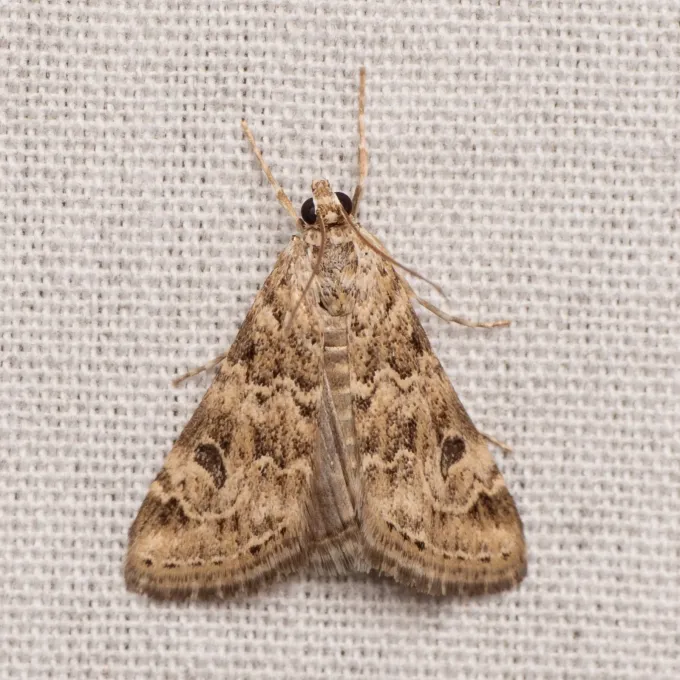
The adult moth has a wingspan of approximately 20 mm, with forewings that feature a distinct grayish-brown pattern and transverse wavy white lines.
Larvae, or caterpillars, are the stage responsible for crop damage; they are typically yellowish-gray with dark, longitudinal stripes running down their bodies.
A key identifying feature of the caterpillar is its dark, almost black, head capsule, which remains visible as the larvae feed on plant tissues.
Pupation occurs within a silken cocoon, which the larva constructs by binding soil particles or plant debris together, often found near the host plant base.
What it damages
This pest is a specialized feeder on the Brassicaceae family, targeting commercial and home-grown crops such as cabbage, broccoli, cauliflower, and kale.
Upon hatching, larvae initially feed on the underside of leaves or within the heart of the plant, often creating a small web to shelter themselves.
As the caterpillars grow, they burrow into the terminal buds, which can destroy the primary growing point and prevent the formation of heads in cabbage.
Extensive feeding results in skeletonized leaves, where only the veins remain, leading to significant stunted growth and reduced marketability of the produce.
Heavy infestations leave behind large amounts of frass (feces) and silk, which can lead to secondary infections and rot in the heart of the brassica plants.
When it appears
The life cycle of Hellula rogatalis is highly sensitive to temperature, with the pest thriving and reproducing rapidly during hot summer months.
Adult moths are primarily nocturnal, becoming active in the evenings to mate and lay eggs on the leaves or stems of host plants.
Under optimal conditions, the life cycle from egg to adult can be completed in as little as three to four weeks, allowing for several overlapping generations.
The pest is most prevalent in regions with long, warm growing seasons, where it can cause persistent damage from late spring through early autumn.
In colder regions, the pupae may enter a period of diapause or struggle to survive the winter, but in warmer climates, they remain active year-round.
Signs of infestation
Presence of fine silk webbing over the leaf surfaces or deep within the center of the brassica plant is the most immediate indicator of an infestation.
Visible feeding holes in leaves, transitioning to total skeletonization of the leaf tissue, confirm the presence of growing larvae.
Dark, granular frass accumulation in the leaf axils or near the base of the terminal bud suggests that larvae are feeding inside the plant's heart.
Deformed plant growth or the appearance of multiple lateral shoots instead of a central head is a sign of previous damage to the apical meristem.
The sudden appearance of small grayish-brown moths flying around garden beds at dusk is a warning sign to inspect plants for eggs or young larvae.
Control measures
Integrated Pest Management (IPM) is essential for controlling this pest, combining cultural, biological, and chemical strategies for maximum effect.
Crop rotation remains a fundamental practice; avoiding the planting of cruciferous vegetables in the same soil for multiple seasons breaks the pest cycle.
Sanitation practices, including the removal and destruction of cruciferous weeds like wild mustard, prevent the pest from building populations before harvest.
Chemical control involving insecticides should be applied as soon as damage is detected, targeting young larvae before they burrow into the plant head.
- Regular monitoring using pheromone traps to detect moth flight.
- Application of Bacillus thuringiensis (Bt) products for biological control.
- Use of row covers to provide a physical barrier against egg-laying adults.
Taxonomy
- Latin name
- Hellula rogatalis
- Order
- Lepidoptera (butterflies)
- Family
- Crambidae
- EPPO code
- HLULRO
Discussion
No discussions yet — be the first.