
Cabbage webworm
Hellula hydralis
Description
How to identify
The Cabbage webworm (Hellula hydralis) is a moth species belonging to the family Crambidae. It is a significant pest that affects various cruciferous crops globally.
Adult moths are relatively small, with wingspans typically ranging between 15 to 20 mm. Their forewings feature a distinctive pattern of light and dark brown markings.
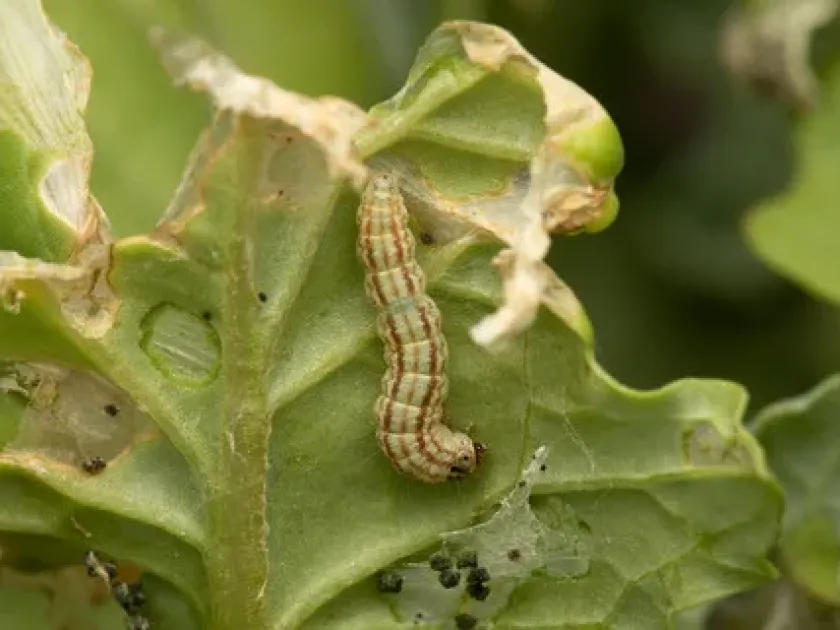
The larvae are easily recognized by their striped appearance, featuring distinct longitudinal bands. They move actively and often drop from the plant when disturbed.
Pupation occurs in small, silk-lined cocoons usually found in the soil or within debris. This stage is critical for the survival of the species during cold seasons.
The life cycle is influenced by ambient temperature, with warmer climates allowing for multiple generations per year, leading to rapid population growth.
What it damages
This pest primarily attacks members of the Brassicaceae family, including broccoli, cabbage, cauliflower, kale, and radishes, among other related plants.
Larvae are notorious for their damage to the heart of the plants. By boring into the central bud or young leaves, they stunt growth and prevent head formation.
Feeding damage often results in skeletonized leaves, where only the veins remain. This significantly reduces the photosynthetic capacity of the affected plants.
The presence of webbing and frass (larval waste) within the plant structures creates an unappealing appearance, rendering crops unmarketable for fresh consumption.
Secondary infections, such as bacterial soft rot, are common following the physical damage caused by the larvae, leading to further loss in crop quality and yield.
Signs of infestation
The presence of fine webbing covering the leaf surface or connecting adjacent leaves is the most indicative sign of webworm infestation in a field.
Look for holes in the leaves, progressing from small punctures to complete skeletonization, especially in the tender inner foliage of the host plants.
Deformed or withered central buds in cabbage plants often suggest that a larva has tunneled into the growth point to feed from the inside.
Accumulated larval excrement near the base of the plant or within the folds of the leaves serves as a clear warning sign of active feeding larvae.
The larvae themselves can often be spotted hiding within their webbed nests or actively feeding during the cooler parts of the day, such as early morning.
Control measures
Cultural control practices, such as deep plowing after harvest, are essential to destroy pupae overwintering in the soil and disrupt the pest's life cycle.
Effective weed management, specifically targeting cruciferous weeds like wild mustard, reduces the local population reservoir before the main crop is planted.
Biological control using Bacillus thuringiensis (Bt) provides a selective and environmentally friendly way to manage larvae without harming beneficial insects.
In cases of high infestation, insecticides should be applied during the early larval stages when they are most vulnerable and before they seek protected areas.
- Use row covers to physically exclude moths from laying eggs on young transplants.
- Monitor moth activity using pheromone traps to time treatments correctly.
- Maintain proper crop rotation to minimize pest carryover between growing seasons.
Taxonomy
- Latin name
- Hellula hydralis
- Order
- Lepidoptera (butterflies)
- Family
- Crambidae
- EPPO code
- HLULHY
Discussion
No discussions yet — be the first.