
Hedylepta diemenalis
Hedylepta diemenalis
Description
How to identify
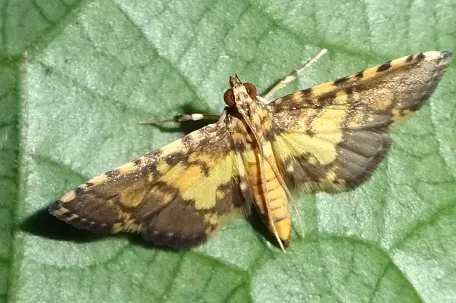
Hedylepta diemenalis, commonly known as a type of bean leaf folder, belongs to the family Crambidae (order Lepidoptera). The adult moth is relatively small, with a wingspan of approximately 20–25 mm.
The wings of the moth exhibit a brownish-gray coloration with dark transverse lines and patterns, which provides excellent camouflage against vegetation during the daytime rest.
The larvae are typical caterpillars, which progress through several instars. They are usually pale green with a dark-colored head, allowing them to blend in perfectly with the underside of legume leaves.
The life cycle encompasses four distinct stages: egg, larva, pupa, and adult. The duration of each stage is highly dependent on ambient temperatures and local climatic conditions.
The pest typically overwinters in the pupal stage, hidden within plant debris or protected in the top layer of soil, awaiting favorable conditions for the next generation to emerge.
What it damages
This insect primarily targets plants within the Fabaceae (legume) family. Its preferred hosts include crops such as soybeans, peas, beans, and various leguminous cover crops.
The caterpillars are foliage feeders that primarily consume the soft leaf tissues. By feeding between the veins, they skeletonize the leaves, which significantly impairs the plant's ability to photosynthesize.
Severe infestations can lead to substantial yield losses. When the caterpillar population density is high, they may feed on young pods and flowers, directly impacting the reproductive success of the plant.
The feeding activity results in reduced vigor, stunted growth, and in extreme cases, total defoliation of the plant, which prevents the proper filling of seeds.
Furthermore, the damage caused by these larvae creates entry points for secondary pathogens, such as fungi and bacteria, which can cause rotting and further crop quality degradation.
Signs of infestation
The most diagnostic sign of infestation is the presence of folded, rolled, or webbed leaves. The larvae use silk to stitch leaves together, creating a protective shelter.
Inside these silken shelters, one can often find small, dark fecal pellets left by the larvae. The presence of these pellets is a clear indicator of active feeding within the leaf rolls.
The leaves display characteristic skeletonized patches where the epidermis has been consumed. Over time, these patches turn brown and may cause the leaf to wither prematurely.
When scouting fields, look for clusters of webbed leaves at the terminal ends of branches or on the main stem, where the caterpillars tend to aggregate.
- Leaves folded or rolled using silken webs.
- Small, dark fecal pellets present on or inside leaf folds.
- Irregular skeletonized patches on the leaf surface.
- Withered or discolored leaves indicating localized damage.
Control measures
Integrated pest management (IPM) begins with good agronomic practices. Crop rotation and the thorough removal or deep incorporation of crop residues help to disrupt the overwintering pupae.
Biological control agents, such as parasitoid wasps or microbial insecticides like Bacillus thuringiensis, are highly effective when applied during the early larval stages.
Chemical control should be implemented only after scouting indicates that the population has crossed the economic threshold. Targeted insecticides are most effective when applied before larvae roll the leaves.
Regular field scouting using visual inspection and light traps is crucial for timing applications correctly. Detecting the moth flight phase helps predict when egg-laying will occur.
Maintaining clean fields by removing wild host plants, particularly leguminous weeds, helps reduce the local breeding reservoir and keeps pest pressure at manageable levels.
Taxonomy
- Latin name
- Hedylepta diemenalis
- Order
- Lepidoptera (butterflies)
- Family
- Crambidae
- EPPO code
- HEDYDI
Discussion
No discussions yet — be the first.