
Palm leaf folder
Hedylepta blackburni
Description
How to identify
The palm leaf folder, scientifically known as Hedylepta blackburni, is a moth species belonging to the family Crambidae. The adult moths are relatively small, with a wingspan of approximately 20–25 mm, characterized by pale brown or yellowish wings featuring faint darker bands.
The larvae, or caterpillars, progress through several growth stages, initially appearing translucent cream and turning pale green as they mature. Their dark brown head capsule is a distinct morphological feature that helps distinguish them from other palm-infesting insects.
The life cycle of this moth is relatively short, typically spanning 4–6 weeks in tropical environments. This rapid development allows for multiple, overlapping generations to occur throughout the year, which can lead to quick population explosions if not monitored.
Female moths deposit their eggs on the surface of palm leaves, often protected by a thin layer of secretions. This placement provides the eggs with essential protection against environmental stressors and potential predators during the embryonic stage.
Originally native to the Hawaiian Islands, this species has adapted to both endemic Pritchardia palm species and the commercially important coconut palm, expanding its range wherever these hosts are cultivated.
##damage##The primary hosts of the palm leaf folder are various species of palms. The larvae show a strong preference for the succulent tissues of young, emerging palm leaves, which are still soft and pliable.
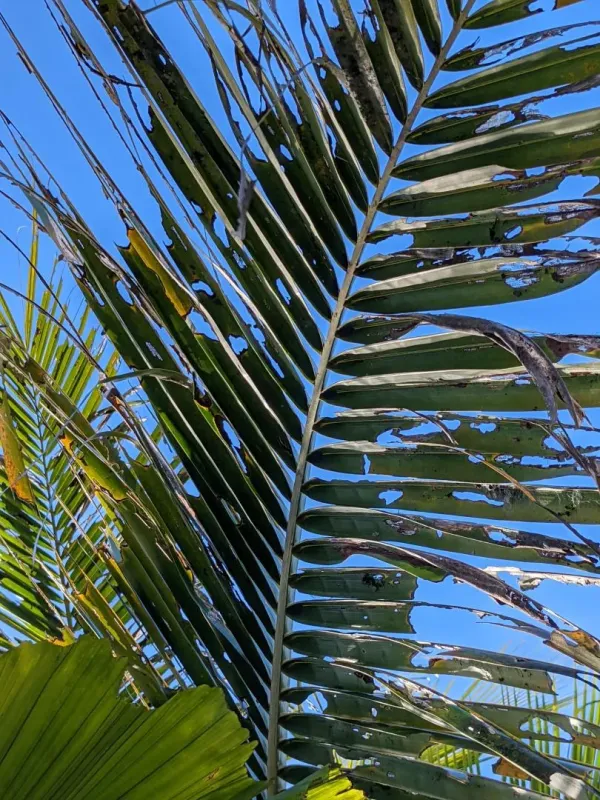
These larvae are known for their habit of folding or rolling the edges of palm leaflets, securing them with silk strands to create a protected shelter. Inside these retreats, they feed on the leaf parenchyma, leaving only the thin epidermis behind.
Severe infestations result in extensive skeletonization of the foliage. When larvae occur in high densities, they can significantly reduce the photosynthetic capacity of the palm, which leads to overall tree stress and reduced vigor.
As the damaged leaf tissue dies, it turns brown and shrivels, which negatively affects the tree's health and appearance. In commercial coconut plantations, such foliage loss can eventually lead to a measurable decline in fruit yield.
Persistent infestations make palms more susceptible to secondary environmental stresses, such as prolonged drought or opportunistic fungal infections that enter the plant through the damaged leaf surfaces.
Signs of infestation
The most reliable sign of an infestation is the presence of folded or rolled leaflets on the palm canopy. These leaf shelters are often clearly visible when examining the youngest fronds of the tree.
Inspection often reveals translucent «window-pane» patches on the leaves. These patches occur where the larvae have consumed the green internal tissue, leaving the transparent outer skin intact and vulnerable to drying out.
Small, dark, granular frass (excrement) pellets on the lower fronds or ground beneath the palm are a clear indication of active larval feeding occurring higher up in the canopy.
- Folded or tied leaflet edges
- Translucent, skeletonized leaf spots
- Accumulation of silk webbing on young fronds
- Premature browning and necrosis of leaflets
- Presence of larval droppings on lower vegetation
In cases of heavy infestation, the entire canopy may take on a ragged, brownish appearance. Observing the tree during the early morning can help identify the moth flight activity or fresh larval shelters.
Control measures
Biological control remains the most effective long-term strategy for managing Hedylepta blackburni. Parasitic wasps, particularly those in the families Trichogrammatidae and Braconidae, act as natural predators that significantly suppress moth populations.
For smaller landscape palms, mechanical removal of affected leaves is a highly effective control measure. By cutting off the folded leaves and destroying them, you directly remove the larvae and break the pest’s reproductive cycle.
The use of biological insecticides containing Bacillus thuringiensis (Bt) is recommended for larger areas. This approach is target-specific, affecting the caterpillars while preserving the beneficial insect population needed for ecosystem balance.
Good horticultural management, including proper irrigation and nutritional fertilization, supports the tree’s natural defenses. Healthy palms are better equipped to withstand minor leaf damage and recover more rapidly through vigorous regrowth.
Chemical intervention with systemic insecticides should be reserved for severe outbreaks where other methods fail. Always follow label instructions to minimize drift and exposure to non-target pollinators and beneficial insects.
Taxonomy
- Latin name
- Hedylepta blackburni
- Order
- Lepidoptera (butterflies)
- Family
- Crambidae
- EPPO code
- HEDYBL
Discussion
No discussions yet — be the first.