
Haplotinea insectella
Haplotinea insectella
Description
How to identify
Haplotinea insectella, commonly known as a grain moth, is a member of the Tineidae family within the Lepidoptera order. It is a specialized pest found primarily in grain storage facilities.
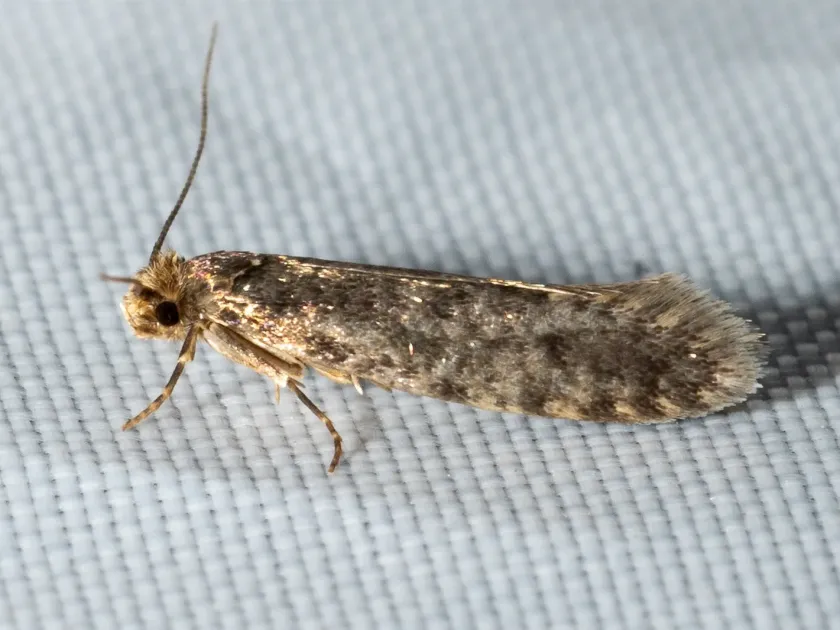
Adult moths have a wingspan of approximately 12 to 18 mm. Their forewings are dark brownish with light-colored spots, providing effective camouflage against stored grain surfaces.
The larvae are typically creamy-white with a dark head capsule and reach lengths of about 10-12 mm. They feed and develop inside the grain kernels, remaining hidden from view.
The life cycle varies based on climate; however, in indoor environments with stable temperatures, multiple generations can emerge throughout the year, causing continuous damage.
The insects undergo a complete metamorphosis. Females lay eggs in close proximity to food sources, ensuring that larvae can begin feeding immediately upon hatching.
What it damages
This moth primarily targets cereal grains, including wheat, rye, barley, corn, and oats. It also infests processed products like flour, semolina, and various cereal mixtures.
Larvae consume the endosperm and the germ of the grain. This feeding behavior destroys the nutritional value of the product and completely ruins its viability for planting.
A significant portion of the damage is indirect: larvae produce silken webbing that binds grain together, leading to clumping and obstructing necessary airflow in storage bins.
The presence of larval excrement, cast skins, and webs contaminates the grain, significantly reducing its quality, market value, and overall safety for consumption or processing.
In severe infestations, the moisture introduced by the pest's activities promotes the growth of mold and bacteria, which can lead to rapid decay of entire grain silos.
Signs of infestation
The most visible sign of infestation is the presence of fine, sticky webbing covering parts of the grain surface or clinging to the walls of storage containers.
Adult moths are often seen flying near stored products, particularly during dusk or in dim lighting conditions, indicating an active population within the facility.
Hollowed-out grains with tiny entry or exit holes are clear indicators of larval feeding. Such kernels are lightweight and often show signs of structural decay.
A musty or off-putting odor emanating from the stored grain usually suggests an underlying infestation, often resulting from the moth's metabolic activity and secondary fungal growth.
The appearance of fine powdery debris and larval casings mixed into the grain sample is a definitive diagnostic feature of Haplotinea insectella activity.
Control measures
Sanitation is the cornerstone of pest management. All storage facilities must be thoroughly cleaned of old grain, dust, and debris before introducing new harvests.
Maintaining low humidity levels within the storage environment is critical, as grain with moisture content below 14% is significantly less attractive to the moth.
The use of pheromone traps is recommended to monitor moth activity and identify early signs of infestation, allowing for targeted interventions before the population explodes.
If an infestation is confirmed, fumigation of the grain using authorized chemical agents is the most effective way to eliminate the pest at all life stages.
Regular inspection of temperature logs in stored grain is essential, as heat spikes often indicate localized hotspots where the moth population may be actively multiplying.
Taxonomy
- Latin name
- Haplotinea insectella
- Order
- Lepidoptera (butterflies)
- Family
- Tineidae
- EPPO code
- TINEMI
Discussion
No discussions yet — be the first.