
Short-nosed cattle louse
Haematopinus eurysternus
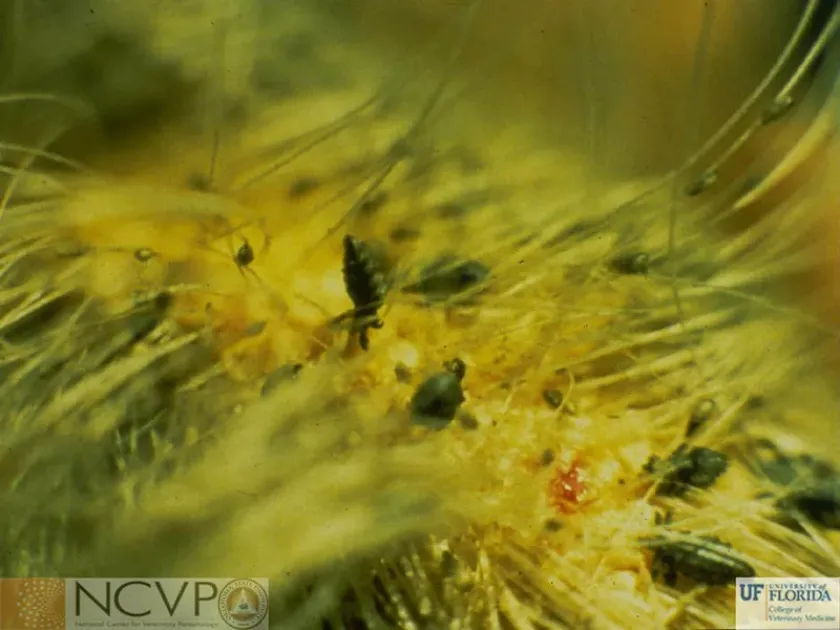
Description
How to identify
The Short-nosed cattle louse (Haematopinus eurysternus) is a blood-sucking louse belonging to the family Haematopinidae. It is recognized as the largest louse species infesting cattle, often causing significant irritation.
Adult lice are gray-brown, flattened, and approximately 3–4 mm in length. They possess a specialized head structure with piercing-sucking mouthparts designed to feed on the host's blood.
Their legs are equipped with strong, specialized claws that allow them to grip firmly onto the hair shafts of the animal. They are obligate parasites, meaning they cannot survive away from the cattle host for more than a few days.
The life cycle is completed entirely on the host. Eggs, known as nits, are glued firmly to the hair follicles, usually near the skin surface, where the temperature is most stable.
Their population density tends to increase significantly in areas where the animal cannot groom itself easily, allowing the colony to thrive without disruption.
What it damages
This parasite affects only cattle and does not damage crops. However, it causes severe economic losses in the livestock industry by impairing animal health and overall productivity.
Lice are typically found on the head, around the eyes, at the base of the horns, and along the neck. The intense itching caused by their feeding forces animals to rub against objects, leading to skin abrasions.
Chronic infestation results in significant stress, weight loss, and reduced milk production. In younger calves, severe infestations can lead to anemia due to heavy blood loss.
The skin damage creates entry points for secondary bacterial or fungal infections, which further complicates the animal's health and requires additional veterinary intervention.
Overall farm productivity declines as the herd suffers from poor coat quality, loss of condition, and an increased susceptibility to other environmental stressors.
When it appears
Infestations are most prevalent during the colder months when cattle are kept in confined indoor housing. The winter season provides the high humidity and moderate temperatures needed for rapid reproduction.
Crowded housing conditions in barns facilitate the easy transmission of lice between animals through physical contact. Thick winter coats provide ample shelter for lice populations to grow.
During summer, intense sunlight and warmer outdoor temperatures significantly reduce the louse population, as these parasites are sensitive to heat and desiccation.
The complete life cycle from egg to mature adult takes approximately 3 to 4 weeks, allowing for multiple generations to develop during a single winter season.
Farmers should monitor their herds closely starting in late autumn, as this is when the lice begin to multiply rapidly following the transition to winter housing.
Signs of infestation
The most prominent sign of an infestation is excessive rubbing and scratching. Cattle will frequently rub against fences, stall walls, or feeders, trying to relieve the intense itch.
The coat may appear matted, dull, or contain patchy areas of hair loss (alopecia). Upon close inspection of the skin, one can often see adult lice and clusters of eggs on the hair.
- Restless behavior and agitation.
- Presence of scabs, raw skin, and bleeding sores.
- Visible hair loss in concentrated areas (neck, tail head).
- Decreased feed intake and lethargy.
- Visible nits attached to individual hair shafts.
Control measures
Controlling this louse requires a comprehensive approach, including regular inspections of all animals in the herd to identify infestations at an early stage.
Chemical control involving insecticides, such as pour-on solutions, sprays, or dusts, is the standard method for eradication. Ensure that products used are approved for use on livestock.
A second treatment is mandatory, usually applied 10–14 days after the first, to kill newly hatched lice that emerged from nits present during the first application.
Proper hygiene, such as cleaning housing facilities and reducing overcrowding, is essential to limit the spread of lice within the herd.
Maintaining a high plane of nutrition boosts the animal's immune system, allowing them to better withstand the negative impacts of an infestation and recover more quickly from skin damage.
Taxonomy
- Latin name
- Haematopinus eurysternus
- Family
- Haematopinidae
- EPPO code
- HAEMEU
Discussion
No discussions yet — be the first.