
Gymnosoma rungsi
Gymnosoma rungsi
Description
How to identify
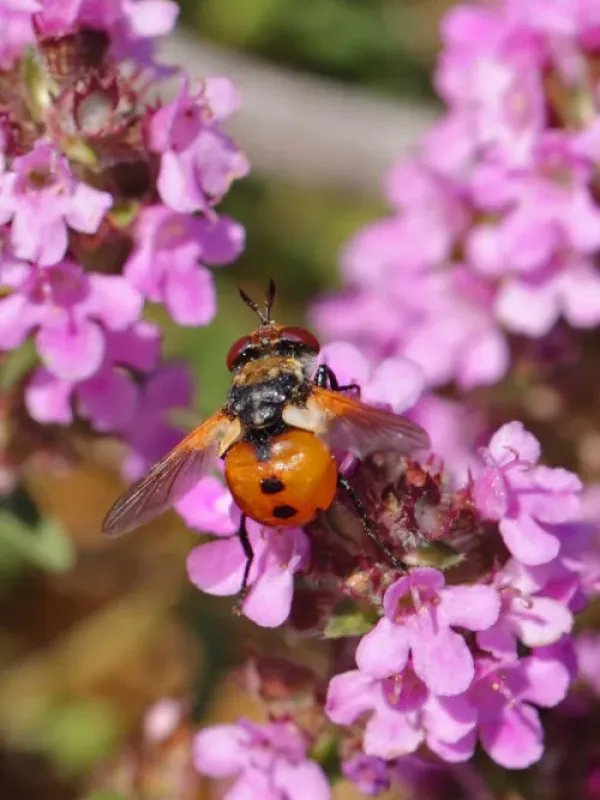
Gymnosoma rungsi is a species of tachinid fly (family Tachinidae) known for its role as a natural enemy of various agricultural pests. These flies are often distinguished by their robust appearance and sensory bristles.
The adult flies possess a globose abdomen, which is frequently marked with bright colors or specific patterns that serve as identification markers for entomologists.
As members of the Tachinidae family, they exhibit complex life histories, with larvae that function as internal parasitoids of other arthropods.
Field identification can be challenging due to the high diversity of related species, often requiring examination of head chaetotaxy and wing venation.
These flies are highly adapted to diverse agricultural landscapes and play a critical role in maintaining ecological balance in cultivated areas.
What it damages
Gymnosoma rungsi is not a plant pest; rather, it is a highly beneficial parasitoid that targets stink bugs (Pentatomidae). Stink bugs are notorious pests for grains, legumes, and vegetable crops.
By parasitizing these bugs, the fly significantly suppresses their population density, thereby preventing extensive crop damage caused by the feeding of the bugs.
Because they act as natural controllers, their presence is vital for reducing reliance on synthetic insecticides, which can be harmful to the environment.
Damage to the ecosystem occurs when broad-spectrum pesticides eliminate these flies, which often results in secondary pest outbreaks that are harder to manage.
Therefore, understanding their life cycle is essential for farmers who prioritize Integrated Pest Management (IPM) strategies to protect their yields.
When it appears
The seasonal activity of Gymnosoma rungsi is synchronized with the life cycle of its host, the stink bug. Activity usually peaks during the warm summer months when host density is high.
Adults are active flyers that seek out nectar sources for sustenance and search for potential hosts to deposit their eggs.
The larval stage develops internally within the host, feeding on its tissues and eventually killing the host before pupation.
Overwintering occurs in the pupal stage, often sheltered in soil or debris, allowing the population to survive winter temperatures until spring arrives.
Depending on the climatic zone, the number of generations per year can vary, directly influencing the efficiency of the natural pest control provided by this species.
Control measures
To conserve Gymnosoma rungsi, it is recommended to minimize the use of non-selective pesticides, particularly during the peak activity period of the adult flies.
Providing wildflower strips or nectar-rich plants around fields is a proven method to increase the longevity and fecundity of the fly population.
Integrated Pest Management should include regular monitoring to determine the ratio of pests to parasitoids before deciding on any chemical intervention.
Utilizing targeted, low-toxicity products ensures that the natural enemy population remains intact, allowing for sustainable agricultural production.
Conservation of field margins and surrounding natural vegetation provides essential refuge sites for overwintering and development, supporting a stable population of this beneficial insect.
Taxonomy
- Latin name
- Gymnosoma rungsi
- Order
- Diptera (flies)
- Family
- Tachinidae
- EPPO code
- GYMSRU
Discussion
No discussions yet — be the first.