
Gymnosoma rotundatum
Gymnosoma rotundatum
Description
How to identify
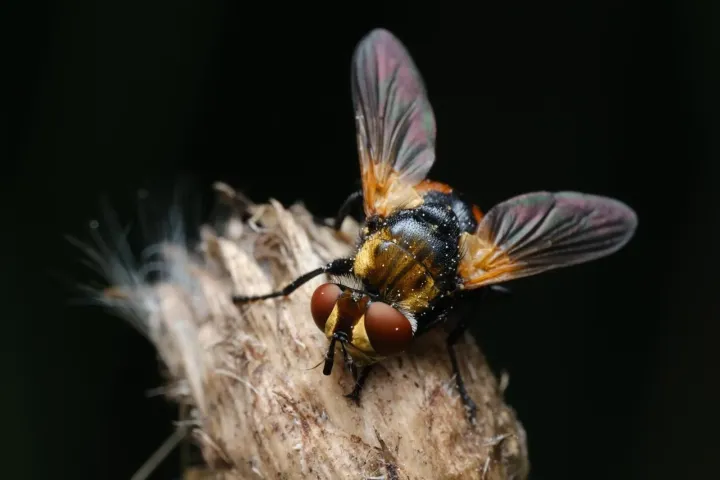
Gymnosoma rotundatum is a species of tachinid fly (family Tachinidae) known for its distinctive appearance and ball-shaped, rounded abdomen, which makes it easy to distinguish from other Diptera.
The adults are relatively small, typically measuring between 6 to 9 mm in length. Their coloration ranges from bright orange and yellow to dark brown or black, often featuring specific patterns on the tergites.
They possess well-developed, clear wings, allowing for rapid and precise flight when hunting for host insects. The head is large, equipped with prominent compound eyes that are essential for spotting potential prey.
The larvae progress through several developmental stages. Because they are internal parasites, their morphology is adapted for survival within the host organism, remaining hidden from external view.
These flies are highly specialized, utilizing sensory cues to identify adult shield bugs (Pentatomidae), which serve as the primary host for their offspring.
What it damages
It is crucial to classify Gymnosoma rotundatum not as a crop pest, but as an important entomophage and biological control agent. The fly helps regulate the population of various shield bug species.
Many of these host bugs are significant agricultural pests, such as the Sunn pest (Eurygaster integriceps), which causes severe damage to cereal crops by feeding on developing grains.
By parasitizing these bugs, the fly significantly limits their reproduction and spread. The presence of these flies in an agroecosystem is a positive indicator of natural pest suppression.
While the impact on host populations is high, the fly itself does not damage plants, as adult flies feed exclusively on nectar and pollen from flowers.
Therefore, farmers should view Gymnosoma rotundatum as an ally in sustainable agriculture, as it contributes to reducing the necessity for chemical insecticides.
When it appears
The activity of Gymnosoma rotundatum is closely linked to the phenology of its host bugs, with adults typically appearing during the late spring and summer months.
Depending on local climate conditions, the fly may complete one or two generations per year. The peak of adult activity usually aligns with the warm period of the growing season.
They are most active in fields and meadows where shield bugs congregate to feed and reproduce. The availability of flowering plants is essential for the survival of the adult flies.
Overwintering occurs primarily in the larval stage, residing inside the body of the hibernating host bug. This synchronization ensures that the fly population remains stable across years.
Environmental factors, particularly temperature and humidity, play a significant role in the fly's population dynamics and their effectiveness as parasitoids.
Signs of infestation
The presence of Gymnosoma rotundatum in an area can be confirmed by inspecting shield bugs for white eggs attached to their cuticle, usually on the dorsal surface of the thorax.
Parasitized bugs often exhibit changes in behavior, becoming sluggish, losing their appetite, and failing to reproduce, which ultimately leads to their death as the larva matures internally.
Field observation often reveals a declining density of pest bugs, which, if not explained by pesticide application, is often due to the successful activity of natural parasitoids.
Laboratory dissection of collected bugs can reveal the presence of the parasitic larva inside the host, providing direct evidence of the fly's impact on the local pest population.
Using sweep nets to sample insect populations in fields allows agronomists to assess the parasitism rate and determine the effectiveness of this biological control agent.
Control measures
Rather than seeking to control the fly, the focus should be on conserving and promoting its population to maximize the biological control of pest bugs.
Reducing the use of broad-spectrum insecticides is essential, as these chemicals frequently kill beneficial parasitoids and upset the natural balance of the agroecosystem.
Maintaining floral strips with nectar-rich plants around agricultural fields provides necessary food resources for adult flies, encouraging them to stay and reproduce in the area.
Adopting Integrated Pest Management (IPM) practices, which prioritize biological and mechanical controls, helps create a sustainable environment for Gymnosoma rotundatum.
Monitoring local insect populations helps to make informed decisions about when and how to intervene, ensuring that the natural services provided by these flies are fully utilized.
Taxonomy
- Latin name
- Gymnosoma rotundatum
- Order
- Diptera (flies)
- Family
- Tachinidae
- EPPO code
- GYMSRO
Discussion
No discussions yet — be the first.