
Gymnosoma fuliginosum
Gymnosoma fuliginosum
Description
How to identify
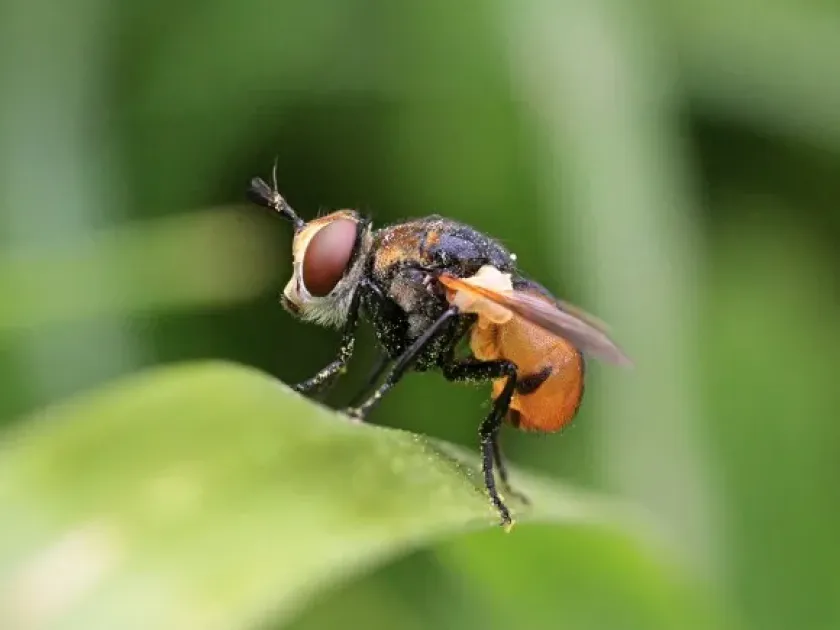
Gymnosoma fuliginosum is a species of tachinid fly belonging to the family Tachinidae. It is recognized by its distinct morphology, characterized by a rounded, orange-colored abdomen with black markings.
The adult fly has a dark thorax and is typically smaller than many other parasitic dipterans. Their eyes are prominent, which helps them detect potential hosts in complex agricultural environments.
This fly species is specialized for parasitism, possessing a sharp ovipositor used to attach eggs to the exterior of shield bugs (Pentatomidae).
Like all tachinids, they undergo complete metamorphosis, which makes their population dynamics closely tied to the availability of their specific host insects.
Identifying this species in the field often requires knowledge of both the adult fly's appearance and the specific signs of egg placement on the bodies of host bugs.
What it damages
Gymnosoma fuliginosum does not cause any direct damage to agricultural crops. In fact, it is considered a beneficial insect and a natural ally for farmers and agronomists.
Its larvae are parasitoids that develop inside the bodies of various shield bug species. By killing the host, the fly reduces the population density of these agricultural pests.
The host bugs are often responsible for significant crop losses, including damage to cereals, fruits, and vegetables, which makes the presence of Gymnosoma highly valuable.
Economic damage to the crop may indirectly increase if Gymnosoma populations are eliminated by indiscriminate pesticide use, leading to an uncontrolled explosion of pest populations.
Therefore, managing this species is about conservation rather than control, as they perform a necessary ecosystem service by keeping pest numbers below the economic threshold.
When it appears
Adult flies are typically active from late spring through the end of the summer, with peak populations usually occurring during mid-summer months.
Their activity is dictated by temperature and the availability of nectar sources, which are essential for the survival of adult flies in the field.
The larval phase occurs inside the host, and the duration of this development depends on environmental factors and the health of the infested bug.
As the season progresses toward autumn, the larvae typically pupate. These puparia often overwinter in the soil or beneath crop debris, emerging as adults in the following spring.
Synchronized emergence is key to their success, ensuring that parasitic larvae are available exactly when the early generations of shield bugs start feeding on crops.
Signs of infestation
One of the primary field signs is observing shield bugs that bear small, white, oval-shaped eggs glued to their thoracic or abdominal segments.
Infested bugs often show signs of lethargy or altered behavior, which can be noted during regular crop scouting and monitoring activities.
High concentrations of adult flies near flowering plants or field margins are a strong indicator that the population is established in the surrounding area.
A decline in pest pressure within a field despite the presence of host insects can sometimes be attributed to the successful activity of such parasitoids.
Lab-rearing samples of collected shield bugs can confirm the presence of Gymnosoma larvae inside, which is the most definitive way to monitor their impact.
Control measures
The best practice for managing this species is to promote conservation by avoiding the use of broad-spectrum insecticides, especially during peak blooming times.
Implementing Integrated Pest Management (IPM) strategies helps preserve these beneficial insects by using treatments only when pests exceed economic damage thresholds.
Establishing floral strips or maintaining non-crop areas provides the necessary food sources for adult flies to sustain their population in the agro-ecosystem.
Minimal tillage practices can also help protect overwintering puparia located in the soil, ensuring a stable population for the next growing season.
- Avoid prophylactic pesticide applications.
- Maintain field margins with native flowering plants.
- Adopt selective pest control methods.
- Monitor parasitoid populations during standard field assessments.
Taxonomy
- Latin name
- Gymnosoma fuliginosum
- Order
- Diptera (flies)
- Family
- Tachinidae
- EPPO code
- GYMSFU
Discussion
No discussions yet — be the first.