
Cotton bollworm
Gossypina glauca
Description
How to identify
The cotton bollworm (Helicoverpa armigera) is a member of the Noctuidae family and is considered one of the most destructive agricultural pests worldwide.
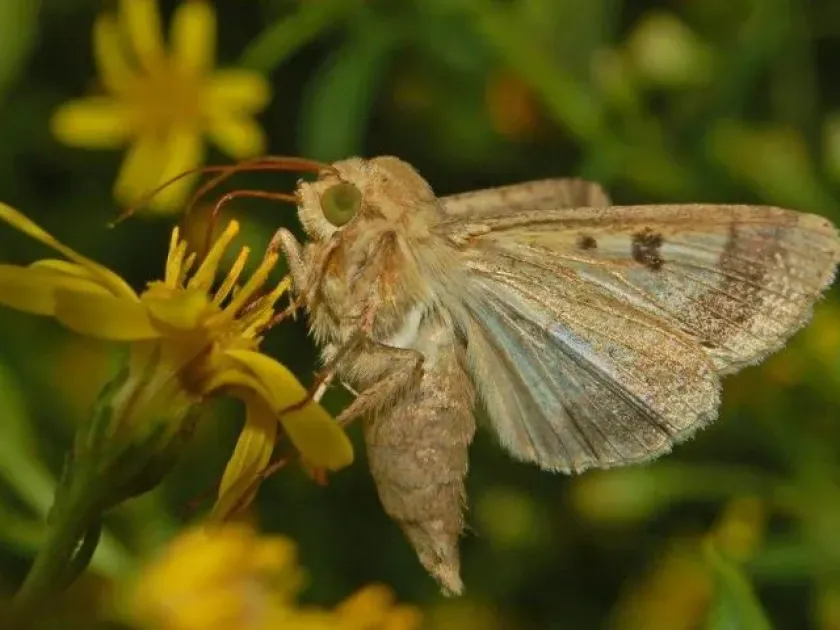
Adult moths have a wingspan of 35–40 mm and exhibit a variable coloration ranging from light brown to olive-green or reddish-brown.
Larvae pass through six instars, changing color from pale green in the early stages to brownish, yellowish, or even blackish patterns when mature.
The pupal stage occurs in the soil at a depth of 5–10 cm, serving as the primary way for the species to overwinter in temperate climates.
Eggs are spherical, yellowish-white when fresh, and are typically laid on the tender parts of host plants, such as squares, flowers, and terminal leaves.
What it damages
This species is highly polyphagous, capable of feeding on over 120 plant species, including cotton, corn, tomatoes, tobacco, and various legumes.
Early-instar larvae feed on young leaves, but they quickly transition to reproductive plant structures as they grow larger.
By consuming buds and fruiting bodies, the bollworm significantly limits the plant's ability to produce flowers and eventually, mature fruits.
Larval feeding inside cotton bolls or maize ears creates deep cavities that ruin the produce and facilitate secondary fungal infections.
Large-scale infestations often result in severe yield reduction, sometimes exceeding 70% if left untreated during the critical growth phases.
When it appears
The adult moth flight usually begins when temperatures remain consistently above 18–20°C, often starting in late spring in many regions.
The number of generations per year varies significantly by latitude, with tropical and subtropical regions supporting continuous breeding cycles.
Pest pressure is usually highest during the flowering and fruiting periods of major crops, making these phases the most critical for monitoring.
Adult moths are strong fliers and can migrate over long distances, which means populations can appear unexpectedly in new fields.
Climate factors such as humidity and high temperatures accelerate the life cycle, leading to overlapping generations in a single season.
Signs of infestation
Early detection involves inspecting the upper canopy and underside of leaves for small, cream-colored eggs placed individually.
- Excrement (frass) pellets visible on leaves or around the base of plants.
- Small circular or irregular holes in buds, flowers, or developing bolls.
- Stunted or deformed fruits due to internal tissue damage.
- Presence of larvae feeding openly or burrowed within plant structures.
- Sudden shedding of buds and small fruit pods in the field.
Pheromone traps are essential tools for monitoring adult activity and determining the precise timing for intervention measures.
Control measures
Deep plowing after harvest is a vital cultural practice to destroy pupae buried in the soil, effectively reducing the next season's population.
Weed management is critical, as many common weeds serve as alternative hosts for the early generations of the bollworm.
Biological control agents, such as egg parasitoids (Trichogramma spp.) and microbial insecticides, are effective components of an IPM strategy.
Chemical control must target young larvae before they enter protected sites like cotton bolls or corn husks, where they are unreachable.
It is crucial to practice rotational insecticide application using different modes of action to prevent the development of resistance in pest populations.
Taxonomy
- Latin name
- Gossypina glauca
- Order
- Hemiptera (bugs, aphids, leafhoppers)
- Family
- Coccidae
- EPPO code
- GOSPGL
Discussion
No discussions yet — be the first.