
Juniper bug
Gonocerus juniperi
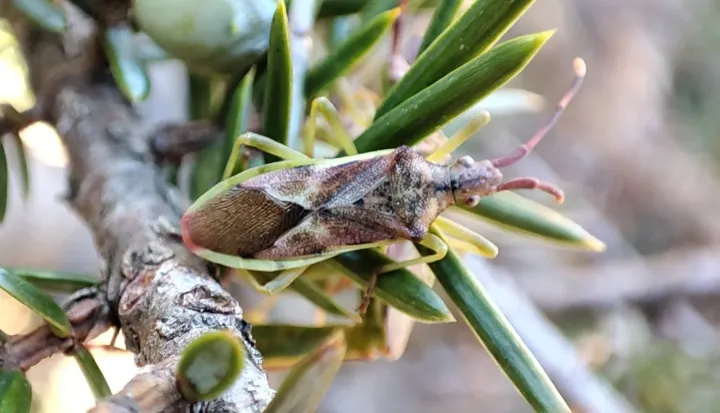
Description
How to identify
The juniper bug (Gonocerus juniperi) belongs to the order Hemiptera and the family Coreidae. These insects are medium-sized bugs, usually measuring 10–13 mm in length, with a coloration ranging from yellowish-brown to reddish-brown.
They are characterized by a slightly flattened, oval-shaped body with lateral expansions of the pronotum, which makes them easily recognizable. Their antennae are divided into four segments, and their legs are designed for agility among branches.
The life cycle involves an egg stage, several nymphal instars, and the adult stage. Nymphs resemble miniature versions of adults but lack fully developed wings and have a slightly different color pattern throughout their growth.
Adults overwinter in sheltered locations, such as leaf litter, bark crevices, or near the base of conifer trunks. They become active as soon as temperatures rise in the spring, initiating their feeding cycle.
They are relatively shy and tend to remain hidden deep within the foliage of coniferous trees. This cryptic behavior often allows populations to build up undetected until damage becomes visible.
What it damages
The primary hosts for this pest include members of the Cupressaceae family, such as juniper, thuja, cypress, and yew trees. Both nymphs and adults focus their feeding activity on the most tender parts of the plants.
Using their piercing-sucking mouthparts, these bugs feed on the sap of young shoots and developing cones. This extraction process robs the plant of essential nutrients and disrupts its normal development.
Damage symptoms include the yellowing, wilting, and subsequent drying of shoot tips. These signs are often mistaken for environmental stress or fungal infections if the presence of the bug is not confirmed.
Feeding sites can serve as entry points for secondary infections. As the tissues die or become necrotic, the tree may become susceptible to additional diseases that affect the bark and inner wood.
While established, mature trees often tolerate light infestations, young shrubs or saplings can suffer from severe growth retardation and loss of aesthetic appeal if the population density is high.
Signs of infestation
The most obvious sign of an infestation is the premature browning of needles at the tips of new growth. If observed closely, one might see small puncture marks or resin beads on the surface of the twigs.
During summer, a visual inspection of the inner canopy can reveal the bugs themselves. When disturbed, they often remain motionless for a moment before crawling deeper into the foliage to avoid detection.
Cones on infected plants may show signs of deformation, shriveling, or premature shedding. This is particularly noticeable in species that are normally covered in lush berries or seed cones during the season.
The presence of a characteristic, somewhat unpleasant odor, which is common among many coreid bugs when threatened, can indicate a significant cluster of these insects in a specific area.
Overall thinning of the foliage or a "patchy" appearance of the tree indicates that the infestation has been present for some time, necessitating an immediate assessment of the plant's health.
Control measures
Effective management begins with regular pruning of heavily damaged branches. Removing the infested growth helps reduce the overall population of nymphs and prevents further spread of the bugs.
On smaller ornamental trees, manual removal is a practical and environmentally friendly solution. Gently shaking the branches over a white sheet or tray can help you collect and dispose of the insects.
Chemical control involving systemic or contact insecticides may be necessary during peak infestation periods. It is critical to ensure thorough coverage of the foliage, focusing on the inner parts of the canopy.
Maintaining high horticultural standards, such as proper fertilization and irrigation, is essential. A well-nourished plant is more resilient to pest attacks and can recover more efficiently from minor tissue loss.
If you have had issues with this pest in previous years, monitor the plants closely in early spring. Preventive measures or early-season treatment can significantly minimize damage to your landscape.
Taxonomy
- Latin name
- Gonocerus juniperi
- Order
- Hemiptera (bugs, aphids, leafhoppers)
- Family
- Coreidae
- EPPO code
- GONRJU
Discussion
No discussions yet — be the first.