
Goldenrod gall moth
Gnorimoschema gallaesolidaginis
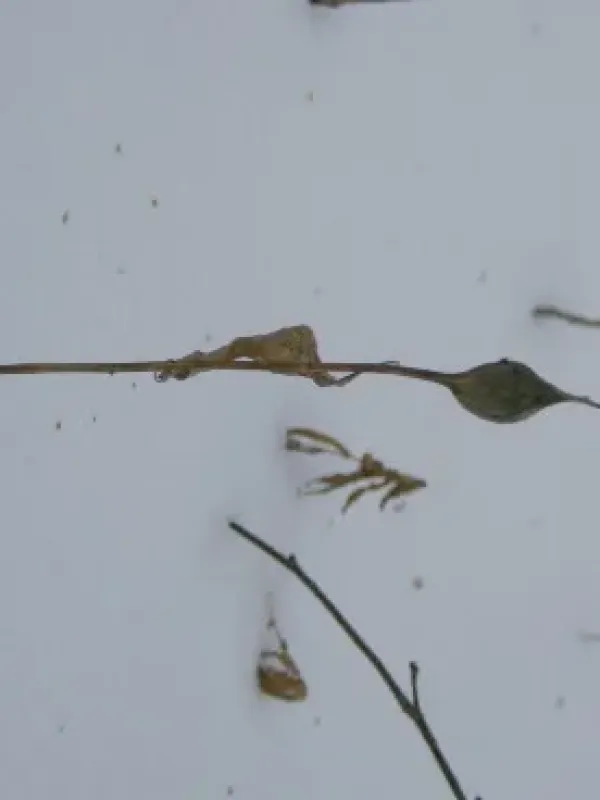
Description
How to identify
The Goldenrod gall moth, scientifically known as Gnorimoschema gallaesolidaginis, belongs to the family Gelechiidae. This insect is a specialized pest that induces the formation of galls on goldenrod (Solidago) species.
Adult moths are small and cryptic, usually showing mottled brown or grey coloration. This appearance serves as camouflage, allowing them to remain undetected when resting on plant stems or leaf litter.
The larval stage is responsible for the characteristic damage. The caterpillars are pale with a distinct dark head capsule and, during their development, they remain confined within the stem of the host plant.
The pupa is housed inside the gall, a complex structure created by the plant in response to the larvae's feeding and hormonal secretions. The gall acts as both a physical barrier and a source of nutrition.
The insect's life cycle is strictly synchronized with the phenology of the goldenrod plant, ensuring that the larvae emerge exactly when the plant tissue is most suitable for gall initiation.
What it damages
The primary injury to the plant is the development of a large, spindle-shaped gall on the main stem. This structural modification interferes with the normal growth patterns of the goldenrod.
By consuming internal stem tissue, the larva disrupts the plant's vascular system, specifically affecting the transport of water and nutrients to the upper parts of the plant, including the flower buds.
Plants heavily infested by the moth often exhibit reduced height and vigor. The inflorescence may be stunted, malformed, or entirely absent, which significantly diminishes the plant's ornamental value.
Stems weakened by internal tunneling are prone to lodging. High winds or rain can cause these stems to snap at the site of the gall, leading to premature decay of the plant's upper section.
While a few galls may not kill the host, large populations can cause significant stress to goldenrod plantings, making them less competitive and less aesthetically pleasing in gardens or nurseries.
When it appears
The Goldenrod gall moth completes one generation per year. The insect overwinters in the egg stage, which is deposited on the stem or buds of the host plant during the late summer or autumn.
In spring, as temperatures rise, the larvae hatch and burrow into the young, growing stems. This is the period when the gall formation process is initiated.
The larvae continue to feed and grow within the developing gall throughout the late spring and early summer months. This activity is the most critical stage for pest monitoring.
Pupation occurs inside the mature gall in mid-summer. After the metamorphosis, the adult moths emerge to mate and lay eggs, starting the cycle anew.
Understanding this annual rhythm is essential for practitioners, as it defines the window of opportunity for applying effective management strategies and mechanical removal.
Signs of infestation
The most diagnostic sign of an infestation is the appearance of a noticeable spindle-shaped swelling on the goldenrod stem. These galls are typically found in the upper half of the plant.
Initially, the gall may be small and green, resembling the surrounding stem tissue. As the season progresses, the gall expands, becoming hard and sometimes darker than the rest of the plant.
Plants with galls often show signs of stunted growth or curling leaves near the affected area. The overall structure of the stem may appear twisted or bent at the point of infestation.
If the gall is split open during the larval stage, one can find the caterpillar and its tunnels filled with frass. These are clear indicators of the moth's presence.
Small, circular exit holes on the surface of the gall signify that the adult moth has completed its development and emerged, usually occurring in late summer.
Control measures
The most straightforward and effective method of control is mechanical removal. Gardeners should cut off and destroy the galls before the adult moths emerge in late summer.
Burning or bagging the infested stems is crucial, as simply dropping them on the ground will not stop the development of the larvae inside the galls.
Systemic insecticides can be used to manage high populations. Treatments should be timed to coincide with the period when young larvae are entering the stems, before the gall has fully formed.
Good garden sanitation, such as removing old goldenrod stalks during late fall or winter, can help reduce the number of overwintering eggs and lower the population for the following year.
Maintaining plant health through proper watering and soil nutrition ensures that goldenrod can tolerate minor infestations without losing its structural integrity or visual appeal.
Taxonomy
- Latin name
- Gnorimoschema gallaesolidaginis
- Order
- Lepidoptera (butterflies)
- Family
- Gelechiidae
- EPPO code
- GNORGA
Discussion
No discussions yet — be the first.