
Canna leaf folder
Geshna cannalis
Description
How to identify
The Canna leaf folder, scientifically known as Geshna cannalis, is a moth belonging to the order Lepidoptera and the family Crambidae. The adult moths are small, typically displaying brownish-yellow wings with subtle patterns.
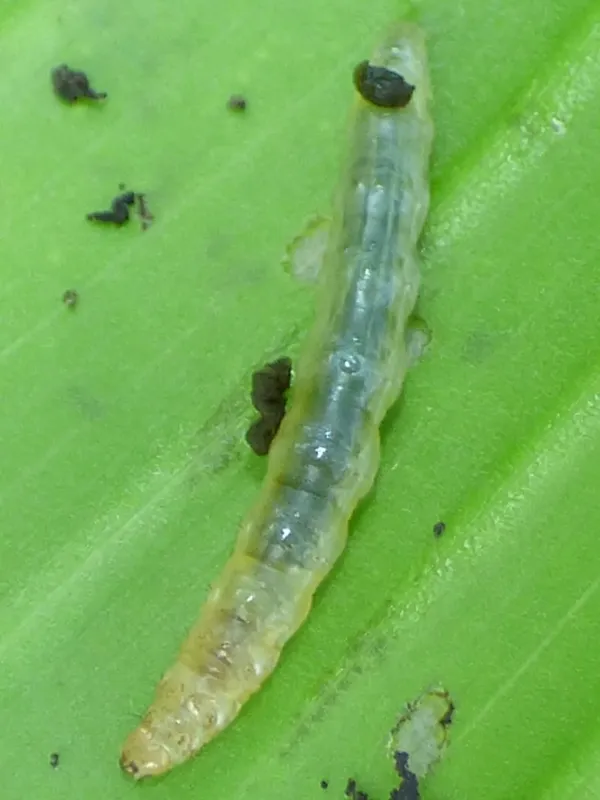
The larvae, or caterpillars, are the stage that causes visible damage to plants. They are slender, typically pale green, and grow up to 2 centimeters in length. A dark-colored head is a distinguishing morphological feature of this species.
This pest thrives in warm, humid climates, making it a persistent problem in tropical and subtropical regions. The moth's life cycle is relatively rapid, allowing for multiple generations during a single growing season.
The insect completes its life cycle within the foliage of the Canna lily. Eggs are laid on the leaves, and upon hatching, the larvae immediately start feeding and constructing their shelters.
Understanding their behavior, such as their tendency to roll leaves to create protected micro-habitats, is crucial for timely identification and monitoring of garden collections.
What it damages
The primary host for Geshna cannalis is the genus Canna. The damage is primarily caused by the feeding habits of the larvae, which consume the parenchyma tissues of the leaves.
By rolling and tying leaves together with silk, the larvae create protective tunnels. This mechanical damage restricts the leaf's ability to expand and function properly, often leading to unsightly deformities.
Severe infestations can lead to significant defoliation and a reduction in the plant's overall photosynthetic capacity. This weakens the plant, reducing its vigor and impacting the development of flowers.
In ornamental horticulture, the primary damage is the loss of aesthetic value. Because the pests target the young, tender growth, the entire appearance of the Canna plant is ruined during an infestation.
If left unmanaged, the larvae can compromise entire plantings, eventually leading to stunted growth and premature death of the foliage.
Signs of infestation
The most prominent sign of infestation is the presence of tightly rolled or folded leaves. This specific architectural modification of the leaf is the hallmark of the Canna leaf folder.
Inside the rolled leaves, one can often find small black pellets, which are the frass (excrement) left behind by the feeding larvae. The leaves themselves may show irregular holes or patches where the tissue has been eaten away.
In many cases, the leaf margins of the folded area will turn yellow or brown, indicating necrosis due to the feeding activity. The plant may appear stunted with distorted leaf tips.
When the leaf is opened, the larva is usually found inside, moving rapidly to escape. The silk webbing holding the leaf folds together is also a clear indicator of the pest's presence.
Heavy damage can cause the entire top of the Canna plant to look burnt or dry, especially during hot and dry spells when the plant is already stressed.
Control measures
For minor infestations, manual removal is the most effective approach. Simply pick off and destroy the folded leaves that contain larvae to prevent the next generation of moths.
Biological control using Bacillus thuringiensis (Bt) is highly recommended. This bacterium effectively targets caterpillars while remaining safe for beneficial insects and the environment.
When chemical intervention is necessary, systemic insecticides are preferred. Since the caterpillars are protected inside the leaves, a contact-only spray may not reach them effectively.
Proper plant maintenance, including adequate watering and avoiding excessive nitrogen fertilization, helps plants maintain their health and resist the negative impacts of pest feeding.
Regular monitoring of the garden, especially during the peak summer months, allows for early detection and prevents the population of leaf folders from reaching a destructive scale.
Taxonomy
- Latin name
- Geshna cannalis
- Order
- Lepidoptera (butterflies)
- Family
- Crambidae
- EPPO code
- GESHCA
Discussion
No discussions yet — be the first.