
Gelechiid moth
Gelechia
Description
How to identify
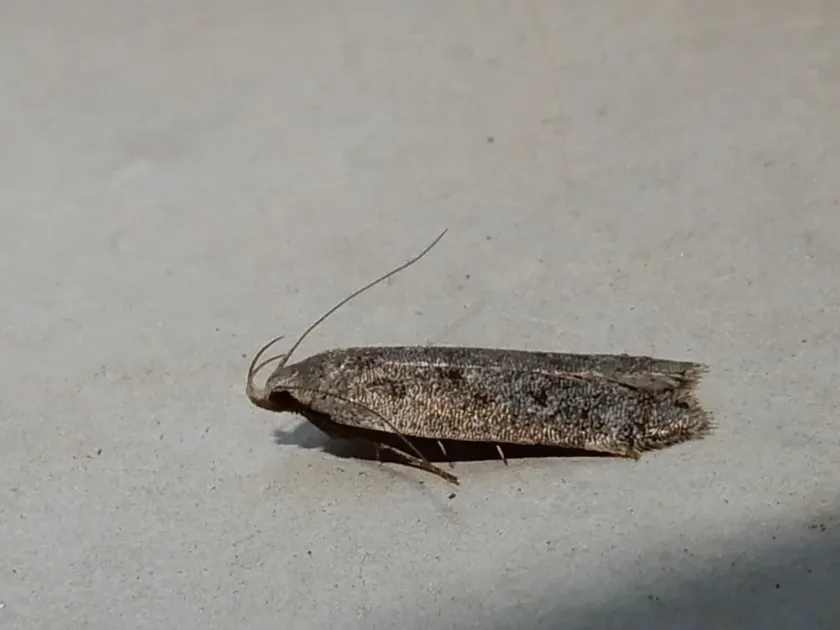
The family Gelechiidae, commonly known as gelechiid moths, consists of small moths with a distinctive wing shape. Their hindwings feature a pronounced concave notch on the outer margin, which is the primary morphological characteristic used for their identification.
The adult moths are typically small, with wingspans often ranging between 10 to 20 mm. Their coloration is usually cryptic, featuring various shades of gray, brown, and black, which allows them to blend in with foliage, bark, or soil surfaces during the day.
Larvae, or caterpillars, are the most damaging stage of the life cycle. They are generally slender, with a dark, well-defined head capsule. They possess chewing mouthparts designed for feeding on internal plant tissues, which they access by mining leaves or boring into stems and fruits.
Systematically, they belong to the order Lepidoptera. This family is vast and globally distributed, containing several species that are notorious agricultural pests, including the potato tuber moth (Phthorimaea operculella).
Pupation occurs within a protective silk cocoon. Depending on the species and environmental conditions, this may happen inside the plant tissue, within the soil, or among leaf litter and debris near the host plant.
What it damages
Gelechiid moths are responsible for significant economic losses in various crops, including potatoes, tomatoes, beans, and several cereals. The larvae cause direct damage by consuming plant tissue, which stunts growth and reduces plant vigor.
By mining leaves, these pests destroy the photosynthetic surface of the plant, leading to a reduction in total biomass and yield. Severe infestations can cause leaves to wilt, curl, and die prematurely, particularly in young or stressed plants.
Boring into fruits, tubers, or grains creates entry points for secondary pathogens. Fungal and bacterial infections often follow the larval feeding, resulting in rot and total loss of the infested produce, especially during storage.
For grain crops, larvae may attack seeds or young shoots, compromising the structural integrity of the plant and resulting in empty heads or poor germination rates in subsequent seasons.
Because the larvae live inside the plant tissues, they are protected from many environmental factors and standard insecticide applications, making them particularly difficult to control once they have entered the host plant.
When it appears
The seasonal appearance of these moths is highly dependent on climate. In temperate regions, they typically emerge in late spring as temperatures rise, signaling the start of the first annual generation.
Depending on the latitude, these moths can produce multiple generations per year. Warmer climates allow for nearly continuous reproduction throughout the growing season, often with overlapping generations present at the same time.
Infestation peaks usually coincide with the active development stages of the host crops. In many cases, the late-summer generation is the most destructive, as larvae target developing storage organs like potato tubers or ripening seeds.
Overwintering typically occurs in the pupal stage. They remain in protected environments such as crop debris, soil crevices, or storage facilities where temperatures remain moderate enough for survival.
The adults are primarily nocturnal or crepuscular, meaning they are active during dusk and throughout the night. During the day, they remain motionless on the undersides of leaves or within dense vegetation.
Signs of infestation
The most recognizable sign of an infestation is the presence of leaf mines—narrow, winding tunnels visible within the leaf blade. As larvae consume the internal tissue, the epidermis remains intact, creating a transparent or translucent appearance.
Larval frass (excrement) is another reliable indicator. It often accumulates at the entry points of stems, leaf axils, or on the surface of infested tubers, appearing as small, dark, granular deposits.
Webbing is a common sign associated with larval activity. Many species spin fine silk threads to bind leaves together or to construct protective shelters before pupation, which causes leaves to look crumpled or withered.
Stunted growth or sudden wilting of individual branches or stems, despite adequate soil moisture, suggests that a larva has bored into the stalk and is feeding internally, cutting off nutrient flow.
Small, circular entry holes on the skin of tubers or fruits are definitive signs of infestation. Internally, these tunnels are often clearly visible and filled with larval waste, rendering the produce unsuitable for consumption or market.
Control measures
Integrated Pest Management (IPM) is essential for effective control. Cultural practices such as deep plowing after harvest help bury pupae and larvae, preventing them from emerging in the following season.
Crop rotation and the destruction of host weeds (especially wild relatives of crops like potatoes or nightshades) are critical for breaking the moth's life cycle and reducing the local pest population.
Monitoring using pheromone traps is highly recommended. These traps allow growers to identify the timing of adult flights, ensuring that insecticide applications are timed to coincide with the most vulnerable stage of the pest's life cycle.
Biological control agents, including parasitic wasps and Bacillus thuringiensis sprays, have shown effectiveness in reducing larval populations. These methods are environmentally friendly and target specific stages of the moth's development.
For post-harvest protection, maintaining cool temperatures in storage facilities (below 4–5°C) is effective in inhibiting the development of eggs and larvae, preventing the spread of infestation while the produce is being held.
Taxonomy
- Latin name
- Gelechia
- Order
- Lepidoptera (butterflies)
- Family
- Gelechiidae
- EPPO code
- GELESP
Discussion
No discussions yet — be the first.