
Gargara genistae
Gargara genistae
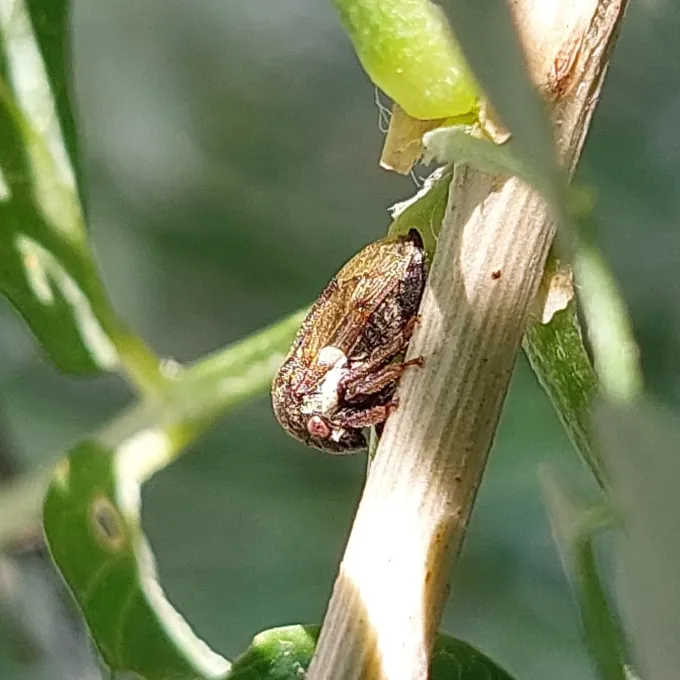
Description
How to identify
Gargara genistae is a species of treehopper belonging to the family Membracidae, order Hemiptera. These insects are small, typically measuring between 4 and 6 millimeters in length.
The adult is characterized by a prominent pronotum extension that arches over the scutellum, providing the insect with a unique, thorn-like appearance that acts as camouflage.
Their coloration is generally brownish or dark, allowing them to blend perfectly with the bark or stems of their host plants, where they often remain motionless during the day.
Nymphs of this species are distinct from adults; they lack fully developed wings and often exhibit waxy secretions that protect them from predators and environmental factors.
This species maintains a mutualistic relationship with ants, which tend the treehoppers to collect the honeydew they excrete, providing protection to the colony in return.
##damage##The primary hosts of Gargara genistae are members of the Fabaceae family, particularly broom (Genista) and other shrubs that are often found in field margins and meadows.
In agricultural settings, these pests can infest commercial leguminous crops, including alfalfa, clover, and soybeans, by feeding on the sap of young, succulent tissues.
Feeding occurs through the piercing of stems and leaf stalks by both nymphs and adults, which depletes the plant's resources and stunts overall development.
The honeydew produced by these insects acts as a substrate for sooty mold, which can cover the leaves and further inhibit the plant's ability to photosynthesize effectively.
Severe infestations lead to stunted plant growth, leaf chlorosis, and, in high-density populations, a significant reduction in biomass and overall crop yield.
When it appears
The species typically overwinters in the egg stage, with eggs deposited by females into the bark or near the buds of perennial host plants.
Nymphs emerge in early spring, synchronized with the onset of active plant growth and sap flow, which provides the necessary nutrients for their development.
The life cycle continues throughout the summer, with one or more generations occurring depending on the regional climate and the abundance of suitable host material.
Peak adult activity and mating usually take place during early summer, during which time the insects spread to colonize new parts of the host plant.
As autumn approaches and temperatures decrease, the metabolic rate of the treehoppers slows down as they prepare for the winter diapause.
Signs of infestation
A primary indicator of infestation is the observation of small, jumping insects on the upper stems of plants, which quickly move when disturbed by human activity.
The presence of high numbers of ants moving along stems and congregating at the tips of shoots is a strong signal of an active Gargara genistae colony.
Affected plants often show visible signs of stress, including twisted or curled leaves and stunted shoots that lose their healthy green appearance.
The buildup of black sooty mold on the foliage is a secondary sign resulting from the colonization of honeydew deposits by fungi, indicating a long-term infestation.
Close examination of the axils of the leaves or along the nodes will often reveal groups of nymphs, which can be identified by their sedentary behavior during feeding.
Control measures
Effective management begins with regular monitoring of crops, particularly during the late spring when the first nymphs emerge from their overwintering sites.
Control of ant populations is essential, as the ants actively protect treehoppers from natural predators like lacewings, lady beetles, and parasitic wasps.
A cultural control method involves the removal of alternative host plants from the field borders, specifically wild legumes that support the pest population.
If population thresholds are exceeded, the application of systemic insecticides, particularly those belonging to the neonicotinoid class, can significantly reduce numbers.
- Implement regular field inspections in May and June.
- Encourage the presence of natural enemies by minimizing broad-spectrum sprays.
- Ensure good weed management in and around leguminous fields.
Taxonomy
- Latin name
- Gargara genistae
- Order
- Hemiptera (bugs, aphids, leafhoppers)
- Family
- Membracidae
- EPPO code
- GRGAGE
Discussion
No discussions yet — be the first.