
Buffalo treehopper
Gargara
Description
How to identify
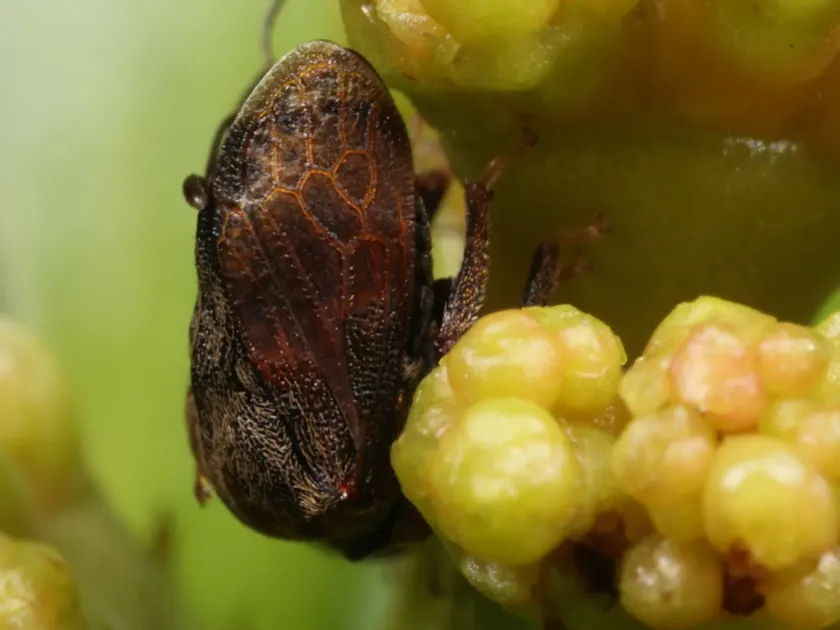
The buffalo treehopper, and related species within the Gargara genus, are members of the Membracidae family, commonly known as treehoppers. These insects are easily identified by their unique, enlarged pronotum, which often extends backward and can mimic the shape of thorns or plant debris, providing excellent camouflage.
Adult treehoppers are relatively small, usually measuring between 4 to 6 millimeters in length. Their bodies are stout, typically colored in shades of brown, gray, or black to blend in with the bark of host trees. They possess strong wings and are highly capable of flight within the tree canopy.
The nymphs of these insects look quite different from the adults. They often have soft, somewhat flattened bodies and may be covered in waxy secretions or branched spines. These specialized features help them blend into the twigs and leaves, making them difficult for predators to spot during their development.
Their life cycle typically consists of egg, nymph, and adult stages. Females use a sharp, saw-like ovipositor to make slits in the bark of young shoots to lay their eggs. This practice provides the eggs with protection against environmental stressors and potential predators during the winter months.
These insects are highly adaptable to various ecological conditions and can establish stable populations in orchards and gardens. Their presence is often a concern for arborists and gardeners who manage woody plants, as they can cause long-term structural damage if left unchecked.
What it damages
Treehoppers are primarily sap-sucking insects that target a wide variety of fruit trees and ornamental shrubs. Common host plants include apple, pear, plum, and cherry trees, as well as various deciduous species found in landscaping and commercial nursery settings.
Both nymphs and adults contribute to the damage by using their piercing-sucking mouthparts to feed on plant phloem. They puncture the bark of young twigs and the petioles of leaves, depleting the plant of essential nutrients and water needed for healthy growth and fruit production.
Feeding sites often develop into necrotic lesions, which can impede the flow of water and nutrients within the branch. These puncture wounds also create entry points for secondary infections, including fungal pathogens and bacterial diseases that can lead to the dieback of entire branches.
Severe infestations cause physical deformation of twigs, often leading to stunted growth or a twisted, weakened appearance. This stress weakens the overall health of the tree, potentially reducing fruit yields and the long-term vigor of young saplings in the orchard.
In addition to direct damage, the physical scarring from egg-laying can be significant. Repeated egg-laying in the same vicinity of a branch can cause the bark to crack and split, creating structural weaknesses that make the tree more susceptible to wind damage or further pest colonization.
When it appears
The activity of treehoppers is closely linked to seasonal temperature cycles. Adults typically emerge in the spring once temperatures are consistently warm, marking the start of their feeding and reproductive cycle after overwintering.
Nymph development peaks in early to mid-summer, coinciding with the rapid growth phase of host trees. During this time, nymphs feed aggressively on tender new shoots, where the concentration of plant sap is high, which is essential for their rapid maturation into adults.
As autumn approaches, adult insects prepare for winter. Depending on the species, they may overwinter as eggs deposited within the bark of host plants, which provides them with the necessary thermal insulation to survive freezing winter temperatures.
Orchard managers should conduct regular monitoring throughout the growing season, with particular attention paid to the budding and early leaf-out phases. Early detection is key, as it allows for intervention before the insect population reaches a level that causes irreparable damage.
Environmental factors, such as unusually hot and dry summers, can influence the rate of development. A drier season may lead to more rapid maturation cycles, requiring increased vigilance and more frequent scouting by those responsible for plant health.
Signs of infestation
Recognizing the signs of a treehopper infestation is vital for effective management. The most distinct sign is the presence of characteristic slit-like scars or dimples on young twigs, which are the result of females inserting eggs beneath the bark surface.
Leaves on affected branches may show signs of stress, such as yellowing, curling, or overall lack of turgor pressure. If feeding is intense, the tips of the shoots may cease to grow or develop abnormally, which is a clear indicator of systemic plant stress.
The presence of ants on the bark can be an indirect sign of treehopper activity. Ants are often attracted to the honeydew secreted by these insects and may actively defend them from natural predators, which can inadvertently boost the treehopper population.
During winter or early spring inspections, one may notice small, raised bumps or ridges on the bark of twigs. These are sites where egg masses are located, and in some cases, these areas may show signs of secondary fungal growth due to the injury caused to the plant tissue.
Adult treehoppers are generally elusive, but observant individuals can spot them by their unique shape. They often remain perfectly still, mimicking the appearance of a thorn or bud, which makes them easy to overlook unless one is specifically searching for them.
Control measures
Managing treehoppers requires an integrated approach that focuses on both physical and chemical control methods. The most effective cultural practice is the regular pruning and removal of heavily infested twigs, which helps eliminate overwintering egg masses before nymphs emerge.
Maintaining strong tree vigor through proper irrigation and balanced fertilization is crucial. A healthy tree can better tolerate light feeding pressure and heal tissue wounds more quickly than a stressed or neglected plant.
Chemical control should only be implemented when damage thresholds are exceeded. Systemic insecticides are generally the most effective, as they are absorbed by the plant and kill the sap-feeding nymphs, but they should be used according to label instructions to protect pollinators.
Encouraging natural predators, such as lady beetles, lacewings, and parasitic wasps, can provide significant natural control. Reducing the use of broad-spectrum pesticides ensures that these beneficial insects remain present to manage treehopper populations effectively.
- Pruning and destroying infested plant material.
- Removing weeds that serve as alternative hosts for nymphs.
- Monitoring for egg-laying scars in late winter.
- Using targeted insecticidal treatments during the nymph stage.
Taxonomy
- Latin name
- Gargara
- Order
- Hemiptera (bugs, aphids, leafhoppers)
- Family
- Membracidae
- EPPO code
- GRGASP
Discussion
No discussions yet — be the first.