
Filatima
Filatima
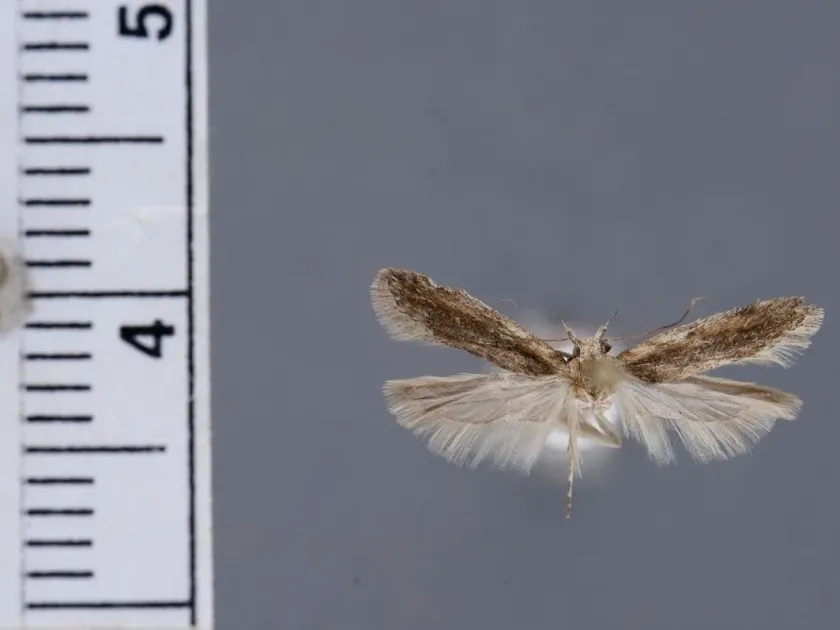
Description
How to identify
The genus Filatima belongs to the order Lepidoptera and the family Gelechiidae (twirler moths). These are small moths with a wingspan of approximately 15-20 mm, characterized by cryptic coloration that blends seamlessly with plant bark or soil surfaces.
The larvae (caterpillars) possess a cylindrical body with a distinct head capsule and three pairs of thoracic legs. Their coloration is highly variable, ranging from light green to brownish, adapting to the specific host plant they consume.
The primary damage stage is the larval stage, which adopts a concealed lifestyle. Larvae often mine leaves or bore into the reproductive organs of host plants, making early visual detection quite challenging.
Adult moths are typically crepuscular or nocturnal. Monitoring their activity usually involves using light traps or pheromone lures to determine population density and the timing of insecticide application.
The life cycle involves complete metamorphosis: egg, larva, pupa, and adult. Overwintering typically occurs in the pupal stage, buried in the soil or protected within plant debris.
What it damages
Filatima impacts a broad spectrum of vegetation, including both wild plants and various economically important agricultural crops, particularly within the Asteraceae and Fabaceae families.
Larvae feed on leaf tissue, often leaving only the skeletal vein structure. Additionally, they penetrate buds and ovaries, causing wilting, deformation, or the total shedding of the plant's reproductive structures.
Severe infestations reduce the photosynthetic surface area of the leaves, which significantly inhibits the plant's metabolic processes during critical phases of vegetative growth.
Damage to flowers and developing fruits directly correlates with yield loss, often leading to deformed produce or complete destruction of grain and vegetable harvests.
In high-intensity agricultural systems, Filatima can rapidly establish focal points of infestation, spreading quickly across fields when environmental conditions support their reproduction.
When it appears
The mass flight of the first generation of adults generally occurs in late spring or early summer, coinciding with the stabilization of warmer temperatures.
Larval activity peaks during the hot summer months, when host plants provide ample food resources during their most active growth phases.
Pupation usually takes place in late summer, leading to the emergence of subsequent generations or the initiation of diapause as the season concludes.
Environmental factors, particularly high humidity combined with moderate heat, accelerate the larval development cycle, leading to rapid population surges in the field.
As autumn temperatures drop, the pest ceases activity and enters a dormant phase, making post-harvest control strategies less effective than proactive measures.
Signs of infestation
Early signs of infestation include characteristic "windows" on the leaf surface and fine webbing used by larvae to pull leaf margins together for protection.
The presence of frass (larval excrement) within folded leaves or near damaged flower buds is a clear indicator that active larvae are feeding within.
Wilting of terminal shoots or premature yellowing of leaf tissue often suggests that the larvae have moved inside the stem or petiole, causing internal injury.
Inspection of inflorescences may reveal ragged, uneven edges on petals and the general loss of structural integrity of the flowers due to larval feeding.
Small entry holes on the surface of young fruits or ovaries, accompanied by visible fecal matter, indicate that the pest has shifted to internal feeding.
Control measures
The primary control measure is the implementation of strict crop rotation, which disrupts the life cycle of the pest and limits the accumulation of pupae in the soil.
Deep autumn plowing is a recommended cultural practice to bury and destroy overwintering pupae, significantly reducing the pest pressure for the following season.
- Regular field monitoring using pheromone traps.
- Effective management of weeds and post-harvest crop residue removal.
- Application of biological insecticides containing entomopathogenic fungi or bacteria.
Chemical intervention is most effective when targeted at newly hatched larvae before they retreat into leaf rolls or internal plant tissues.
During the flowering and fruiting stages, the use of selective insecticides is advised to protect beneficial pollinators and natural predators while controlling the Filatima population.
Taxonomy
- Latin name
- Filatima
- Order
- Lepidoptera (butterflies)
- Family
- Gelechiidae
- EPPO code
- FILASP
Discussion
No discussions yet — be the first.