
Cat louse
Felicola subrostratus
Description
How to identify
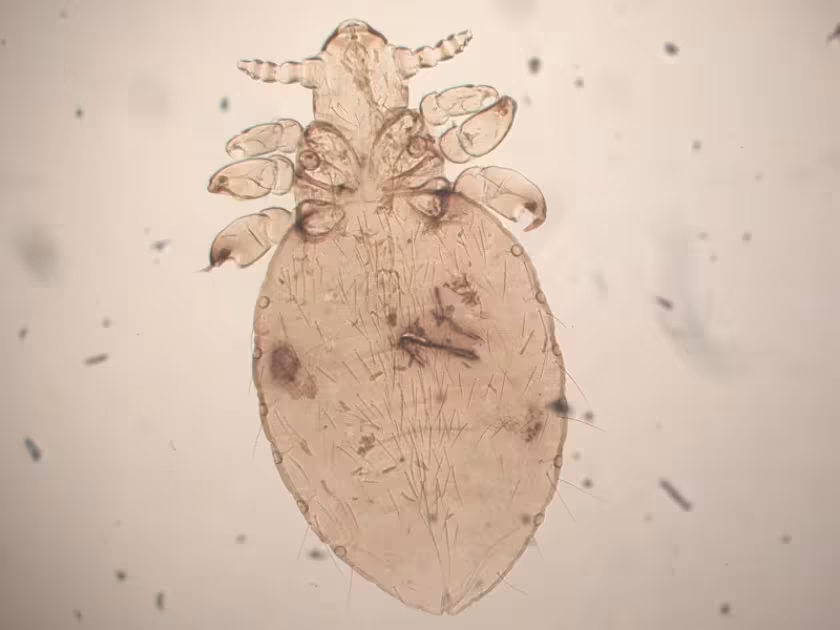
Felicola subrostratus is a tiny wingless insect belonging to the order Mallophaga and the family Trichodectidae. It is commonly known as the cat louse. The adult measures about 1-1.5 mm in length and possesses a flat, pale-brown body with a wide, rounded head featuring powerful mandibles.
These parasites spend their entire life cycle on the host. They are equipped with specially adapted tarsal claws that allow them to firmly grip the hair shafts, making them highly specialized to live on feline skin.
What it damages
The primary hosts of this parasite are domestic cats and some wild felids. Unlike lice that feed on blood, the cat louse feeds on skin debris, sebaceous gland secretions, and hair particles, acting as a scavenger on the skin surface.
While not as dangerous as blood-feeding parasites, heavy infestations cause severe itching, skin irritation, and dermatological problems. The constant irritation often leads to secondary infections if the cat scratches the area excessively.
When it appears
Felicola subrostratus is active throughout the year as the environment within the cat's fur remains warm and consistent. There is no seasonal dormancy for this parasite as long as it resides on a warm-blooded host.
The lifecycle consists of three nymphal stages and an adult stage, following the hatching of eggs (nits) glued to the hair near the skin. The duration of the cycle depends on the grooming behavior of the cat and the ambient humidity.
Signs of infestation
The most common sign is intense pruritus, causing the cat to groom or scratch excessively. This behavior leads to a matted coat, breakage of hair, and the development of crusts or scabs on the skin surface.
During a close inspection of the coat, one might notice small, mobile specks that resemble dandruff. When viewed under magnification, these "dandruff" particles are identified as active lice. Severe cases manifest as bald patches and skin redness.
Control measures
Effective control requires the use of veterinary-approved insecticides. Spot-on treatments, topical sprays, or specialized insecticidal shampoos containing fipronil or selamectin are typically recommended for elimination.
Treatment should be thorough, covering all infested areas, and accompanied by the cleaning of bedding and resting surfaces. A second application of the treatment is critical after 14 days to target any nymphs that hatched from eggs after the first dose.
Taxonomy
- Latin name
- Felicola subrostratus
- Family
- Trichodectidae
- EPPO code
- FELCSU
Discussion
No discussions yet — be the first.