
Goat biting louse
Bovicola crassipes
Description
How to identify
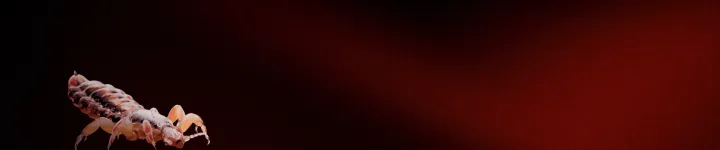
Bovicola crassipes is a small, wingless insect belonging to the order Phthiraptera, family Trichodectidae. The parasite has a flattened body, yellowish-brown in color, with dark transverse stripes on the abdomen, which allows it to blend into the thick hair coat of goats.
Adult specimens reach a length of about 1.5–2 mm. The head of the biting louse is wide, often wider than the thorax, and is equipped with powerful chewing mouthparts adapted for scraping off epidermal scales and feeding on secretions from the sebaceous glands.
These insects are highly specialized ectoparasites. They spend their entire life cycle directly on the host's body, firmly attaching their eggs (nits) to the hair shafts with an adhesive secretion produced by the female during oviposition.
The development of the biting louse follows an incomplete metamorphosis. A nymph emerges from the egg, which resembles a miniature copy of the adult insect, progressing through several nymphal stages until reaching sexual maturity.
An important biological feature is the parasite's high dependence on the host's body temperature and the microclimate of the coat. When exposed to the external environment, biting lice die quickly, which determines the specificity of their transmission between animals through direct contact.
What it damages
The goat biting louse affects exclusively domestic and wild goats. Unlike blood-feeding lice, biting lice cause damage with their mandibles, injuring the top layers of the skin and causing serious dermatological problems.
As a result of constant skin irritation, animals suffer from intense itching. Lesions typically occur on the back, neck, base of the tail, and the inner thighs, where the hair density is highest.
The economic impact on goat farming lies in reduced animal productivity. Constant agitation disrupts sleep and appetite, leading to slowed growth in kids, decreased milk production in lactating does, and overall physical exhaustion.
Damaged skin becomes a portal for secondary infections. Irritations and wounds can provoke eczema, dermatitis, and inflammation, significantly degrading the quality of goat hair and cashmere, which become matted and fall out.
The parasite poses a significant threat in crowded housing conditions. High stocking density facilitates the rapid spread of biting lice within the herd, requiring immediate veterinary intervention upon the first signs of infestation.
When it appears
The seasonal activity of biting lice is most pronounced during the cold months — autumn, winter, and early spring. During this period, animals are kept in enclosed housing, which facilitates the migration of parasites from one individual to another.
Long, thick winter coats provide ideal temperature conditions for active insect reproduction. Lack of direct sunlight and high humidity in poorly ventilated barns contribute to the survival of the eggs.
During the summer, when goats are on pastures, active solar radiation naturally suppresses the reproduction intensity of the parasites. Sunlight is lethal to nymphs and eggs located on exposed parts of the body.
However, even in summer, infestations can persist deep within the coat, especially in areas where ultraviolet light does not penetrate. This makes preventive treatment of the entire herd necessary before the onset of winter.
Young animals with undeveloped immune systems and weakened individuals suffer from infestations year-round, so inspections should be carried out regardless of the season if biting lice are suspected.
Signs of infestation
The primary sign of infestation is intense itching. Animals begin to scratch actively, rubbing against walls, feeders, and fences, often leading to abrasions and hair loss.
Upon visual inspection of the hair coat, especially at the roots, small moving insects can be observed. When the hair is parted, the parasites move quickly toward the base, trying to hide from the light.
The presence of whitish points firmly attached to the hair shafts indicates the presence of louse eggs. Their concentration can be very high around the withers, along the spine, and behind the ears, which is a diagnostic criterion during physical examination.
- Dull, ruffled coat with patches of alopecia (hair loss).
- Characteristic "dandruff-like" skin condition due to constant scraping of scales.
- Restless behavior and persistent desire to scratch.
- Appearance of scabs and sores from scratching at sites of parasite aggregation.
In neglected cases, a pronounced decrease in body condition is observed in goats. Because of the itching, goats stop feeding properly, which ultimately affects the overall health of the entire herd and leads to economic losses.
Control measures
The control of biting lice is based on the use of modern insecticidal products. For treating goats, preparations in the form of sprays, dipping solutions, or special powders (dusts) containing pyrethroids are effectively used.
It is crucial to treat all animals in the herd simultaneously, even if symptoms are visible only in a few individuals. This is necessary to prevent re-infestation from hidden parasite carriers.
Repeat treatment is a mandatory procedure. Most insecticides kill adults and nymphs but do not affect the eggs (nits), so a second course is required 10–14 days later to destroy insects that have hatched after the first disinfection.
Disinfection of housing is an integral part of control. It is necessary to clean the barns of manure and hair residue, and perform sanitary treatment of walls, floors, and equipment with specialized solutions to prevent parasite survival in the environment.
To maintain herd health, it is recommended to follow zoohygienic standards: maintain dryness in barns, ensure high-quality feed to boost immunity, and perform regular inspections of all new animals introduced into the farm.
Taxonomy
- Latin name
- Bovicola crassipes
- Family
- Trichodectidae
- EPPO code
- DAMLCR
Discussion
No discussions yet — be the first.