
Goat biting louse
Bovicola limbata
Description
How to identify
The goat biting louse (Bovicola limbata) is a species of wingless insect belonging to the family Trichodectidae. It is a highly specialized ectoparasite that spends its entire life cycle on the host animal.
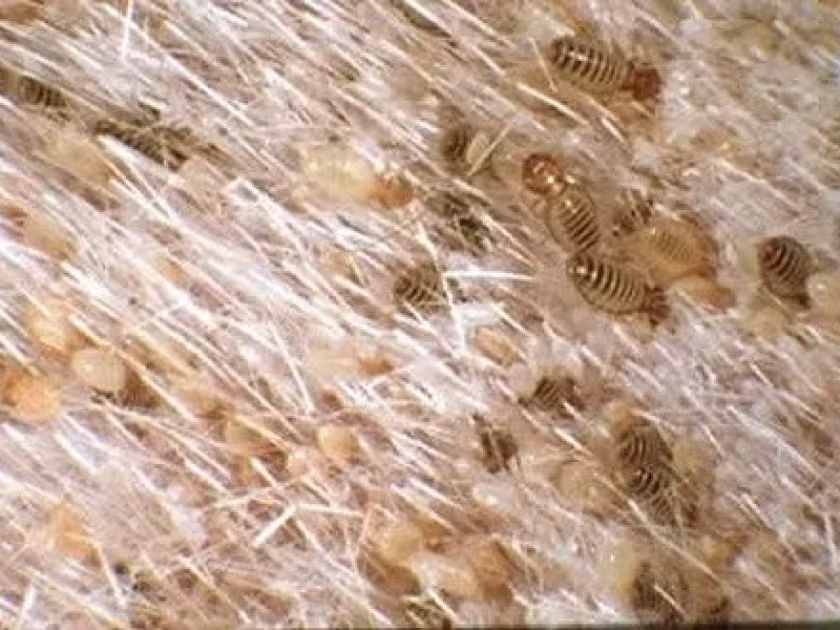
Adult lice are small, measuring approximately 1.5 to 2 mm in length. They possess a flattened body and a broad head, which is characteristic of the species, equipped with strong mandibles adapted for grazing on skin scales and hair fibers.
The life cycle involves incomplete metamorphosis, progressing through egg, nymph, and adult stages. Eggs, commonly known as nits, are cemented to the base of the hair shafts by the female, ensuring they remain attached to the host.
Under optimal conditions, the life cycle completes in about 3 to 4 weeks. The goat biting louse is dependent on the host’s body heat and cannot survive for long periods in the environment, making direct contact the primary route of transmission.
These parasites are highly mobile and tend to move across the skin surface, particularly in regions where the goat cannot easily groom itself. Their presence is persistent throughout the year but often peaks during the winter months.
What it damages
The damage caused by Bovicola limbata is primarily related to intense skin irritation. Unlike sucking lice, they do not feed on blood, but their constant movement and feeding on skin debris trigger severe pruritus (itching) in the host.
Goats suffering from infestation exhibit restlessness, which negatively impacts their overall health and production. This stress leads to reduced appetite, slower weight gain, and diminished milk yield in dairy herds.
The wool and hair quality are significantly degraded due to the lice biting the hair shafts, which causes breaking and matting. For fiber-producing breeds, this results in direct financial losses as the fleece loses its commercial value.
Chronic infestation causes the animal to scratch and rub against objects, leading to hair loss (alopecia), skin inflammation, and abrasions. These lesions often become secondary sites for bacterial infections, exacerbating the animal's condition.
In cases of severe infestation, goats may become anaemic due to the stress and the poor quality of their nutritional intake. Vulnerable animals, especially kids, may suffer from stunted growth and lowered immunity.
Signs of infestation
The most noticeable sign of infestation is persistent scratching and rubbing against fences or stable walls. Owners may observe patches of hair that appear dull, broken, or missing, particularly along the spine, neck, and flanks.
Skin lesions, such as redness, scabbing, and flaking, are common indicators. These are usually concentrated in areas where the goat cannot reach with its mouth, indicating a high concentration of parasites in those specific zones.
Close inspection of the skin, especially at the base of the hairs, will reveal the presence of small, light-colored insects moving about. Using a magnifying glass in good lighting is often necessary for early diagnosis.
Grooming tools used on the animal will often pick up dead skin cells and live lice, providing immediate evidence of the infestation. This manual check is a critical part of herd health management.
Distinguishing between biting lice and other skin conditions like mange is important. Biting lice are visible to the naked eye upon careful examination, unlike many mite-related infections that cause deeper skin layer issues.
Control measures
Control strategies involve the application of effective ectoparasiticides, including spray-on solutions, pour-on treatments, or insecticidal dips. It is essential to treat all goats in the flock simultaneously to break the parasite life cycle.
Environmental sanitation is a key component of management. Stables should be thoroughly cleaned and disinfected to eliminate any stray lice or eggs that may have dropped off onto bedding or equipment.
Quarantine of new or returning animals is highly recommended to prevent the introduction of lice into a healthy herd. Keeping new arrivals separate for at least 2 to 4 weeks allows for monitoring and prophylactic treatment.
Regular monitoring of the flock's coat condition should be integrated into daily management routines. Early detection allows for immediate intervention, preventing the infestation from becoming widespread throughout the facility.
- Consistent use of veterinary-approved insecticides
- Regular brushing and grooming to monitor skin health
- Isolation and treatment of infected animals
- Sanitary management of animal housing facilities
Taxonomy
- Latin name
- Bovicola limbata
- Family
- Trichodectidae
- EPPO code
- BOVCLI
Discussion
No discussions yet — be the first.