
Biting louse
Bovicola
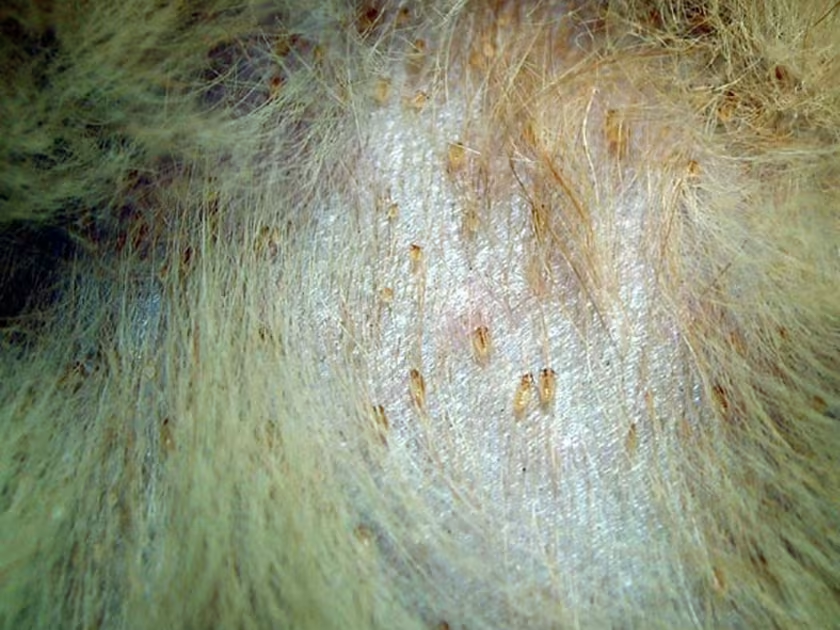
Description
How to identify
Biting lice (genus Bovicola) are small, wingless ectoparasites belonging to the Trichodectidae family, which live exclusively on the bodies of warm-blooded animals.
They possess a broad head with strong chewing mouthparts, adapted for consuming skin debris, sebum, and hair fragments rather than sucking blood.
Their bodies are flattened dorsoventrally, allowing them to crawl easily through dense fur or wool, while specialized claws on their legs ensure a firm grip on hair shafts.
The life cycle consists of three nymphal stages before reaching adulthood. The entire biological development, including egg incubation, occurs directly on the host's skin.
Females produce eggs (nits) and cement them firmly to the base of the hair, ensuring they remain protected until the larvae hatch under optimal temperature conditions.
What it damages
Biting lice primarily infest cattle, sheep, goats, and horses, causing significant irritation and physical discomfort to the host animals.
The direct damage is caused by the insects feeding on the epidermis and hair fibers, which creates localized skin irritation and severe itching.
Chronic infestation leads to reduced weight gain, lower milk production in dairy herds, and damage to the hide quality due to constant rubbing and scratching.
The stress caused by persistent itching compromises the animal's immune system, making the herd more susceptible to secondary bacterial and fungal infections.
In high-density livestock farming, the rapid spread of lice through direct contact can lead to widespread herd infestation within a short period.
Signs of infestation
The most prominent sign is intense pruritus (itching), causing animals to rub against fences, stall partitions, or other objects to alleviate the sensation.
Visual indicators include areas of hair loss (alopecia), matted fur, and patchy skin where the animal has scratched itself against hard surfaces.
Upon closer inspection of the hair roots, one can observe the presence of active lice moving or small, whitish eggs attached to the hair shafts.
Affected animals often appear restless, exhibit decreased appetite, and may show visible lesions or crusting on the skin surface due to persistent scratching.
Infestations are often most noticeable during late winter or early spring when animals are kept in crowded, poorly ventilated barns, promoting the survival of the lice.
Control measures
Effective management requires the application of registered topical insecticides, such as pour-on formulations, sprays, or dusting powders, directly onto the animals.
It is crucial to treat all animals within the herd simultaneously to prevent re-infestation from untreated carriers that might show fewer symptoms.
Environmental control is equally important; cleaning stalls, bedding areas, and grooming equipment helps reduce the population of lice surviving off the host.
Quarantine and thorough inspection of new additions to the herd are essential preventive measures to avoid introducing parasites into a clean environment.
- Use of professional veterinary insecticides.
- Regular grooming to remove dead hair and larvae.
- Proper ventilation and hygiene in livestock housing.
- Monitoring animal behavior for signs of itching.
Taxonomy
- Latin name
- Bovicola
- Family
- Trichodectidae
- EPPO code
- BOVCSP
Discussion
No discussions yet — be the first.