
Common kestrel
Falco tinnunculus
Description
How to identify
The Common kestrel (Falco tinnunculus) is a bird of prey belonging to the Falconidae family, known for its distinct flight patterns and hunting style.
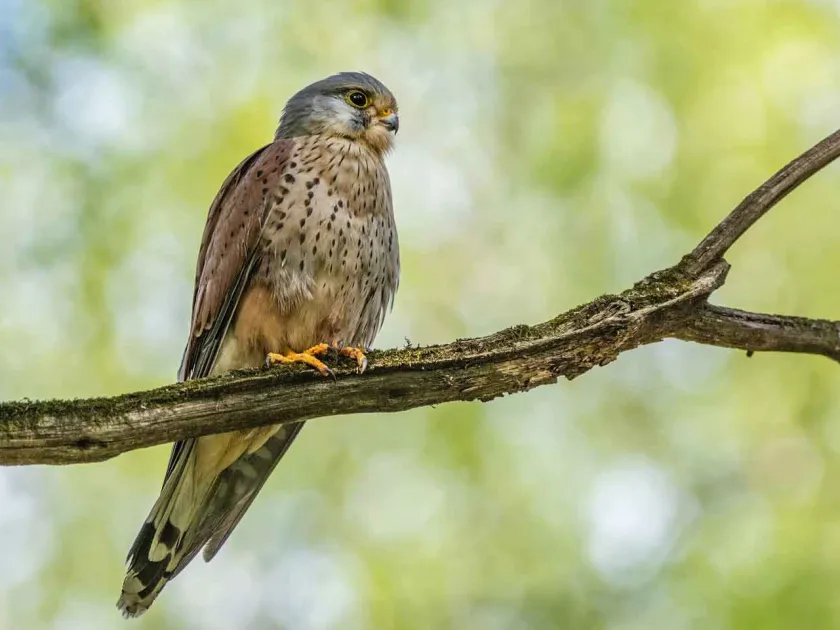
Males are easily identified by their blue-grey heads and spotted rufous backs, while females possess a more uniform brownish plumage with dark barring.
They are famous for "hovering," a unique behavior where they remain stationary in the air while scanning the ground for movement, supported by their pointed wings.
Typically 30-35 cm in length, they are highly adaptable birds that occupy various habitats, including open farmland, meadows, and even urban edges.
Their sharp eyesight allows them to detect small mammals from a significant height, making them highly efficient predators within agricultural landscapes.
What it damages
The Common kestrel is not a crop pest; it poses no threat to grain crops, vegetables, or fruit production, as its diet is entirely carnivorous.
In an agronomic context, the kestrel is highly beneficial because it preys almost exclusively on small rodents, such as field voles and house mice.
By consuming large numbers of rodents throughout the year, kestrels play a critical role in limiting the damage these mammals cause to seedling crops and stored grains.
They act as a natural pest control agent, significantly reducing the density of pest populations that would otherwise require intensive chemical intervention.
Their presence on farmland is a strong indicator of a balanced ecosystem, where the natural mortality of pests is managed by avian predators.
When it appears
Common kestrels are largely resident in temperate zones, meaning they remain in the vicinity of their hunting grounds throughout the year.
Their activity levels spike during the breeding season in spring and early summer, when they must catch enough food to nourish their growing brood.
In winter, they may range over wider areas in search of food, often patrolling the edges of fields and roadsides where rodents remain active beneath the vegetation.
The timing of their nesting cycle is closely linked to the seasonal availability of prey, peaking when rodent populations are at their most vulnerable.
Maintaining a stable environment for these birds year-round ensures they remain available to assist with rodent suppression during the crucial sowing and harvesting months.
Control measures
Management strategies should focus on conservation and attraction rather than control, as these birds are invaluable partners in sustainable crop production.
It is essential to strictly avoid the use of toxic rodenticides, as these chemicals accumulate in the food chain and can cause lethal secondary poisoning to kestrels.
Agronomists are encouraged to maintain hedgerows and plant native trees that provide safe nesting sites and observation posts for these raptors.
- Eliminate toxic rodent baits to prevent secondary predator mortality.
- Install nesting boxes in suitable areas to encourage kestrel residency.
- Protect natural habitats within the farm to support biodiversity.
Adopting these bird-friendly practices helps reduce dependence on synthetic pesticides and promotes a healthier, more resilient agricultural environment.
Taxonomy
- Latin name
- Falco tinnunculus
- Family
- Falconidae
- EPPO code
- FALCTI
Discussion
No discussions yet — be the first.