
Merlin
Falco columbarius
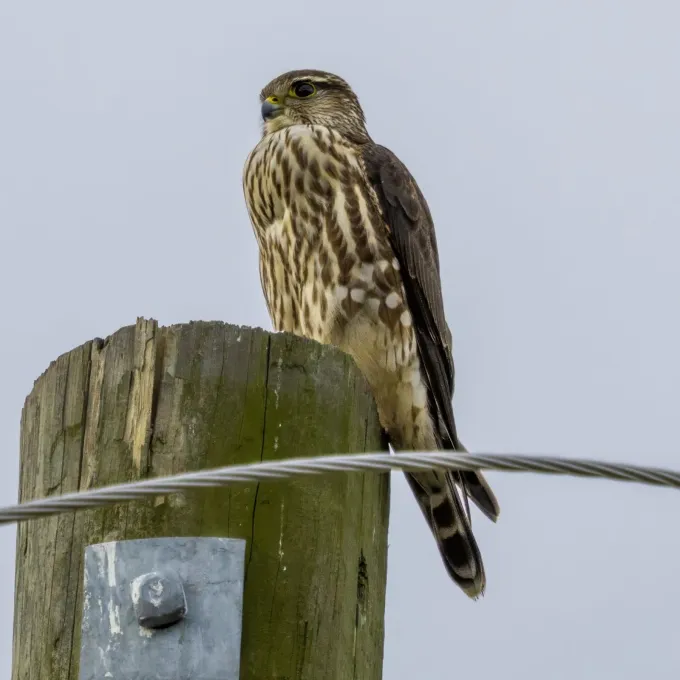
Description
How to identify
The Merlin (Falco columbarius) is a small species of falcon belonging to the family Falconidae. It is characterized by its compact size, pointed wings, and swift, agile flight patterns that distinguish it from larger raptors.
Adult males typically feature a slate-grey dorsal plumage with reddish streaking on the underside, while females and juveniles display a darker, brownish hue. Their wingspan ranges from 50 to 70 centimeters.
These birds are known for their hunting technique, which involves low-level flight and rapid pursuit rather than hovering or soaring at great heights.
In terms of habitat, Merlins are often found in open country, scrublands, and agricultural landscapes, making them frequent visitors to farmland during migration and winter.
Identification is aided by their distinct behavior; they are fast-moving hunters that rarely perch in prominent positions for extended periods when active.
What it damages
The Merlin is not an agricultural pest. It does not feed on plant material, crops, seeds, or roots. It is a strictly carnivorous raptor that poses no risk to agricultural yields.
Instead of causing damage, the Merlin acts as a beneficial component of the agroecosystem. By preying on small birds and occasionally rodents, it helps regulate populations that could potentially damage grain crops.
There is no economic damage caused by this species. It does not transmit plant diseases, nor does it interfere with irrigation or tillage operations.
Its role is exclusively that of a natural pest regulator. In the context of Integrated Pest Management (IPM), the presence of such raptors is viewed as a sign of a healthy, functioning environment.
Farmers are encouraged to view the presence of the Merlin as an asset, as it contributes to the natural suppression of bird populations that might congregate in crop areas.
When it appears
Merlins are migratory birds. Their presence in agricultural fields is primarily determined by seasonal migration patterns, occurring mainly during the spring and autumn months.
During autumn migration, they are frequently seen in areas where bird flocks gather after harvest. They utilize these open landscapes to pursue their prey efficiently.
In certain geographic regions, Merlins may spend the winter months near farmland, provided there is a sufficient supply of prey to sustain them throughout the colder season.
Their activity on farms is entirely unrelated to the growth cycles of crops. It is dictated by the availability of prey and the seasonal movement of other bird species.
The absence of the species during mid-summer, when they are focused on breeding in more northern or remote habitats, confirms that they are seasonal visitors rather than permanent agricultural inhabitants.
Control measures
Control measures against the Merlin are neither necessary nor permitted. As a non-pest species, it should not be targeted by any lethal or exclusionary methods.
In many jurisdictions, the Merlin is a protected species. International and local laws strictly forbid the harassment, trapping, or killing of these birds of prey.
Maintaining biological corridors, hedgerows, and buffer zones within agricultural landscapes is the best practice for supporting the presence of beneficial raptors like the Merlin.
The avoidance of harmful rodenticides and pesticides is crucial, as these substances can bioaccumulate and inadvertently kill raptors, thereby disrupting the natural control of crop-damaging populations.
Encouraging biodiversity on the farm is the recommended strategy. By fostering an environment where natural predators thrive, farmers can achieve better long-term ecological balance.
Taxonomy
- Latin name
- Falco columbarius
- Family
- Falconidae
- EPPO code
- FALCCO
Discussion
No discussions yet — be the first.