
Falcon
Falco
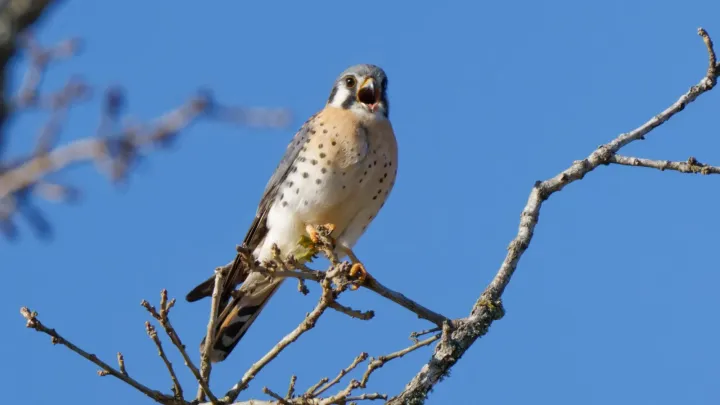
Description
How to identify
The falcon (genus Falco, family Falconidae) is a bird of prey that, while biologically significant for the ecosystem, acts as a pest for poultry farmers by preying on domestic birds.
Falcons are characterized by their streamlined bodies, exceptionally sharp vision, and powerful talons, all of which make them highly efficient aerial hunters capable of rapid dives.
The genus includes various species, such as the peregrine falcon or kestrel, all sharing a distinct "tomial tooth" on the upper beak, designed for efficient dispatching of their prey.
These birds are highly intelligent and opportunistic, often scouting farming environments to identify vulnerable targets among free-ranging poultry or unprotected enclosures.
Their ability to nest on high man-made structures like silos, barns, or transmission towers brings them into direct conflict with agricultural operations seeking to protect their livestock.
What it damages
The primary agricultural impact of falcons is the predation on young poultry, including chicks, ducklings, and quails, which are often killed during daytime foraging.
Constant predation pressure creates a high-stress environment for the entire flock, which can manifest in reduced growth rates, lower egg production, and increased susceptibility to disease.
The presence of a falcon can also cause logistical issues, as it attracts secondary scavengers and creates unsanitary conditions around nesting sites or feeding perches.
Physical damage may occur to the farm infrastructure, such as tearing of netting or accumulation of droppings on critical equipment, requiring constant maintenance.
The economic losses are proportional to the effectiveness of the farm's biosecurity measures and the density of local falcon populations nearby.
When it appears
Falcon activity peaks during the spring and early summer when they are actively rearing their young, leading to an increased demand for high-protein food sources for their offspring.
Migration periods in the autumn also see an influx of raptors in certain regions, which may temporarily heighten the pressure on agricultural sites located along flyways.
Daily activity is most intense during the early morning and late afternoon hours, coinciding with the times when poultry is frequently released for free-range grazing.
In regions with milder winters, falcons remain active throughout the year, meaning that poultry protection measures cannot be relaxed even in the colder months.
Clear, sunny weather conditions significantly increase hunting efficiency for falcons, leading to higher risks of predation on days with high visibility and stable air currents.
Signs of infestation
The discovery of plucked feathers and carcass remains in or near the poultry enclosure is a definitive sign of recent predation by a raptor.
Flock distress, characterized by sudden flight to cover, vocal warnings, or abnormal groupings, suggests the presence of a predator in the immediate vicinity.
Pellets, which are small compact masses of undigested fur and feathers regurgitated by the bird, are clear evidence that a falcon is using a specific spot for resting.
Repeated sightings of a bird circling overhead or perching on tall poles are indicative of "scouting" behavior as the predator habituates itself to the farm's activity schedule.
A sudden drop in productivity or overall bird health without biological signs of infection often indicates chronic stress caused by the persistent threat of aerial predators.
Control measures
Implementing overhead netting is the most reliable method for protecting poultry, as it creates an impenetrable barrier against aerial attacks by falcons.
Audio deterrents, including recordings of predator distress calls or electronic sonic devices, can effectively discourage falcons from frequenting the farm area.
Visual deterrents like holographic tapes, reflective surfaces, or large artificial owl decoys can be effective, though they must be moved regularly to avoid habituation.
Maintaining a clean farm environment by managing rodent populations and proper waste disposal helps by removing smaller prey species that attract raptors to the area.
Since most falcon species are protected by local and international wildlife laws, all mitigation efforts must be non-lethal and focus on harassment or exclusion strategies.
Taxonomy
- Latin name
- Falco
- Family
- Falconidae
- EPPO code
- FALCSP
Discussion
No discussions yet — be the first.