
Cabbage webworm
Evergestis frumantalia
Description
How to identify
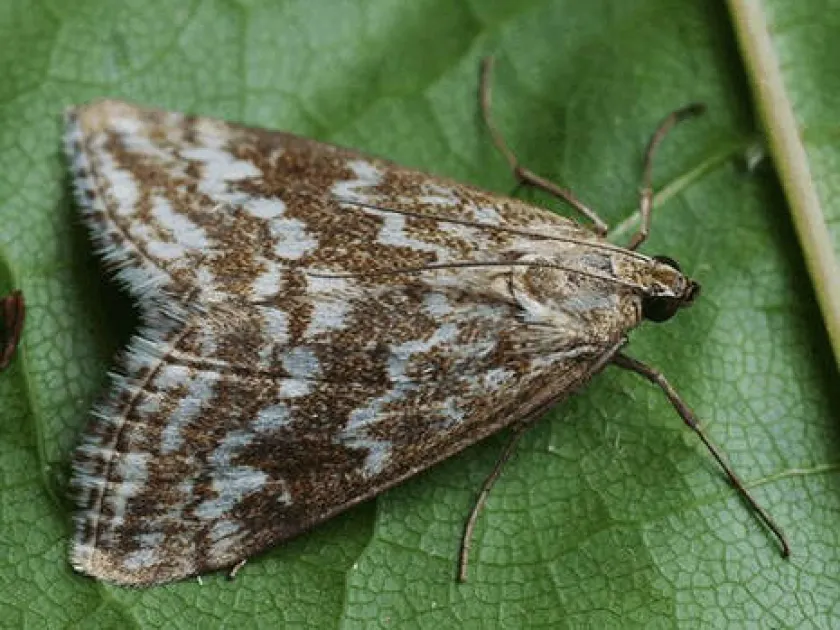
The Cabbage webworm (Evergestis frumantalia) is a lepidopteran pest belonging to the Crambidae family. The adult moth has a wingspan of approximately 30 mm and displays a cryptic, brownish-grey coloration with dark patterns, which aids in camouflage on host plants.
The larvae are approximately 20–25 mm long at maturity and exhibit a pale yellowish-green to greyish body. A key identification feature is a dark dorsal stripe accompanied by lighter lateral lines, which helps them blend seamlessly with the foliage of their host plants.
The life cycle encompasses four stages: egg, larva, pupa, and adult. The insect typically overwinters in the pupal stage, encased in a durable cocoon located within the upper layer of soil, allowing it to withstand harsh environmental conditions during the winter months.
Adult moths emerge in late spring or early summer. Depending on local climatic conditions, the species can produce one or two generations per season. The timing of emergence is highly dependent on ambient temperatures, which trigger the development from pupae.
Females lay their eggs in clusters, primarily on the underside of leaves. Each female can produce hundreds of eggs, creating a significant potential for population growth within a single growing season if left unmanaged by agricultural practices.
What it damages
Larvae are the primary cause of damage, as they feed on the leaf tissue. Younger larvae often skeletonize the leaves, while larger ones can consume the entire leaf lamina, leaving only the primary veins, which severely stunts plant development.
Host crops include various crucifers, specifically all types of cabbage, broccoli, Brussels sprouts, radishes, and turnips. They are also known to feed on wild cruciferous weeds, which act as a reservoir for populations when cultivated crops are absent.
The economic impact is highest during the early vegetative stages of the crop. Larval feeding on the growing point or heart of the cabbage plant often results in malformed heads or total loss of the crop, rendering the harvest unmarketable.
Secondary damage occurs when larval excrement accumulates, promoting the growth of bacteria and fungi. This causes rotting in the head of the cabbage, which significantly reduces the shelf life and quality of the final produce, leading to substantial financial losses.
Monitoring the intensity of infestation is crucial. Because larvae often hide within the inner leaves of the cabbage head, traditional contact-based treatments may be ineffective, necessitating the use of systemic insecticides or early-stage interventions.
Control measures
Effective management requires an integrated approach that focuses on reducing the initial pest population and preventing major outbreaks. Cultural practices serve as the foundation for long-term population suppression in commercial fields.
- Implement deep autumn plowing to disturb and destroy overwintering pupae in the soil.
- Maintain weed-free conditions, specifically targeting wild mustards and other cruciferous weeds.
- Rotate crops to minimize the build-up of local pest populations over consecutive years.
- Utilize pheromone traps for monitoring flight activity to time insecticide applications accurately.
- Apply biological insecticides such as Bacillus thuringiensis during the early larval instar stages.
Taxonomy
- Latin name
- Evergestis frumantalia
- Order
- Lepidoptera (butterflies)
- Family
- Crambidae
- EPPO code
- EVERFR
Discussion
No discussions yet — be the first.