
Evergestis
Evergestis
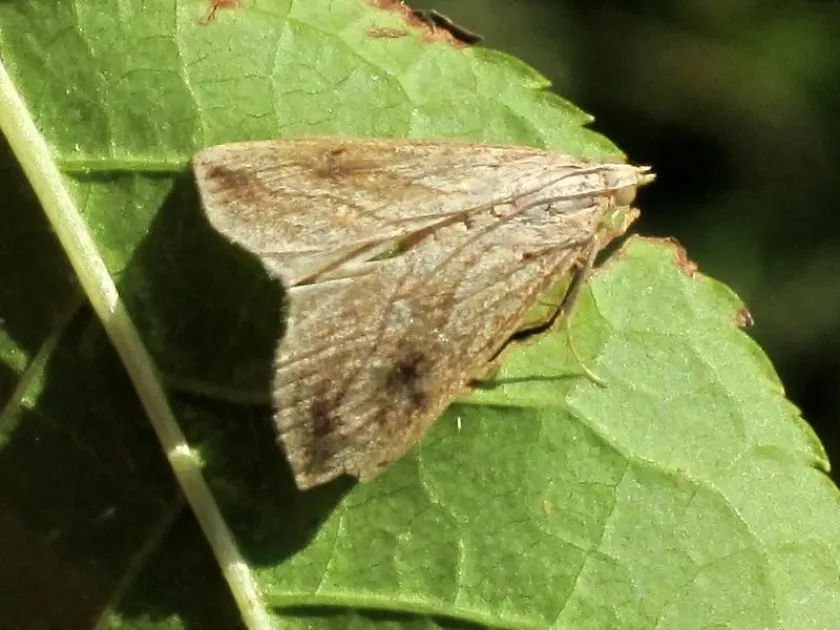
Description
How to identify
The genus Evergestis belongs to the family Crambidae (snout moths). Adult insects are medium-sized moths with a wingspan of 20 to 35 mm, featuring distinct dark lines and spots on their forewings.
The larvae (caterpillars) of Evergestis are typically spindle-shaped, colored in shades of gray, green, or yellow with longitudinal stripes, which provide camouflage on host leaves.
The pupal stage occurs in the soil or within a dense cocoon among plant debris, where the insect overwinters. The pupae are brown and have protective covers to survive winter conditions.
The life cycle involves complete metamorphosis: egg, larva, pupa, and adult. Depending on the region and climatic factors, the species may complete one or two generations per season.
Species identification can be challenging due to similarities with other members of the subfamily Evergestinae, often requiring expert entomological analysis for confirmation.
What it damages
The primary hosts for Evergestis larvae are members of the Brassicaceae family, including cabbage, cauliflower, broccoli, turnips, swedes, and radishes.
Young larvae feed primarily on the tender tissue of the leaves, creating small holes known as "windows," which initially appear as minor aesthetic damage.
As larvae grow, they become more voracious, destroying large portions of the leaf blade and leaving only the skeleton of major veins, which drastically reduces photosynthesis.
During the formation of heads or root vegetables, caterpillars may bore into the produce, rendering it unfit for market or storage due to physical damage and secondary rot.
Severe infestations on young seedlings can result in total crop failure or significant stunting, leading to stunted growth and deformed plant development.
When it appears
The emergence of the first generation of adult moths usually begins in late spring or early summer, coinciding with the active growth phase of cruciferous crops.
The peak activity of larvae typically occurs in June and July, when weather conditions become optimal for their rapid development and growth.
A second generation often appears in late summer, posing a significant threat to late-maturing cabbage varieties and root crops that are approaching the harvest period.
Biological activity is highly dependent on temperature; hot and dry seasons can accelerate the larval cycle, leading to increased population density.
During the autumn, the pest enters diapause and burrows into the soil to spend the winter months until the arrival of spring warmth.
Signs of infestation
The first signs of Evergestis presence are irregular holes in the leaves, often concentrated on the underside of the leaf blades near the base of the plant.
The accumulation of frass (larval droppings) on leaves and in the center of the plant is a clear indicator that caterpillars are actively feeding in the area.
The presence of silken webbing, used by caterpillars to bind leaf edges together for protection, is another significant indicator of high infestation levels.
Visual inspection during the early morning or evening hours allows growers to find the larvae, which typically seek shelter at the base of the plant or in the leaf rosette.
- Leaves showing a skeletonized, net-like appearance.
- Presence of frass in the center of the plant rosette.
- Wilting or deformed young shoots and leaves.
- Tangled, webbed leaf structures indicating larval shelter.
Control measures
Cultural control measures include deep autumn plowing, which helps destroy a significant portion of the pupae overwintering in the soil.
Crop rotation is essential for integrated pest management; gardeners should avoid planting cruciferous crops in the same area for multiple consecutive years.
Consistent weed management, especially targeting wild Brassicaceae (such as shepherd's purse or field mustard), helps remove breeding grounds for the moth.
In the event of large larval outbreaks, chemical insecticides such as pyrethroids or organophosphates may be applied, strictly following label dosage and safety intervals.
Biological control agents containing Bacillus thuringiensis are highly effective against younger larvae and are considered environmentally friendly as they minimize harm to beneficial insects.
Taxonomy
- Latin name
- Evergestis
- Order
- Lepidoptera (butterflies)
- Family
- Crambidae
- EPPO code
- EVERSP
Discussion
No discussions yet — be the first.