
Goldenrod gall fly
Eurosta solidaginis
Description
How to identify
The goldenrod gall fly is a small insect belonging to the fruit fly family (Tephritidae). Adult flies feature distinctive dark patterns on their wings, which help them camouflage against the foliage of their host plant.
This insect is a highly specialized herbivore with a life cycle strictly tied to the goldenrod plant. Females possess a specialized ovipositor designed to penetrate the stem of the goldenrod to deposit their eggs.
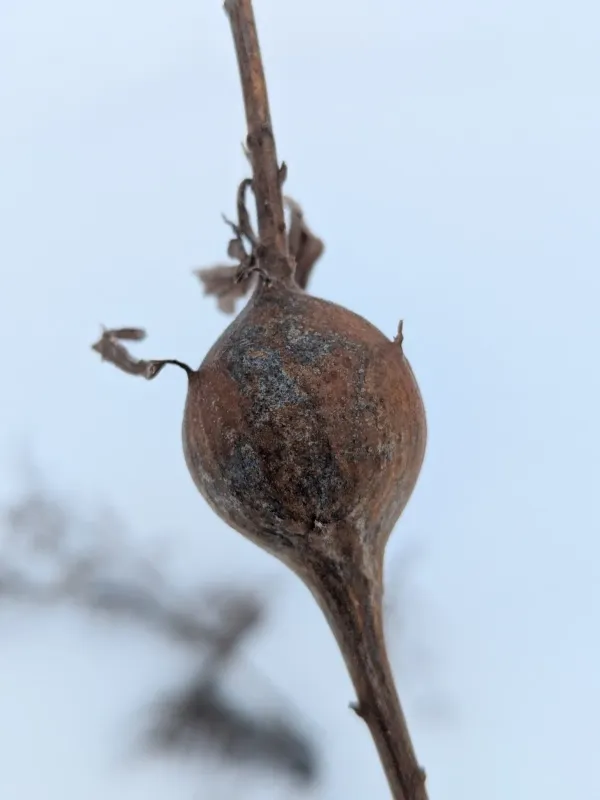
The larva is a white, legless grub that resides almost entirely within the plant tissue. Its feeding activity is the primary driver behind the formation of the characteristic spherical growths on the goldenrod stem.
Adult flies are often overlooked due to their small size and cryptic coloration. The most visible stage of the insect's presence is the gall, a plant growth that serves as both a food source and a protective shelter.
Understanding the biology of this pest is crucial for managing its population. The life cycle is precisely synchronized with the growth phases of the goldenrod, making it a fascinating subject of study in plant-insect interactions.
What it damages
The primary host for the goldenrod gall fly is the tall goldenrod (Solidago canadensis) and closely related species. Larvae use the stems of these plants as their exclusive habitat and source of nutrition.
As the larva feeds, it releases specific chemical signals that induce the plant to undergo abnormal cell growth. This results in the formation of a round, woody gall around the larva.
While the galls rarely kill the host plant, they divert significant nutrients and water away from the plant's terminal growth. This can reduce the overall vigor and aesthetic appeal of the goldenrod.
In cases of heavy infestation, multiple galls on a single stem can structurally weaken the plant, making it more susceptible to environmental stressors or secondary pathogens.
For agricultural and pastoral land, the pest is primarily managed due to the goldenrod's status as an invasive weed in many areas, where controlling the fly can be part of broader weed management efforts.
When it appears
The life cycle begins in early spring when adult flies emerge from the overwintered galls. This emergence is synchronized with the rapid shoot growth of the goldenrod host plant.
After mating, females lay their eggs in the terminal buds or upper stem tissues. The eggs hatch quickly, and the larvae begin burrowing into the plant to initiate gall formation.
Throughout the summer, the larva feeds within the developing gall, increasing in size as the plant tissue grows. By autumn, the larva reaches maturity and enters a state of dormancy to survive the winter.
The insect spends the winter safely encased within the woody gall, which provides insulation against freezing temperatures and protection from many predators.
Pupation occurs inside the gall in early spring, marking the end of the annual cycle. Once transformation is complete, the adult chews an exit hole through the gall wall to emerge and begin the cycle anew.
Signs of infestation
The most obvious indicator of a goldenrod gall fly infestation is the presence of large, round, ball-shaped galls on the stems of the goldenrod plants during the growing season.
If a gall is carefully cut open, a single creamy-white larva can be found in the central chamber. This is the definitive sign that the plant has been colonized by this specific insect.
Small, circular exit holes found on the galls in early spring indicate that the adult fly has already emerged. These holes are a clear sign that the current cycle is complete.
Stems affected by galls may appear slightly distorted or stunted. In some cases, the foliage above the gall may show signs of premature wilting or yellowing due to the restriction of nutrient flow.
- Spherical galls on the goldenrod stem
- Distorted growth of terminal shoots
- Small exit holes in the galls observed in spring
- Stunted plant development in heavy infestations
- Larvae visible inside the gall when dissected in winter
Control measures
The most effective mechanical control method is to cut and remove the galls during the autumn or winter months before the adults emerge. This effectively eliminates the next generation of the pest.
Collected galls must be burned or disposed of in sealed containers to ensure that larvae do not complete their cycle on the ground. Composting is generally not recommended unless the heat process is sufficient.
Biological control involves preserving the natural enemies of the gall fly, such as parasitic wasps that lay eggs inside the galls to predate on the larvae. Limiting insecticide use in the area helps these natural predators thrive.
Chemical control is rarely recommended or effective, as the larvae are well-protected inside the plant tissue. Systemic treatments are usually not justified except in specific nursery or research settings.
Prevention focuses on maintaining plant health and monitoring local goldenrod patches. Removing unwanted goldenrod stands early can significantly reduce the risk of infestation in your immediate area.
Taxonomy
- Latin name
- Eurosta solidaginis
- Order
- Diptera (flies)
- Family
- Tephritidae
- EPPO code
- EUOSSO
Discussion
No discussions yet — be the first.