
Eurosta
Eurosta
Description
How to identify
The genus Eurosta belongs to the family Tephritidae, commonly known as fruit flies or gall flies. These insects are distinguished by their ability to induce gall formation in their host plants.
Adult flies are generally small, with patterned wings that are characteristic of the Tephritidae family. Identification to the species level often relies on specific host associations and morphological features.
Larvae are legless and reside within the protective environment of the plant gall they induce. Their growth is entirely dependent on the nutritional resources provided by the host.
The life cycle involves complete metamorphosis, including egg, larva, pupa, and adult stages. The transformation occurs either within the gall or after the adult emerges.
Their ecological niche is highly specialized, typically associating with specific plant families, with the genus being a well-known inhabitant of Asteraceae members.
What it damages
Eurosta species primarily target plants in the Asteraceae family, with goldenrod (Solidago) being the most documented host for the genus.
The primary damage is the creation of galls on stems. These growths act as nutrient sinks, diverting resources from the plant's reproductive and vegetative development.
While often considered a nuisance in ornamental gardens, heavy infestations can weaken the structure of the host plant, potentially leading to stunted growth.
The gall structure itself disrupts the vascular tissue, potentially interfering with the translocation of nutrients and water throughout the stem.
Although economic damage to commercial crops is usually low, the presence of these insects can be detrimental to the aesthetic value of nursery stocks and floral displays.
Signs of infestation
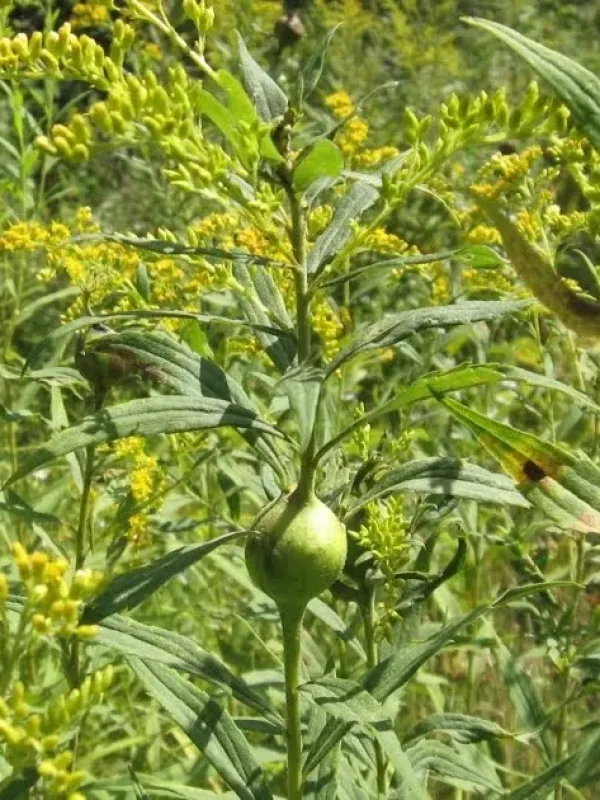
The most prominent sign of infestation is the appearance of distinct, globular, or spindle-shaped galls on the plant stems during the growing season.
These galls are often firm to the touch and can vary in size depending on the specific Eurosta species and the vigor of the host plant.
Stunting of the stem above the gall or reduced flower production are common secondary symptoms observed in infested goldenrod plants.
During the dormant season, dried stems often reveal the persistent galls, which remain attached even after the rest of the plant tissue has died back.
In some instances, the gall surface may show small emergence holes where the adult fly has exited, indicating that the generation cycle has been completed.
Control measures
Sanitation is the most recommended control method. Physically removing and destroying infested stems containing galls prevents the next generation of adults from emerging.
All collected plant material must be burned or disposed of in sealed containers to ensure that larvae do not complete their development.
Chemical control is generally ineffective and not recommended, as the larvae are protected inside the gall walls and are shielded from standard insecticide applications.
Encouraging natural enemies, such as parasitoid wasps that specifically target Eurosta larvae, can help maintain population levels in balance within an ecosystem.
Regular inspection during early spring and summer is vital for nurseries to identify new gall formation and implement manual removal strategies before the population expands.
Taxonomy
- Latin name
- Eurosta
- Order
- Diptera (flies)
- Family
- Tephritidae
- EPPO code
- EUOSSP
Discussion
No discussions yet — be the first.