
Brown-tail moth
Euproctis varia
Description
How to identify
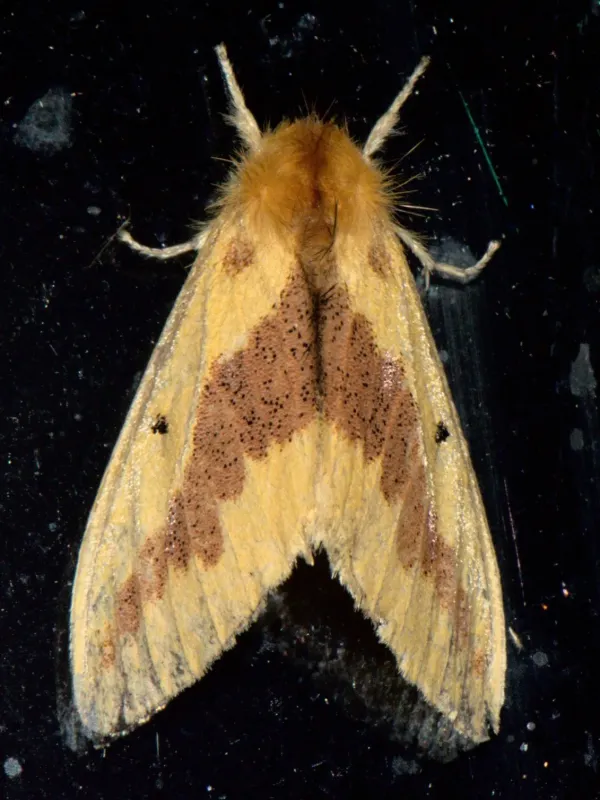
The brown-tail moth (Euproctis varia) belongs to the Erebidae family. The adult moth has a wingspan of approximately 35–40 mm and is characterized by a snow-white body, with the female displaying a distinctive brown tuft of hairs at the end of its abdomen.
The larvae are covered in dense tufts of long hairs, which contain urticating toxins. These hairs are notorious for causing severe skin rashes and respiratory irritation in humans, making the management of this pest a sensitive task.
Pupation occurs within brownish cocoons, which are constructed from silk and incorporated with foliage to provide camouflage. These cocoons are typically found on the terminal branches of host trees.
The eggs are laid in clusters, which are covered by the golden-brown hairs shed from the female moth’s abdomen. These clusters are often placed on the underside of leaves and act as a primary indicator for population density.
This species is highly adaptable and can be found across various forest and orchard habitats. Its presence is often seasonal, coinciding with the growth stages of its preferred deciduous host plants.
What it damages
The larvae are polyphagous, feeding on a wide variety of deciduous trees, including apple, pear, cherry, plum, oak, and elm. In orchards, they cause direct damage to the fruit-bearing capacity of the trees.
Damage starts with the consumption of buds and young foliage in the early spring. When populations are high, the larvae can strip a tree completely bare, leaving only the leaf veins remaining in a process known as skeletonization.
The loss of foliage leads to a significant decrease in photosynthetic capacity, which weakens the tree's overall vigor. Repeated defoliation events over successive years can lead to limb dieback and tree death.
Aside from foliage damage, the presence of these moths is a health hazard to orchard workers. Handling infested branches without protection can lead to severe dermatitis caused by the larval hairs.
In addition to agricultural impact, the moth is a significant pest in urban landscapes and parks. The loss of aesthetic value and the human health risk make it a high-priority pest for management programs.
When it appears
The brown-tail moth typically completes one generation per year. Winter is spent in the larval stage, inside communal silk nests constructed on the twigs of host trees.
Larval emergence occurs in the spring, synchronized with the opening of buds. This is the period when they are most voracious and cause the most significant damage to the plant's structural development.
Pupation occurs in early summer, usually June, with adults emerging later in the season. The flight period for the moths typically occurs in mid-to-late summer, when mating and egg-laying take place.
Newly hatched larvae feed for a short period before constructing their winter nests. These nests are vital for surviving the cold months, as they provide insulation and protection from predators.
Weather patterns significantly influence the success of the annual cycle. Warm, mild winters lead to higher survival rates for the larvae within their nests, which often correlates with larger outbreaks in the following spring.
Signs of infestation
The most reliable sign of a brown-tail moth infestation is the presence of winter silk nests on the branches. These nests remain visible throughout the dormant season, appearing as clusters of dead, withered leaves tied with silk.
In the spring, the presence of damaged or consumed buds and leaves is a clear indicator of larval activity. Larvae are often found in groups, moving collectively through the canopy.
Droppings, or frass, accumulating under the tree canopy are another common sign of a significant larval presence. This material is often found on foliage or around the base of the trunk.
The presence of egg clusters on the underside of leaves during the summer months indicates where the next generation will start. Careful inspection of tree foliage can prevent surprise infestations.
Increased bird activity, specifically around the canopy, can sometimes serve as an indirect clue that caterpillars are present. Monitoring these patterns is a useful tool for integrated pest management.
Control measures
Winter nest removal is the most effective cultural control method. By manually cutting out and burning the silken nests before the larvae emerge in the spring, you can prevent damage without chemicals.
Biological control, using Bacillus thuringiensis sprays, is highly effective when applied to young larvae. This method is environmentally friendly and helps preserve beneficial predatory insect populations.
Chemical control should be considered as a last resort in cases of severe infestation. Products should be selected based on local regulations and applied precisely during the early stages of larval development.
Pheromone traps are excellent for monitoring adult moth populations and identifying the timing of peak flight. This information is crucial for planning any necessary intervention in the life cycle.
Maintaining tree health through proper fertilization and pruning reduces the tree's susceptibility to long-term damage. Healthy trees recover more quickly from defoliation events compared to stressed trees.
Taxonomy
- Latin name
- Euproctis varia
- Order
- Lepidoptera (butterflies)
- Family
- Erebidae
- EPPO code
- EUPRVA
Discussion
No discussions yet — be the first.