
Celery fly
Euleia fratria
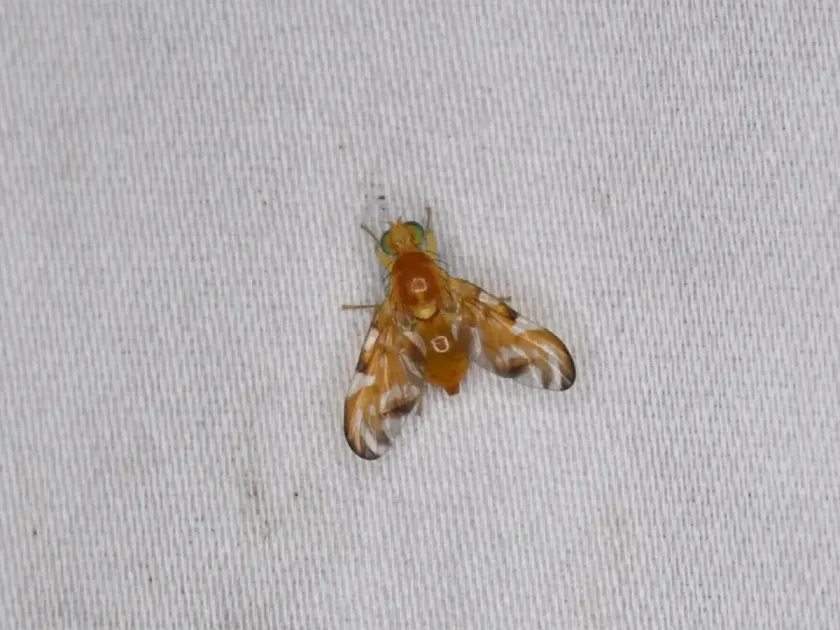
Description
How to identify
The celery fly (Euleia fratria), often referred to as the parsnip fly, belongs to the Tephritidae family, also known as fruit flies or picture-winged flies. It is a significant pest of various apiaceous vegetable crops.
Adult flies are approximately 6 mm long with a distinct brownish-yellow body. Their wings are the most characteristic feature, bearing unique dark patterns or bands that distinguish them from common house flies.
The life cycle involves four distinct stages: egg, larva, pupa, and adult. The insect typically undergoes one or two generations per year, depending on the climatic zone and temperature conditions.
Larvae are small, legless, and creamy-white in color, usually reaching 7–8 mm in length. They spend their entire feeding stage hidden within the leaf tissue, which provides them with protection from predators and environmental factors.
Pupation occurs in the soil, where the insect remains in a protective puparium through the winter months, emerging as an adult in the following spring once conditions become suitable.
What it damages
The primary hosts of Euleia fratria are members of the Apiaceae (formerly Umbelliferae) family, specifically parsnip (Pastinaca sativa), celery (Apium graveolens), and sometimes parsley.
The damage is caused entirely by the larvae, which create mines—tunnels—within the leaves by feeding on the mesophyll tissue. This feeding behavior destroys the leaf structure and hampers photosynthesis.
Heavy infestations can lead to severe wilting and drying of the foliage. When the leaves are heavily mined, the plant is unable to produce sufficient carbohydrates, leading to stunted root development.
Young seedlings are particularly vulnerable and may die completely if the infestation is heavy during the early stages of growth, resulting in significant yield losses for growers.
Beyond crop loss, the presence of mines and frass inside the leaves significantly reduces the marketability of crops sold with foliage or those requiring high aesthetic quality.
When it appears
Adult flies usually emerge in mid-to-late spring, with the timing being highly dependent on soil temperature. They are active during the day and seek out suitable host plants for oviposition.
The first generation typically targets young plants, causing damage in May and June. If a second generation occurs, it often peaks in mid-summer, affecting the crop during its most rapid growth phase.
The fly's activity is spread out over several weeks because females lay eggs in batches rather than all at once, which can lead to overlapping generations in the field.
By late summer and early autumn, the larvae migrate into the soil to pupate. The pupae stay dormant throughout the winter, waiting for the return of warmer spring temperatures.
Monitoring the flight periods is essential for successful control, as treatments must be applied before the eggs are laid to prevent the larvae from entering the leaves.
Signs of infestation
The first visible signs are small, pale spots or punctures on the leaves where the female has deposited eggs. These spots eventually enlarge into clear or whitish blotch mines.
As the larvae feed, the mines become increasingly visible as irregular, winding, and transparent trails that turn brown and necrotic as the plant tissue dies.
Heavily infested plants often exhibit symptoms of yellowing, curling, and premature senescence of the outer leaves, giving the crop a scorched or unhealthy appearance.
If you inspect the affected leaves, you can clearly see the tunnels. Opening a mine often reveals the larvae or dark deposits of excrement left behind by the feeding insects.
- Pale, winding tunnels (mines) on leaves.
- Yellowing and browning of leaf tissue.
- Premature leaf drop or wilting.
- Stunted plant growth and development.
- Visible larvae within leaf tissue.
Control measures
Crop rotation is the most effective cultural control method. By planting celery or parsnip far from the previous year's sites, you can significantly reduce the risk of emerging adults finding the crop.
Tilling the soil deeply after harvest helps to bury the pupae, making it difficult for the adults to emerge from the ground the following spring.
For home gardeners, using floating row covers (agrofleece) is highly effective. If installed early in the season, it provides a physical barrier that prevents females from landing on the leaves to lay eggs.
Weed control is essential, particularly removing wild relatives of the parsnip and celery family from the field borders to eliminate alternative breeding sites for the flies.
Chemical control should be used judiciously, targeting the adult stage to interrupt the life cycle before egg-laying occurs, while always adhering to local safety guidelines.
Taxonomy
- Latin name
- Euleia fratria
- Order
- Diptera (flies)
- Family
- Tephritidae
- EPPO code
- EULIFR
Discussion
No discussions yet — be the first.