
Far Eastern soft scale
Eulecanium excrescens
Description
How to identify
The Far Eastern soft scale (Eulecanium excrescens) is an insect belonging to the family Coccidae, known for its ability to parasitize various woody plants by piercing and sucking tissues.
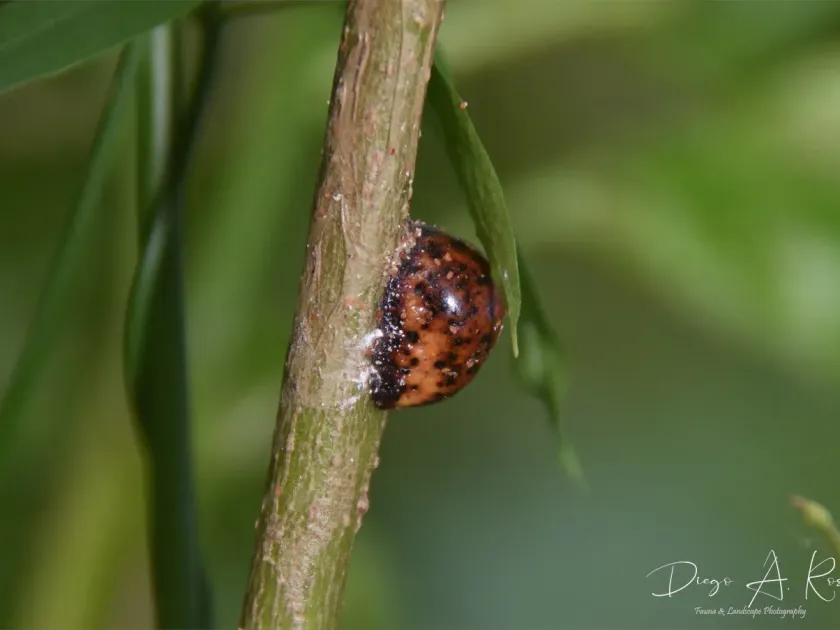
Adult females are characterized by their convex, nearly spherical shape and brownish color, which allows them to blend in with the bark of host trees effectively.
Unlike armored scales, soft scales do not have a separate shield; instead, the hardened cuticle of the insect itself serves as protection, firmly adhering to the plant's surface.
The larvae, often referred to as crawlers, are highly mobile during the early stages of their development, facilitating their movement to new feeding sites within the tree canopy.
Males are rarely seen in the field due to their ephemeral lifespan and small, winged morphology, while the primary damage is caused by the sedentary female population.
What it damages
This pest affects a wide range of deciduous trees and shrubs, including fruit species like apples, pears, and plums, as well as ornamental trees in various regions.
By consuming sap, the scales weaken the plant, leading to stunted growth, reduced foliage density, and an overall decrease in the plant's vigor and health.
The removal of large quantities of sap causes nutritional imbalances, which can make the host plant more susceptible to secondary infections and extreme weather conditions.
The excretion of honeydew serves as a substrate for the development of sooty mold, which inhibits photosynthesis by covering the surface of leaves and branches with a black layer.
Severe infestations over several seasons can cause branch dieback and, in young or stressed trees, may ultimately lead to the death of the entire host plant.
When it appears
The life cycle is closely synchronized with the host plant's phenology, with overwintering larvae beginning their activity in early spring as temperatures rise.
By late spring or early summer, the insects mature into adults, and egg-laying occurs, with the mother protecting the clutch beneath her body during the developmental phase.
The crawler stage, which is the period when larvae emerge and seek new locations to settle, typically occurs in mid-summer, making it the most critical time for monitoring.
As autumn approaches, the second-instar larvae migrate to the protective crevices of the bark to enter diapause, effectively surviving the winter months.
Understanding this single-generation cycle is vital for timing control measures to target the most vulnerable stages of the insect's development.
Signs of infestation
One of the most obvious signs is the presence of small, hemispherical brown growths on the twigs, which often persist long after the insects have been removed or died.
Honeydew, a sticky substance found on leaves and branches, acts as a primary indicator of sucking insect activity and often attracts ants to the affected branches.
The appearance of a black, dusty coating on leaves (sooty mold) is a strong symptom that the scale population is already at a high density requiring intervention.
Visual decline, including the wilting of young shoots and yellowing of foliage in mid-summer, often points to the debilitating feeding activity of these pests.
- Spherical brown bumps on the bark.
- Sticky residue on foliage and stems.
- Black sooty mold growth on leaves.
- Increased ant activity on the tree trunk.
Control measures
Dormant oil sprays applied in early spring are highly effective in suffocating the overwintering larvae before they resume their active development.
Systemic insecticides applied during the crawler emergence phase are a reliable way to manage populations that have already established themselves on the branches.
Pruning out heavily infested branches and properly disposing of them can significantly reduce the pest load without the immediate need for broad-spectrum chemical treatments.
Encouraging beneficial insects, such as lady beetles and parasitic wasps, can provide long-term natural suppression of soft scale populations in stable garden ecosystems.
Maintaining optimal tree health through regular watering and balanced fertilization helps plants recover from infestations and improves their natural defense mechanisms.
Taxonomy
- Latin name
- Eulecanium excrescens
- Order
- Hemiptera (bugs, aphids, leafhoppers)
- Family
- Coccidae
- EPPO code
- EULCEX
Discussion
No discussions yet — be the first.