
European fruit lecanium
Eulecanium cerasorum
Description
How to identify
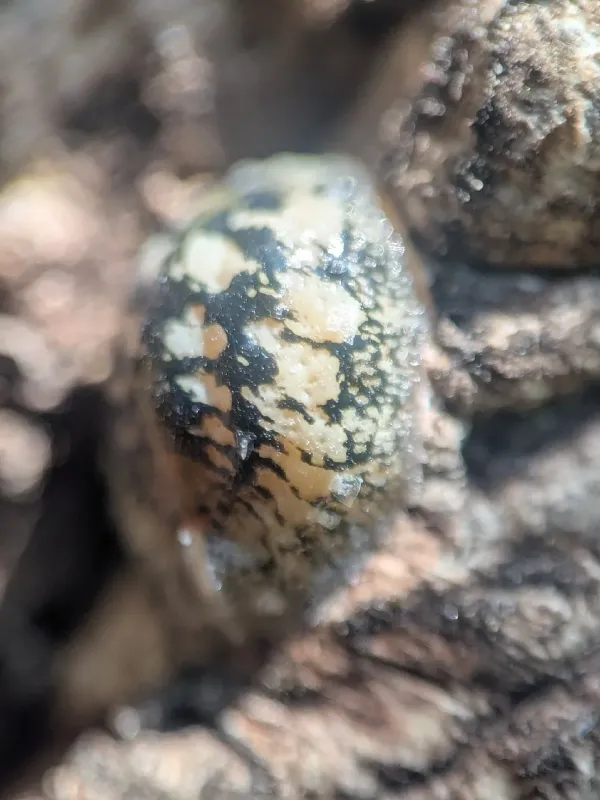
The European fruit lecanium belongs to the Coccidae family. Adult females have a characteristic hemispherical shape, resembling small brown bumps firmly attached to the bark of twigs.
The body surface of the female is smooth, shiny, and colored in dark brown or reddish hues. Adults reach 3–6 mm in size, making them visible upon close inspection of branches during the dormant period.
Males are rare, small winged insects that play a minor role in reproduction, as the species often reproduces via parthenogenesis, where females produce offspring without mating.
First-instar nymphs, known as crawlers, have an oval, flattened shape with a yellowish-brown color. They possess well-developed legs, allowing them to move actively across the plant surface.
Eggs are minute, oval-shaped, and pale pink or cream in color. They are deposited in large numbers under the female's hardened body, which serves as a protective shield for the developing brood.
##damage##This pest primarily affects stone fruit crops, including plums, cherries, apricots, and peaches. Occasionally, it can be found on apple and pear trees, as well as various ornamental shrubs.
Damage is caused by both nymphs and adult females that extract cell sap from young shoots and branches, leading to a significant weakening of the tree's physiological state.
Heavy infestations result in stunted growth, premature leaf drop, and decreased cold hardiness, making the trees more susceptible to winter frost damage and secondary diseases.
As they feed, the insects excrete large amounts of honeydew, which serves as a substrate for sooty mold. This fungus creates a black coating on leaves, interfering with photosynthesis.
Prolonged stress leads to reduced crop yield, fruit deformation, and in severe cases, the death of individual branches or even the entire tree if left untreated.
When it appears
The insect has a one-year life cycle. It overwinters as second-instar nymphs that anchor themselves to the underside of branches or within bark crevices, where they are well-camouflaged.
In spring, as buds begin to swell, nymphs wake up, start feeding, and molt into adult females. During this period, they grow rapidly and become clearly visible on the branches.
Egg-laying occurs from late May to early June. A single female can produce over a thousand eggs, which are kept safely underneath her chitinous protective cover.
The crawler emergence begins in June and continues for several weeks. These mobile nymphs migrate to the underside of leaves, where they feed on sap until late summer.
By late summer or early autumn, the nymphs transition to the second instar and move back to the woody parts of the tree to prepare for the winter, completing the annual cycle.
Signs of infestation
The most obvious sign of infestation is the presence of numerous brown, hemispherical structures on the bark, which can be easily mistaken for natural bark texture.
A sticky residue on leaves and branches in mid-summer is a clear indication of pest activity and honeydew production, which also attracts ants to the trees.
The appearance of black sooty mold on foliage is a secondary sign, indicating that the scale insect population has reached a high density and the tree is under significant stress.
Premature yellowing and curling of leaves during the summer, often misinterpreted as nutrient deficiency or drought, are common consequences of severe sap depletion by the lecanium.
Increased activity of ants, wasps, and bees on branches in calm weather is a strong indicator of honeydew presence, suggesting that the tree requires a thorough inspection.
Control measures
Crucial cultural control involves regular pruning and removal of heavily infested branches, which must be burned to destroy the overwintering nymphs.
Early spring application of dormant oil sprays before bud burst effectively suffocates overwintering nymphs by creating a film that blocks their respiration.
During the crawler emergence period in June, targeted application of systemic insecticides is highly effective as the young nymphs are most vulnerable to chemical treatments.
Managing ant populations in the orchard is essential, as ants often protect scale insects from natural predators, preventing biological control agents from doing their job.
Encouraging natural enemies, such as lady beetles and various parasitic wasps, helps keep the lecanium population in check through natural biological control methods.
Taxonomy
- Latin name
- Eulecanium cerasorum
- Order
- Hemiptera (bugs, aphids, leafhoppers)
- Family
- Coccidae
- EPPO code
- LECACE
Discussion
No discussions yet — be the first.