
Eulamprotes atrella
Eulamprotes atrella
Description
How to identify
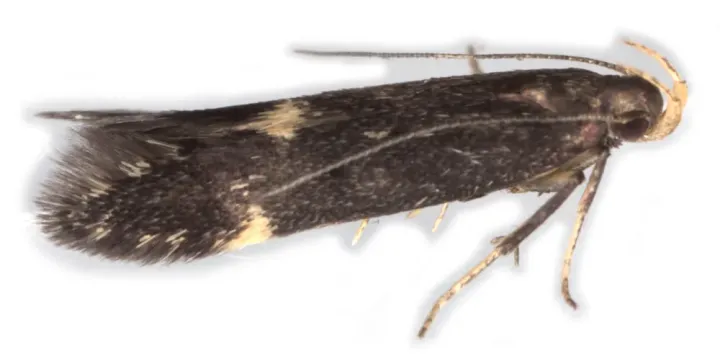
Eulamprotes atrella belongs to the order Lepidoptera and the family Gelechiidae (twirler moths). The adult moth is small, with a wingspan of approximately 10–12 mm, featuring a dark, nearly black coloration that provides excellent camouflage.
The moth has a slender body and narrow wings with a characteristic fringe of hair along the edges. When at rest, the insect holds its wings tightly along its body, adopting a needle-like appearance.
The larvae (caterpillars) are typical for the family Gelechiidae: small, usually pale or greenish in color with a darker head capsule. They lead a concealed life, often feeding inside leaf tissues or in webbed shelters.
The life cycle involves complete metamorphosis: egg, larva, pupa, and adult. Each developmental stage is highly dependent on environmental conditions, particularly temperature and host plant availability.
This species is widely distributed in temperate regions, where it successfully colonizes various members of the Asteraceae family, thriving in both wild and cultivated habitats.
What it damages
The primary hosts of Eulamprotes atrella are plants from the Asteraceae family. Larval feeding can cause significant damage to the foliage and sometimes the reproductive organs of these crops.
Caterpillars feed on leaf tissue, creating mines or skeletonizing leaves by consuming the parenchyma. This feeding activity reduces the plant's photosynthetic surface area, leading to stunted growth.
In cases of high population density, the larvae may damage developing buds and flowers, directly impacting the seed yield and quality of the cultivated plants.
Feeding sites often become entry points for secondary infections. Pathogenic fungi and bacteria can easily invade the weakened plant tissues, causing further decay and damage.
The level of impact varies based on the growth stage of the crop. Seedlings and young plants are particularly susceptible to severe damage, which can lead to plant death or reduced commercial value.
When it appears
Adult moths typically emerge in early spring as temperatures rise. They are nocturnal or crepuscular, often remaining hidden in dense foliage or ground debris during daylight hours.
Eggs are laid on the undersides of leaves or near the plant stem. Upon hatching, larvae immediately begin feeding, which coincides with the period of rapid crop growth.
Pupation generally occurs in the soil or within the shelter of webbed leaves. Multiple generations per year are possible if climatic conditions remain favorable throughout the growing season.
The species overwinters as larvae or pupae in the topsoil or within plant residues, which serves as a protective mechanism against harsh winter temperatures.
Population peaks are often observed in mid-summer, when the life cycle of the moth synchronizes with the availability of suitable host plant tissues for the next generation.
Signs of infestation
The most distinctive sign of infestation is the presence of webbed or curled leaves, where the larvae have woven silk to create a protected feeding chamber.
Traces of frass (larval excrement) inside these shelters or along the mining paths are definitive indicators of current pest activity within the field.
Visible leaf mines appear as winding, discolored, or brown trails where the interior tissue has been removed. Heavily infested leaves eventually dry out, turn brown, and deform.
General plant decline, including yellowing leaves and reduced vigor, often accompanies infestations, even if the pests are not immediately visible upon a quick glance.
Monitoring for adult moths during evening hours using light traps or pheromone baits can provide an early warning of population buildup before significant damage occurs.
Control measures
Effective management begins with rigorous field sanitation, including the destruction of weeds within the Asteraceae family that act as reservoirs for the pest.
Deep plowing in the autumn is a critical cultural control practice, as it disrupts the overwintering stages of the moth by burying pupae and larvae deep in the soil.
Chemical control should be implemented during periods of high larval activity, using systemic or contact insecticides that are registered for use on the specific crop.
It is essential to practice integrated pest management (IPM) by rotating chemical modes of action to prevent the development of insecticide resistance in moth populations.
Biological control methods, such as the use of parasitoids or biopesticides based on specific bacteria, can be highly effective when integrated into a long-term pest management strategy.
Taxonomy
- Latin name
- Eulamprotes atrella
- Order
- Lepidoptera (butterflies)
- Family
- Gelechiidae
- EPPO code
- EWLAAT
Discussion
No discussions yet — be the first.