
Eulamprotes
Eulamprotes
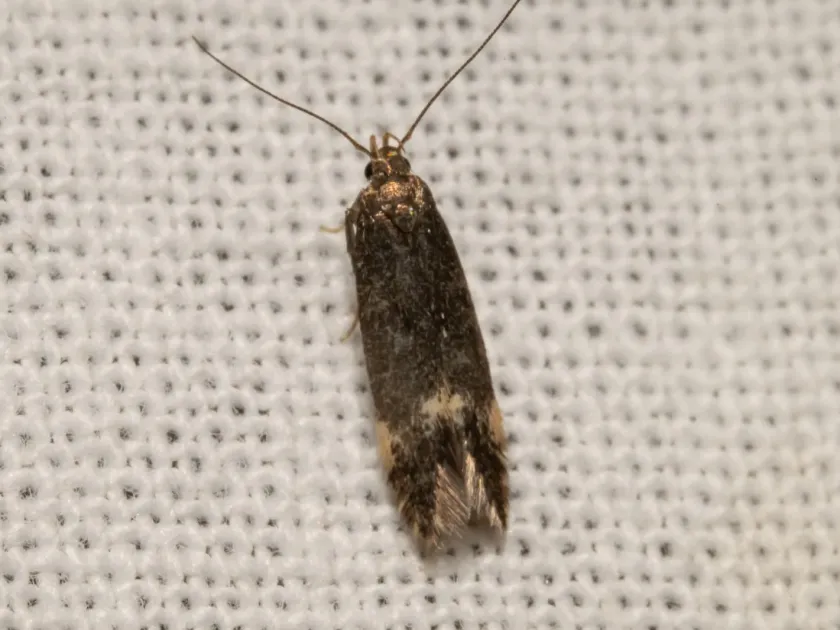
Description
How to identify
Eulamprotes is a genus of moths belonging to the family Gelechiidae (twirler moths). These insects are typically small, and their nocturnal behavior makes them challenging to identify in agricultural field conditions without specialized tools.
Adult moths exhibit narrow wings with a characteristic fringe, which is a hallmark feature of the Gelechiidae family. Their coloration ranges from grey to dark brown, providing effective camouflage on debris or host plants.
Systematically, this genus contains numerous species that require microscopic examination of genitalia for accurate classification. In agronomic practice, they are often identified by their damage patterns rather than individual appearance.
Larvae (caterpillars) progress through several instars, transitioning from translucent to green or yellowish hues with dark head capsules. They are secretive feeders, preferring to live inside plant tissues.
The life cycle is heavily influenced by environmental factors such as humidity and ambient temperature. Favorable weather conditions often lead to population spikes during the mid-season growing period.
What it damages
The larvae of this genus primarily target plants in the Lamiaceae family. However, they may also infest other herbaceous crops if natural host plants are scarce in the local ecosystem.
Caterpillars cause primary damage by feeding on the mesophyll of leaves, creating mines that weaken the plant's physiological ability to photosynthesize effectively, leading to stunted growth.
Severe infestations can affect generative organs, causing distortion of buds and flowers. This results in significant losses in seed yield and reduced market quality of the produce.
Damaged leaf tissue is highly susceptible to secondary infections, such as fungal pathogens and bacterial spots, which can exacerbate the damage caused by the larvae themselves.
Economic damage is most prevalent in fields where crop residues are not properly managed, as the larvae or pupae often hibernate within or near the debris of the previous harvest.
Signs of infestation
The earliest signs of infestation are small, light-colored dots or tunnels on the leaves, known as mines. These structures are the direct result of larvae feeding between the leaf epidermal layers.
Frass (larval excrement) is often visible inside the mines or on the underside of the leaves. This is a definitive sign of active larval presence and feeding activity.
Yellowing, curling, and early wilting of leaves in localized patches of the field are strong indicators that a population of Eulamprotes is establishing itself within the crop canopy.
During the twilight hours, adult moths can be spotted flying low over the crops, especially when utilizing pheromone or light traps to attract and monitor the local population density.
The presence of fine webbing on leaves or apical buds, used by the larvae to secure themselves or shelter, serves as another reliable diagnostic sign for farmers to look for during scouting.
Control measures
Crop rotation is the most effective cultural strategy. By removing the primary host plants for consecutive seasons, the life cycle of the moth is broken, significantly reducing population numbers.
Deep autumn tillage is highly recommended to bury larvae and pupae deep in the soil, effectively preventing them from successfully overwintering and emerging in the following spring.
Chemical control should be employed only when monitoring indicates the population exceeds the economic threshold. Systemic insecticides are typically most effective against these hidden feeders.
Rigorous weed control on the field edges is vital, as wild host plants often act as reservoirs for the pest, allowing it to re-invade commercial fields during the growing season.
- Use light or pheromone traps for early detection of adult flights.
- Target applications during the early larval stage for maximum effectiveness.
- Integrate biological control agents that target gelechiid larvae naturally.
Taxonomy
- Latin name
- Eulamprotes
- Order
- Lepidoptera (butterflies)
- Family
- Gelechiidae
- EPPO code
- EWLASP
Discussion
No discussions yet — be the first.