
Fruit-piercing moth
Eudocima tyrannus
Description
How to identify
The fruit-piercing moth (Eudocima tyrannus) is a large, nocturnal lepidopteran belonging to the Erebidae family, known for its significant impact on fruit production.
Adult moths possess a wingspan of 7 to 9 cm, with forewings that provide excellent camouflage against tree bark during their daytime rest.
The hindwings feature striking yellow and black patterns, which act as a sudden deterrent when the moth takes flight, startling potential predators.
Their bodies are robust and covered in dense setae, and they possess a highly developed, sclerotized proboscis adapted for piercing hard fruit rinds.
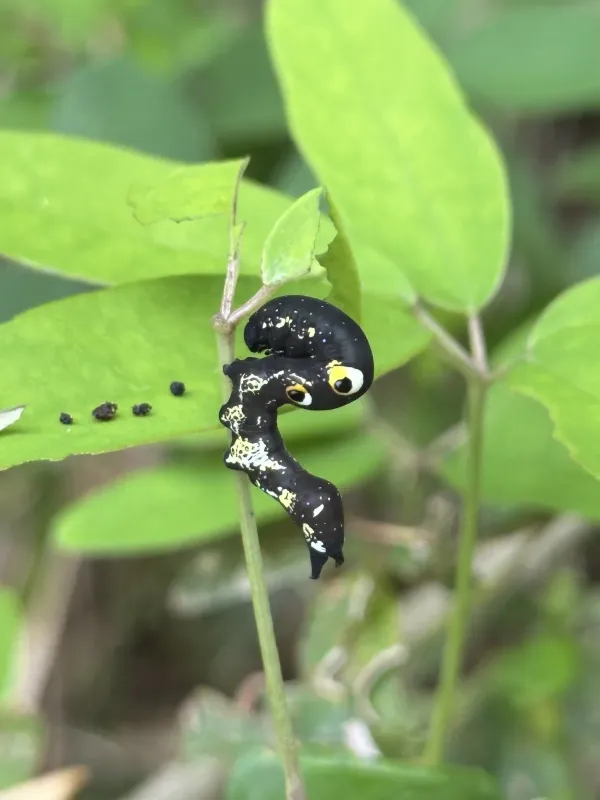
The larvae are typically large and exhibit warning coloration or eyespots, which are specialized evolutionary traits designed to discourage bird predation.
What it damages
Damage is exclusively caused by adult moths that use their specialized proboscis to drill into mature fruits, extracting the juice and nutrients.
Preferred hosts include a wide variety of commercial fruits such as peaches, citrus, apples, pears, and grapes, which are highly susceptible to piercing.
The larvae develop on specific wild plants within the Menispermaceae family, such as Cocculus trilobus, where they feed on foliage.
Once a fruit is pierced, the entry point serves as a gateway for fungi, bacteria, and yeasts, leading to rapid rot and the total loss of the fruit's market value.
In cases of high infestation, entire harvests of specific fruit varieties can be compromised, causing significant economic losses for agricultural enterprises.
When it appears
The adult moth is most active during the late summer and early autumn months, coinciding with the peak ripening time of many fruit crops.
Being strictly nocturnal, these insects begin their feeding activity at dusk, remaining active throughout the night until dawn.
The lifecycle follows a complete metamorphosis: egg, larva, pupa, and imago, with environmental temperature playing a key role in development speeds.
Hibernation typically occurs at the pupal or adult stage in sheltered environments, such as leaf litter or tree crevices, ensuring survival over winter.
Peak periods of damage often correlate with periods of warm, humid weather that support both moth activity and the rapid growth of secondary rot organisms.
Signs of infestation
The most diagnostic sign of infestation is the presence of tiny, pin-prick holes on the fruit surface, often surrounded by a small halo of softening tissue.
If examined at night using a flashlight, adults can be found congregating on ripening fruit, especially in areas bordering wooded habitats.
The presence of chewed leaves or defoliation on host plants like Cocculus trilobus in the surrounding landscape indicates a breeding population nearby.
A noticeable sour or fermented scent in the orchard during the night is a clear indication that moths have already begun feeding on available produce.
The presence of social insects like wasps and ants feeding on fallen or wounded fruit is often a secondary symptom of initial moth damage.
Control measures
The implementation of light traps is one of the most effective ways to reduce adult moth populations in commercial orchards.
Practicing good sanitation, including the prompt removal of fallen or overripe fruit, denies the pests a food source and minimizes the risk of rot.
For high-value crops, physical exclusion methods like bagging fruit or using protective netting can prevent the moths from reaching the product.
Controlling the larval host plants in the immediate vicinity of the orchard can significantly reduce the local population density of the moth.
- Deploy pheromone or light-based monitoring stations.
- Ensure rapid harvesting schedules during peak moth activity.
- Utilize selective biological insecticides if threshold levels are exceeded.
Taxonomy
- Latin name
- Eudocima tyrannus
- Order
- Lepidoptera (butterflies)
- Family
- Erebidae
- EPPO code
- ADRITA
Discussion
No discussions yet — be the first.