
Aster fruit fly
Euaresta bella
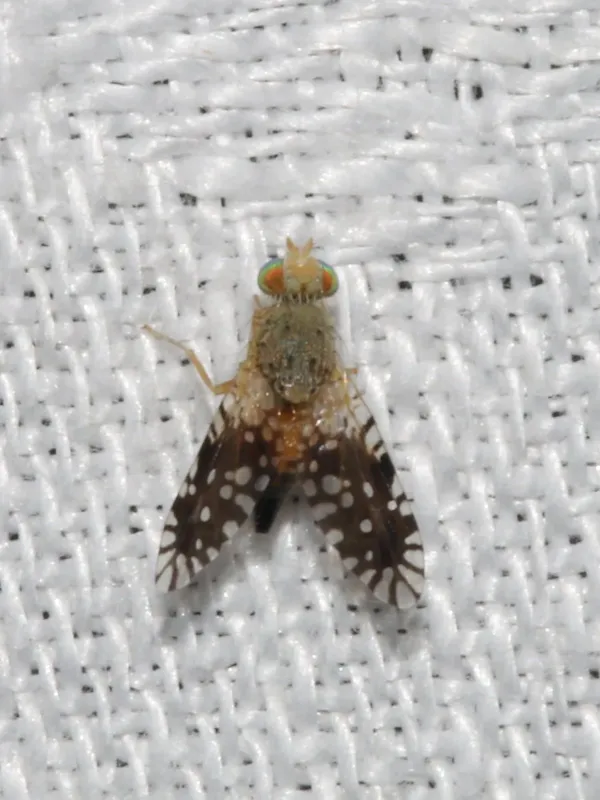
Description
How to identify
The aster fruit fly, Euaresta bella, is a member of the fruit fly family (Tephritidae) within the order Diptera. These small insects are distinguished by the intricate, dark patterns on their wings, which are characteristic of this species.
Adult flies are generally between 3 and 5 mm in length. Their body color ranges from yellowish-brown to dark brown, serving as camouflage against the petals and foliage of host plants.
The larvae are small, legless, and cylindrical, adapted for a life inside the flower heads of composite plants. Their morphology is highly specialized for feeding on floral tissue.
Identifying the pest can be difficult due to its cryptic behavior. Observation of the adults resting on flowers during the day is the most reliable way to confirm their presence in the garden.
While native to North America, these flies have become a recognized pest in horticultural environments where their host plants are grown in significant numbers.
What it damages
The primary hosts for Euaresta bella are members of the Asteraceae family. Garden asters, goldenrod, and various ornamental composite flowers are the most susceptible to infestation.
Larvae feed directly inside the flower head, damaging the disk florets and the developing seeds. This results in significant loss of seed viability and overall reduction in plant vigor.
Feeding activities often lead to the malformation of the flower head. As the larvae consume internal tissues, the structural integrity of the plant's reproductive organs is compromised.
Heavy infestations can result in the total destruction of the flower, making it aesthetically unsuitable and preventing the plant from fulfilling its reproductive cycle.
In addition to feeding damage, the wounds created by the larvae provide easy entry points for fungal pathogens, leading to secondary infections and rapid decay of the blooms.
When it appears
Adult activity is typically synchronized with the budding and flowering period of host plants. Depending on the geographical region, this occurs from mid-summer through early autumn.
The life cycle is closely linked to the availability of host flowers. Under optimal conditions, multiple generations can emerge during a single growing season.
Pupation often occurs within the dry, damaged flower head or in the soil, allowing the insect to survive in varying environments through its puparial stage.
As temperatures drop, the species enters diapause. Overwintering occurs either in the soil or protected within plant debris left in the garden or field.
Early spring monitoring is essential, as the first generation of flies emerging from overwintering sites will determine the intensity of subsequent infestations.
Signs of infestation
The first outward signs include premature wilting or irregular development of the flower buds. Affected heads may appear stunted or lopsided compared to healthy blooms.
Closer inspection often reveals small exit holes on the exterior of the receptacle, where larvae have emerged or where adults have laid their eggs.
Cutting open a suspect flower head will usually reveal the larvae or the debris left behind from their feeding activity within the receptacle and disk florets.
- Malformed or lopsided flower heads.
- Small exit holes in the base of the flower.
- Presence of larval waste or hollowed-out florets.
Inconsistent flowering or the sudden collapse of a healthy bud are reliable indicators that an internal infestation is currently underway.
Control measures
Sanitation is the most effective management strategy. Removing and destroying infested plant material immediately after bloom prevents the next generation from overwintering.
Yellow sticky traps can be placed near host plants to monitor the adult population and capture a portion of the flies before they can mate and lay eggs.
Systemic insecticides, if used early in the budding stage, can provide protection against larval development, though they should be applied with caution to preserve pollinators.
Crop rotation and spatial isolation of susceptible plants can help disrupt the pest's life cycle and reduce the likelihood of heavy infestations in the following year.
Biological control, including the encouragement of natural predators like wasps and predatory beetles, can play a significant role in keeping populations below economic threshold levels.
Taxonomy
- Latin name
- Euaresta bella
- Order
- Diptera (flies)
- Family
- Tephritidae
- EPPO code
- EUARBE
Discussion
No discussions yet — be the first.