
Euaresta
Euaresta
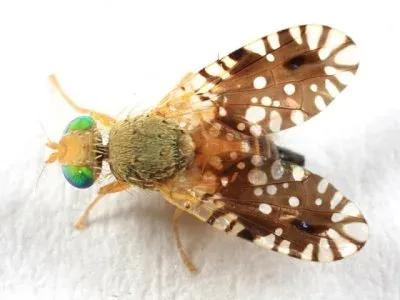
Description
How to identify
Euaresta is a genus of fruit flies belonging to the family Tephritidae. Adult insects are generally small and characterized by a distinctive spotted wing pattern, which is a hallmark of this fly family.
The body of the adult fly is often covered in sparse hairs, with coloration ranging from yellowish-brown to dark, allowing them to camouflage effectively on plant surfaces. The eyes often exhibit a metallic sheen, and the mouthparts are adapted for feeding on nectar and aphid honeydew.
The larvae of Euaresta are typically creamy white or off-white, possessing the cylindrical body shape common to many flies and hooked mouthparts. They lead a cryptic lifestyle, living inside plant tissues, most frequently within flower heads or developing fruits.
The life cycle involves complete metamorphosis: egg, larva, pupa, and adult (imago). Accurate species identification often requires microscopic examination of the wing venation and genital structures, as the genus includes many closely related and visually similar species.
Field identification is challenging, so monitoring populations usually involves the use of sticky traps and visual inspections of inflorescences. These flies are most active during warm, sunny weather, preferring to move across the upper canopy of the plants.
What it damages
The primary damage is caused by Euaresta larvae, which feed on the tissues of plants within the Asteraceae family. They infest flower heads, seeds, and ovaries, which significantly reduces the reproductive potential of the host crop.
During outbreaks, this pest can substantially decrease the yield of seed-producing crops, as the larvae consume the internal contents of the seeds. This renders the produce unsuitable for either commercial use or future propagation.
Beyond direct damage to seeds, the feeding sites created by larvae often serve as entry points for secondary infections, such as mold fungi and bacterial rots. This further accelerates the degradation of the flower head.
Cultivated plants, such as sunflowers and other ornamental or medicinal asters, are particularly vulnerable. The pest typically selects the most susceptible plants or specific developmental stages that coincide with the flowering period.
The level of damage is directly correlated with population density and climatic conditions. In arid years, the impact of the pest on seed quality can be especially pronounced due to the reduced overall resilience of the plants.
Signs of infestation
The first signs of infestation include characteristic spots or dark patches on plant heads during the flowering and seed-filling stages. Upon dissecting the flower head, one may find larvae or evidence of their feeding activity.
Premature wilting or deformation of flower heads is frequently observed, where the heads fail to open properly. Additionally, immature or damaged seeds may drop prematurely from the plant.
Small puncture marks made by females during oviposition can sometimes be seen on the petals or involucral bracts. Necrotic areas of tissue often develop around these sites.
During the adult flight period, flies are often visible on the leaves where they feed on sugar-rich secretions. Mass congregations of adults near the fields serve as a critical signal to initiate intensive monitoring.
The presence of natural enemies or specific parasitoids that control fly populations acts as an indirect sign of their presence. Severe infestations often result in sparse stands and a lack of high-quality seed material.
Control measures
The control strategy includes integrated agricultural practices such as rigorous crop rotation and the destruction of host weeds in the Asteraceae family, which serve as reservoirs for the pest.
Deep fall plowing is an effective way to destroy pupae overwintering in the soil or plant debris, which helps to significantly reduce the subsequent generation's population. Harvesting as early as possible is also recommended to escape the peak infestation window.
The use of biological control methods, including the encouragement of natural insect enemies and parasitoids, helps maintain Euaresta populations below the economic injury level.
Chemical control is applied during the peak emergence of adults if the economic threshold is exceeded. Registered systemic or contact insecticides are typically used for this purpose.
- Maintaining field isolation buffers.
- Using pheromone or yellow sticky traps for monitoring.
- Regular scouting of crops during the flowering stage.
- Application of biological pesticides based on entomopathogenic fungi.
Taxonomy
- Latin name
- Euaresta
- Order
- Diptera (flies)
- Family
- Tephritidae
- EPPO code
- EUARSP
Discussion
No discussions yet — be the first.