
Mountain ash gall mite
Eriophyes sorbi
Description
How to identify
The mountain ash gall mite, known scientifically as Eriophyes sorbi, is a microscopic pest belonging to the family Eriophyidae. Because of their tiny size, usually around 0.2 mm, they are invisible to the naked eye and require magnification for proper identification.
These mites are characterized by a vermiform, elongated body with only two pairs of legs situated at the anterior end. This anatomical structure allows them to navigate within the intercellular spaces of host plant leaves with relative ease.
Their life cycle is intricately linked to the developmental phases of the mountain ash (rowan) tree. Adult females typically overwinter in the dormant buds of the host plant, huddled beneath bud scales to protect themselves from harsh winter temperatures.
As spring arrives and the tree begins to sprout, the mites emerge from their wintering sites. They migrate to the newly developing leaves, where they initiate feeding, triggering the plant's physiological response that results in the formation of characteristic galls.
Under favorable climatic conditions, the mite can produce several generations within a single growing season. This rapid reproduction rate allows for significant spread across the tree's canopy if left unmanaged.
What it damages
The primary damage is inflicted upon the foliage of the mountain ash tree. By feeding on the plant's sap, the mites induce the formation of galls—abnormal outgrowths that serve as both a protected shelter and a source of nutrients for the mite colony.
These galls disrupt the normal photosynthetic process of the leaves. Consequently, the tree's metabolic efficiency drops, leading to stunted growth in younger trees and reduced overall vitality in mature specimens.
As the infestation progresses, the affected leaves may turn yellow or brown prematurely and drop from the tree. This early defoliation deprives the tree of its ability to store necessary energy reserves for the following winter.
Beyond physical damage, the aesthetic value of the tree is significantly compromised. Decorative varieties of rowan lose their visual appeal, as the leaves become unsightly, curled, and covered in numerous bumps and lesions.
In cases of severe or prolonged infestation, the tree may suffer from branch dieback. This systemic weakening can leave the plant susceptible to secondary opportunistic diseases and environmental stressors that it would otherwise easily survive.
Signs of infestation
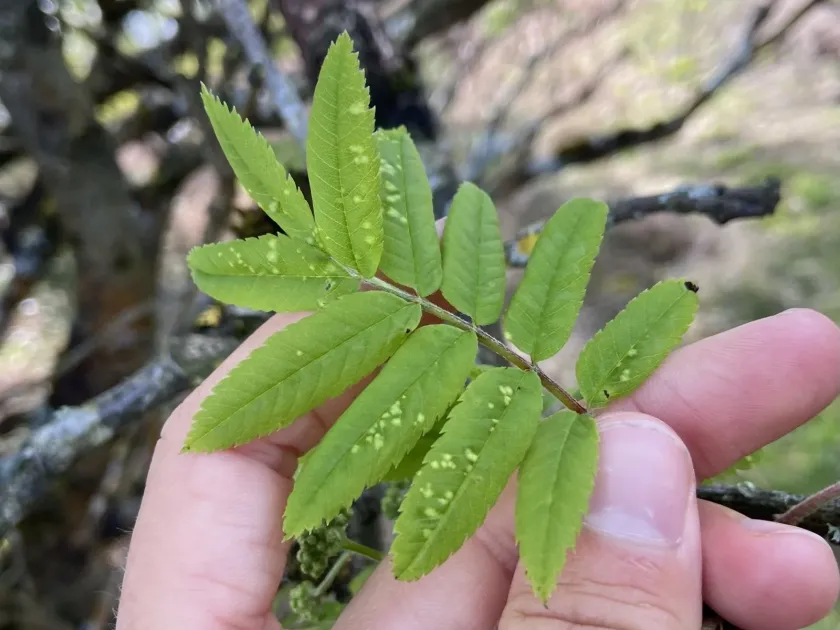
The most prominent sign of infestation is the appearance of distinct swellings or galls on the upper surface of the leaves. These galls can vary in shape and size but are typically noticeable as small, bumpy protrusions scattered across the leaf blade.
The coloration of these galls is a useful diagnostic marker. Initially, they may be pale green, often shifting to reddish or brownish hues as the colony matures and the leaf tissue begins to undergo necrosis within the gall structure.
Leaves affected by the mite often become distorted or twisted. If one examines the underside of the leaf, tiny openings can often be found, which serve as entrance points for the mites to colonize the interior of the leaf.
- Appearance of numerous small galls on leaf surfaces.
- Color changes in leaves (reddish or brown spots).
- Deformation, curling, and twisting of young leaves.
- Premature leaf drop and yellowing during the summer months.
A heavily infested tree will show a characteristic mottled or spotted appearance. This symptom is widespread across the canopy during the mid-to-late summer, making the infestation quite visible to the observant gardener.
Control measures
Controlling the mountain ash gall mite is inherently difficult because the pests are shielded within the plant tissue for most of their active life cycle. Therefore, the timing of control measures is critical for success.
Sanitation is the first line of defense. Collecting and destroying fallen leaves during the autumn is essential, as these serve as the primary reservoir for mites that will emerge the following season.
Chemical control should be timed to coincide with the brief period when the mites are migrating out of their wintering buds in the spring. Applications of acaricides during this window are the most effective way to reduce the population.
Sulfur-based sprays are often recommended for their effectiveness against eriophyid mites. It is important to follow the product label instructions carefully, including the recommended frequency of applications for the best results.
Maintaining tree vigor through proper horticultural practices—such as adequate irrigation, fertilization, and regular pruning—improves the tree's natural resilience, allowing it to better withstand and recover from pest attacks.
Taxonomy
- Latin name
- Eriophyes sorbi
- Order
- Mites
- Family
- Eriophyidae
- EPPO code
- ERPHSR
Discussion
No discussions yet — be the first.